
Why Does My Heel Hurt First Thing in the Morning?
Morning heel pain is one of the most common signs of plantar fasciitis. Learn why it happens, what makes it worse, and when to see a podiatrist in Sydney.
TL;DR
Morning heel pain is most commonly caused by plantar fasciitis - inflammation of the thick band of tissue running under your foot. It hurts most with the first few steps because the tissue tightens and shortens overnight. It rarely resolves on its own without treatment, but with the right approach most people see significant improvement within 6-12 weeks.
You wake up, swing your legs off the bed, take your first step - and feel a sharp, stabbing pain in the bottom of your heel. It eases up after a few minutes of walking around, but it's back again the next morning. Maybe every morning. If this sounds familiar, you're not alone.
Morning heel pain is one of the most common presentations seen in podiatry clinics. A 2019 review in the Journal of Orthopaedic and Sports Physical Therapy estimated that plantar fasciitis affects approximately 10% of people at some point in their lives, with peak incidence in people aged 40-60 and in runners. While it can have a few causes, the most likely culprit is plantar fasciitis.
What Is Plantar Fasciitis?
The plantar fascia is a thick band of connective tissue that runs along the bottom of your foot, connecting your heel bone (calcaneus) to the base of your toes. Its primary role is to support the medial arch of your foot and absorb and distribute the mechanical load of every step you take.
When this tissue becomes overloaded or repeatedly stressed, micro-tears develop - usually at the point of highest tension where the fascia attaches to the heel bone. The result is a degenerative inflammatory process causing stiffness, tenderness and that very specific kind of sharp pain that hits hardest with the first steps of the day.
Despite the "-itis" suffix suggesting acute inflammation, research has shown that chronic plantar fasciitis is more accurately a degenerative condition (plantar fasciopathy) rather than a purely inflammatory one. This distinction matters for treatment - it explains why anti-inflammatory treatments alone (ice, NSAIDs) are often insufficient as a standalone approach for persistent cases.
Why Is the Pain Worst in the Morning?
While you sleep, your foot rests in a plantar-flexed (toes-down) position. In this position, the plantar fascia shortens and tightens. When you stand up and load your foot for the first time, that shortened tissue is suddenly and forcefully stretched - and the already-irritated insertion point takes the brunt of it.
After a few minutes of walking, the fascia warms up and begins to elongate, which is why the pain typically eases once you've been on your feet for a while. This "warm-up" pattern - pain worse with first steps, better after movement, then possibly returning again after prolonged standing - is the hallmark diagnostic pattern of plantar fasciitis.
The "settling" of pain with movement does not mean healing is occurring. Untreated plantar fasciitis frequently becomes chronic, with average symptom duration of 6-18 months if not properly managed.
Other Conditions That Can Cause Morning Heel Pain
Plantar fasciitis is the most common cause, but it's not the only one. A thorough podiatry assessment will rule out:
- Heel spurs (calcaneal spurs): Bony projections that form at the heel bone attachment of the plantar fascia. The spur itself is rarely the primary source of pain - it's the inflamed fascial tissue that hurts. See our detailed explanation in our post on plantar fasciitis vs heel spur.
- Achilles tendinopathy: Overload injury to the Achilles tendon causing pain at the back of the heel, also characteristically worse first thing in the morning. The location differentiates it from plantar fasciitis.
- Sever's disease (calcaneal apophysitis): The most common cause of heel pain in children aged 8-14, caused by traction on the growth plate. Morning stiffness is common.
- Baxter's nerve entrapment: Compression of the first branch of the lateral plantar nerve can mimic plantar fasciitis closely and is frequently missed on initial assessment.
- Reactive or inflammatory arthritis: Conditions like ankylosing spondylitis and psoriatic arthritis can cause enthesopathy (inflammation at tendon and ligament insertions) around the heel.
- Fat pad atrophy: The calcaneal fat pad - the cushioning under the heel bone - naturally thins with age. When the pad loses its shock-absorbing capacity, loading the heel becomes painful, particularly on hard surfaces.
What Risk Factors Make Plantar Fasciitis More Likely?
Plantar fasciitis rarely appears without identifiable drivers. Common contributing factors include:
- A sudden increase in walking or running volume (doing too much too soon)
- Tight calf muscles and Achilles tendon (reduced ankle dorsiflexion range)
- Flat feet (excessive pronation increases fascial tension)
- High-arched feet (less shock absorption, more concentrated load)
- Walking barefoot on hard floors at home
- Unsupportive footwear - particularly flat thongs, ballet flats and worn-out runners
- Prolonged standing on hard surfaces at work
- Increased body mass index
- Occupations involving prolonged weight-bearing
What Can a Podiatrist Do for Plantar Fasciitis?
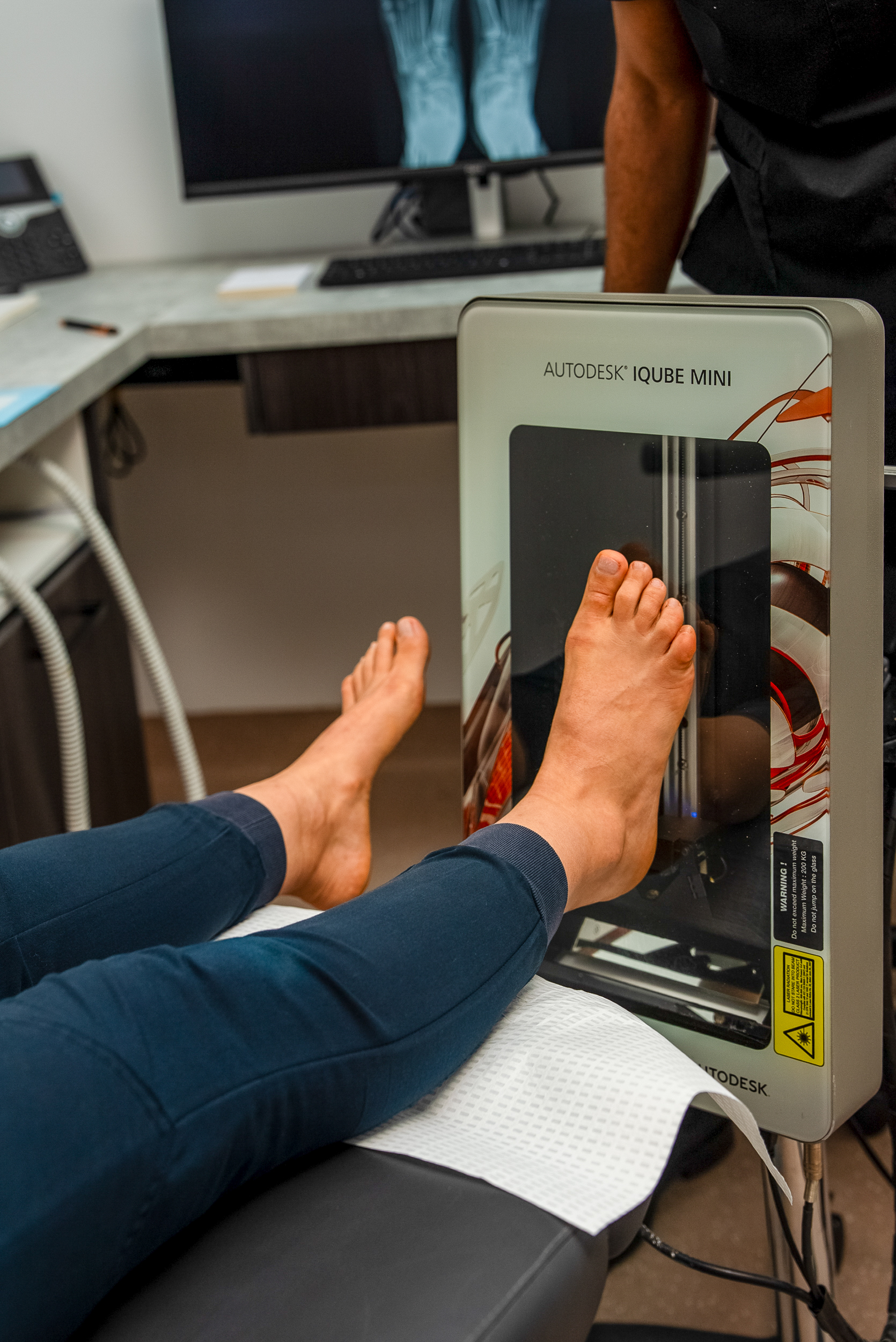
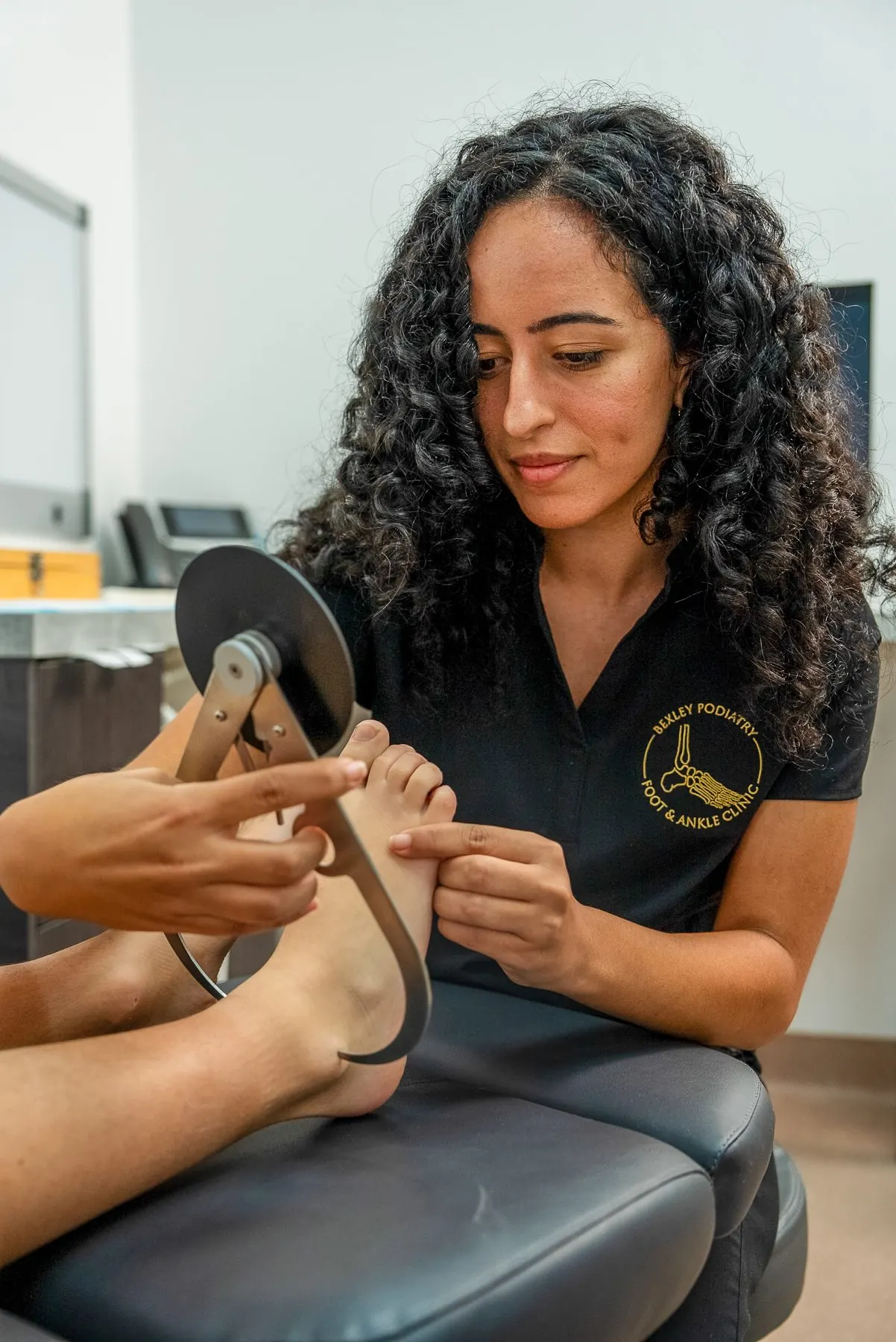
A proper podiatry assessment will identify exactly what's driving your heel pain and put together a staged treatment plan. Depending on the severity and duration of symptoms, this might include:
- Load management: Reducing the aggravating activity to allow symptoms to settle - not complete rest, but a strategic reduction in the provocative load.
- Stretching and strengthening programme: Calf stretching, plantar fascia stretching and progressive loading exercises (such as the Alfredson eccentric protocol for chronic cases).
- Taping: Low-Dye or calcaneal taping provides immediate symptomatic relief and is a useful diagnostic test - if taping settles the pain, it confirms the biomechanical component.
- Custom foot orthotics: Prescribed to offload the heel and modify the biomechanical drivers. See our post on what custom orthotics actually are for a detailed explanation.
- Shockwave therapy (ESWT): Extracorporeal shockwave therapy is the most evidence-based treatment for plantar fasciitis that hasn't responded to conservative care, with response rates of 70-80% in clinical trials.
- Ultrasound-guided cortisone injection: Appropriate for acute, severe presentations where immediate pain relief is needed. Not a cure - typically used to bring symptoms under control so rehabilitation can begin.
Heel pain that keeps coming back each morning is your body flagging a structural problem that won't resolve without the right treatment. The sooner it's properly assessed, the faster and more completely it heals. Book a heel pain assessment.
Related on our site
Frequently asked questions
How do I know if it's plantar fasciitis or something else?
Classic plantar fasciitis causes sharp pain on the inner heel, worst with the first steps of the day, that eases with movement and may return after prolonged standing. Pain at the back of the heel suggests Achilles involvement. Burning or shooting pain suggests nerve entrapment. Pain in a child aged 8-14 is more likely Sever's disease. A clinical assessment by a podiatrist will differentiate these.
Should I stretch my foot before getting out of bed?
Yes. Before your first step, spend 60 seconds gently pulling your toes back toward your shin - this pre-stretches the plantar fascia before it takes load. Studies have shown this simple morning stretch can meaningfully reduce first-step pain intensity.
How long does plantar fasciitis take to heal?
With appropriate treatment started early, most people see significant improvement within 6-12 weeks. Chronic cases lasting 6 months or more may require 3-6 months of structured management. Shockwave therapy significantly accelerates recovery in stubborn long-term cases.
Can I keep exercising with plantar fasciitis?
In most cases yes, with modifications. High-impact activities like running should be temporarily reduced. Low-impact alternatives such as swimming, cycling and strength training are usually well-tolerated. Complete rest is rarely the answer - load management is more effective than elimination.
What shoes should I wear with plantar fasciitis?
Supportive footwear with a cushioned heel, structured arch support and a semi-rigid sole is best. Avoid flat thongs, ballet flats and barefoot walking on hard floors, particularly first thing in the morning. Your podiatrist can recommend specific shoe characteristics based on your foot type and gait.