

Achilles Tendinopathy Treatment in Bexley
A stiff, tender Achilles that grumbles on your first steps and flares after a run or a big day? Achilles tendinopathy is very treatable - but the answer is rarely rest alone. It is a loading problem, and it usually needs a loading solution.
- In-clinic diagnostic ultrasound
- Graded loading programmes
- Shockwave therapy on site
- 60+Years Combined Experience
- 4.9Google Rating (250+)
- Podiatric surgical registrar on team
- Endorsed for Scheduled Medicines
Understanding Achilles Tendinopathy
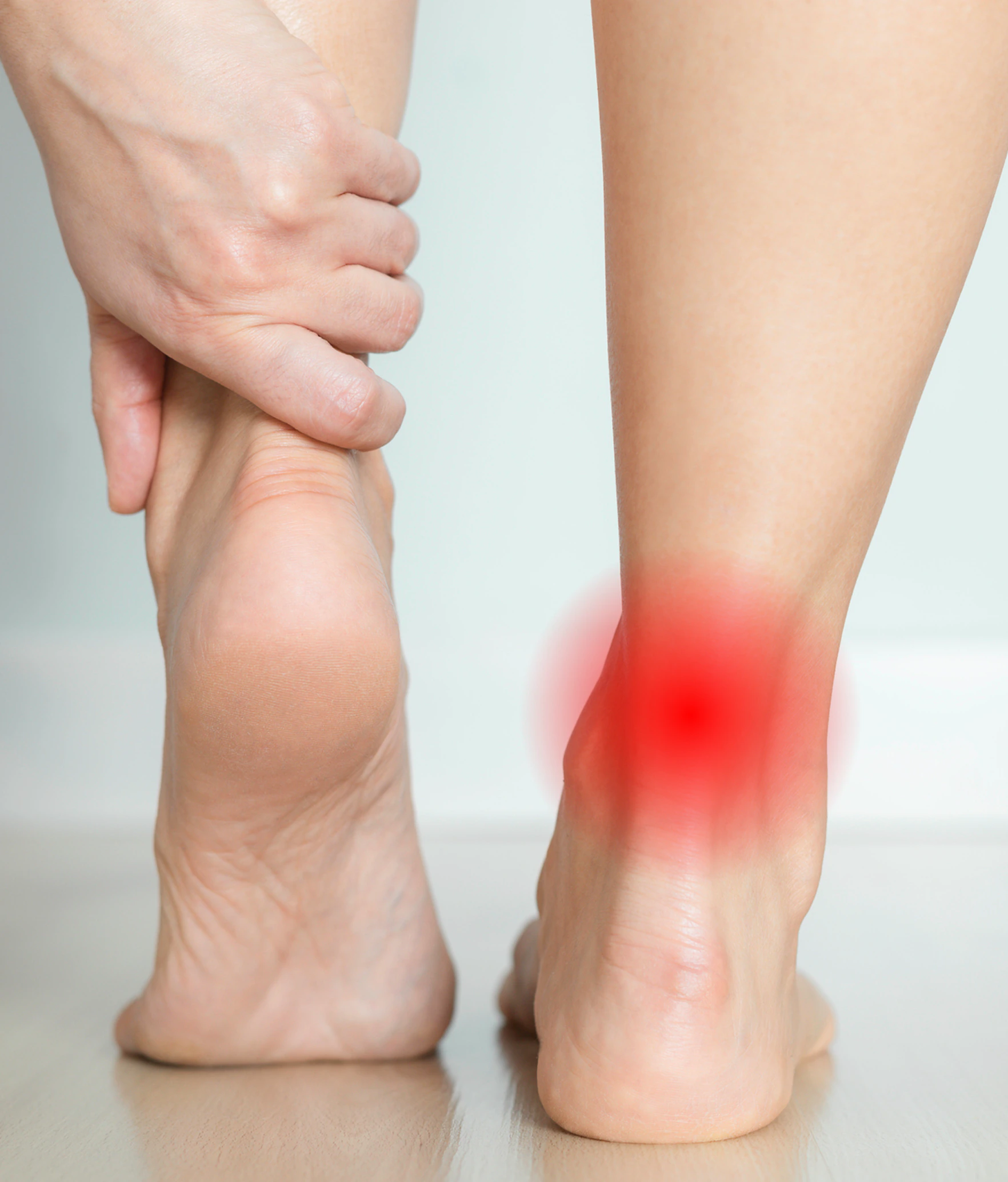
Achilles tendinopathy is a pain-and-stiffness condition of the Achilles tendon, the powerful cord linking your calf muscles to the heel bone and driving every push-off you make. Despite the older label tendinitis, it is not mainly an inflammatory problem - it is a change in the tendon's structure and quality when the load placed on it repeatedly exceeds what it has been prepared for.
It shows up in two main patterns. Mid-portion tendinopathy affects the tendon a few centimetres above the heel and is the more common and more responsive form. Insertional tendinopathy strikes right where the tendon anchors to the heel bone and can be more stubborn, sometimes alongside a bony prominence. Telling them apart matters, because they are managed differently.
Why the Tendon Gets Irritated
Achilles tendinopathy is fundamentally about load outrunning capacity. A range of factors nudges the tendon past its limit:
Training spikes
ramping up running distance, speed or hills faster than the tendon can adapt
Tight, weak calves
reduced calf strength and flexibility that overburden the tendon
Foot mechanics
flat or high-arched feet that alter the pull on the Achilles
Footwear changes
switching to flatter shoes or drilling barefoot-style running too quickly
Age
natural loss of tendon resilience through the 30s, 40s and beyond
Certain medications
some antibiotics and health conditions that affect tendon quality
Symptoms to Watch For
Morning stiffness
A stiff, sore tendon on the first steps out of bed that loosens with movement.
Warms up, flares later
Pain that eases into a run then returns, often worse the next morning.
A tender, thickened cord
Localised tenderness and sometimes a palpable thickening in the tendon.
Back-of-heel pain
Pain right at the heel attachment in the insertional form, worse in stiff shoes.
Weak push-off
Reduced power and confidence on hopping, jumping or climbing stairs.
How We Assess It
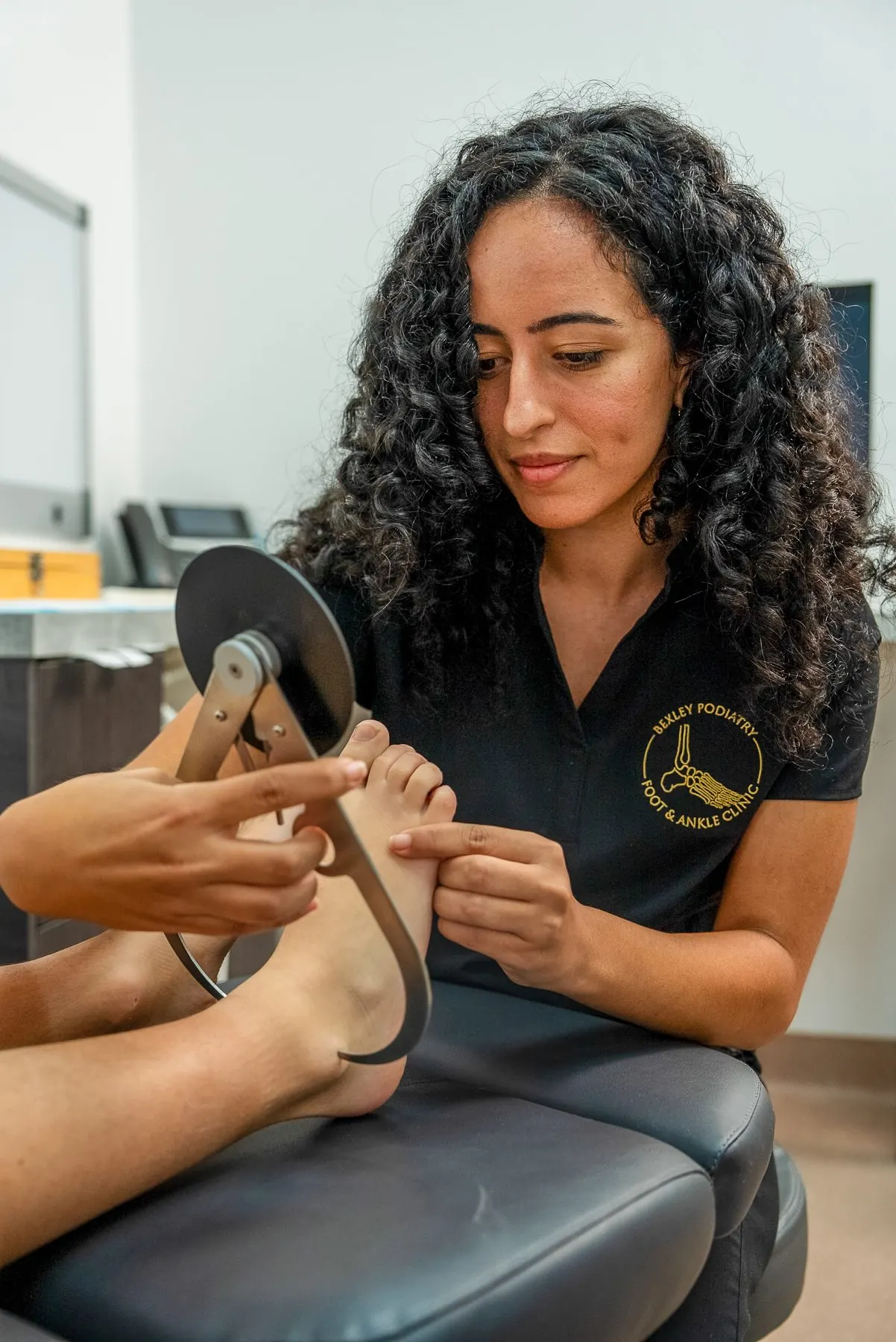
Our assessment sets out to confirm tendinopathy, locate exactly where the tendon is affected, and rule out a partial tear or other back-of-heel problems. It usually includes:
Clinical examination
palpating the tendon and testing where the pain lives - mid-portion or insertion.
Calf and strength testing
assessing calf capacity, single-leg heel raises and ankle range.
In-clinic diagnostic ultrasound
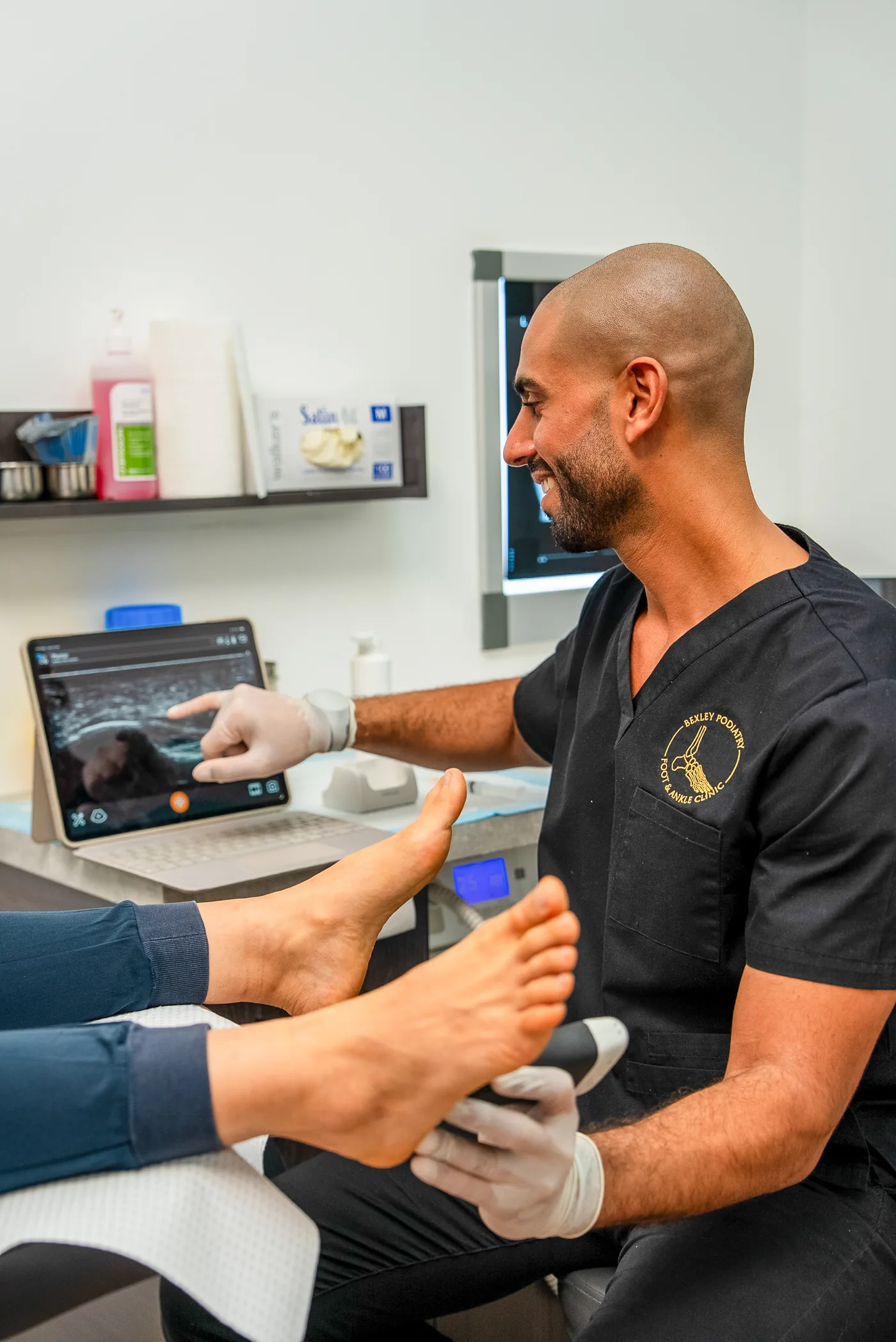
imaging the tendon in real time to gauge thickening, degeneration and any tearing.
Gait and load review
understanding your training and how you move under load.
MRI referral
occasionally, where a significant tear or insertional bony change needs clarifying.
Conservative Management
The cornerstone of recovery is progressively loading the tendon so it rebuilds capacity - not resting it into weakness. A well-run programme resolves the majority of cases. Your plan may include:
- Progressive loading - a staged strengthening programme, often starting isometric and building to heavy, slow calf work
- Activity modification - adjusting rather than stopping training so the tendon keeps adapting
- Shockwave therapy - delivered on site, with good evidence for stubborn mid-portion and insertional cases
- Heel lifts - temporarily offloading the insertion, particularly useful in the insertional form
- Footwear advice - choosing shoes that suit your tendon and phase of recovery
- Custom orthotic therapy - where foot mechanics are adding to the pull on the Achilles
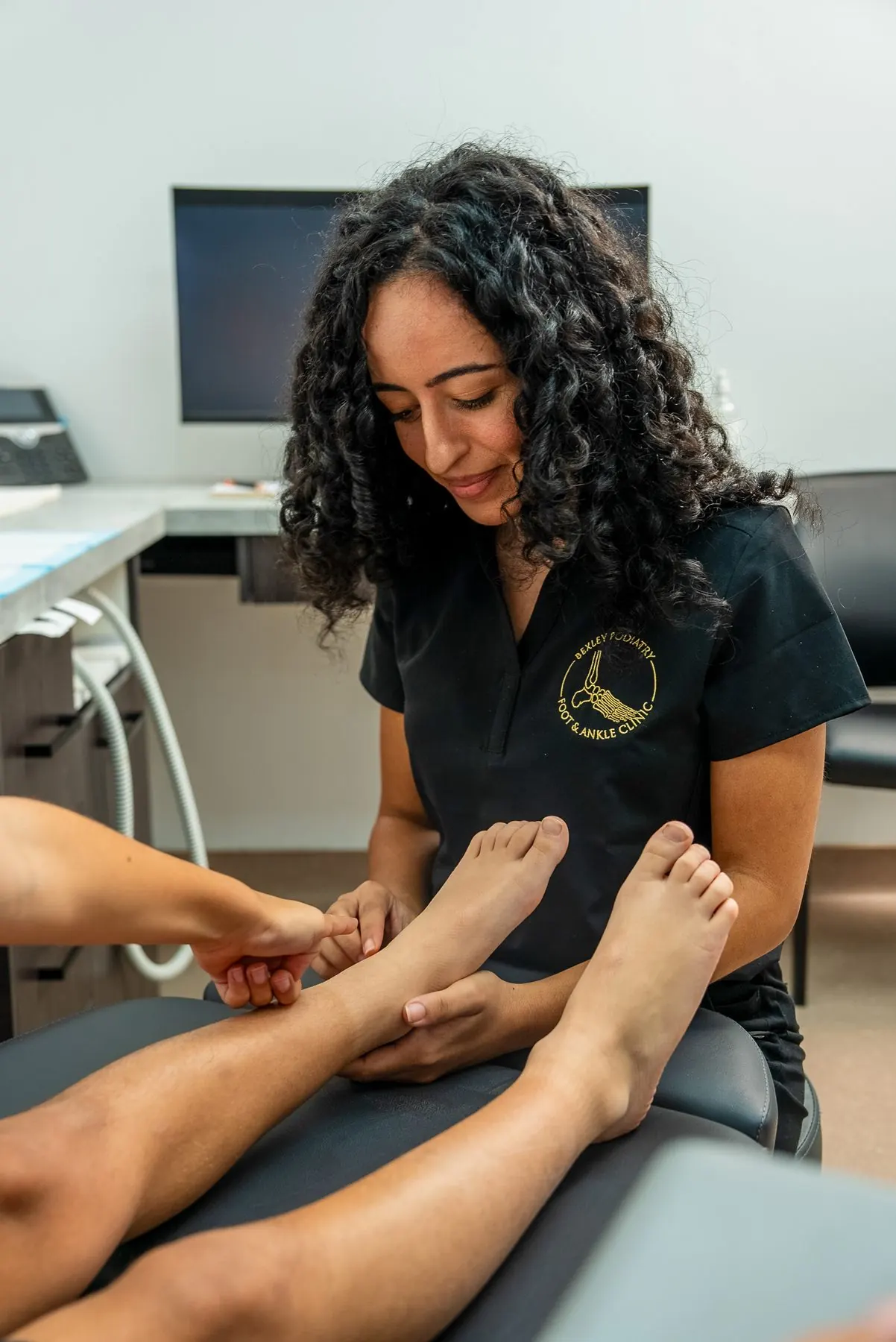
Tendons are slow to remodel - meaningful gains usually take 3 months of consistent loading, and long-standing cases longer. Skipping the strength work is the most common reason recovery stalls.
When Symptoms Persist
If a genuine loading programme has not turned things around after several months, we reassess and consider advanced options - such as ultrasound-guided injection therapy or other procedures suited to degenerative tendons. A suspected significant tear changes the plan entirely. Our podiatric surgical registrar can review persistent or complex Achilles cases, and where surgery is genuinely on the table it is referred to an appropriate surgical specialist.
Achilles Tendinopathy FAQs
Should I just rest my Achilles until it stops hurting?
Complete rest usually backfires - a de-loaded tendon becomes weaker and flares again the moment you return to activity. The evidence favours modified activity plus progressive strengthening, guided so you load enough to rebuild without overdoing it.
Why is my Achilles stiffest in the morning?
Morning stiffness that eases as you move is one of the most typical signs of Achilles tendinopathy. It reflects the tendon's response to overnight rest and is a useful marker we track to judge how treatment is going.
How long until I can run properly again?
Many runners return to full training within a few months, though this varies with how long symptoms have been present and how consistently the loading programme is followed. We build a graded return so you rebuild mileage without relapse.
Could my Achilles pain be a tear?
It can be. A sudden sharp pain, a sense of being kicked in the back of the leg, or weakness pushing off warrants prompt assessment. Our in-clinic ultrasound helps distinguish tendinopathy from a partial or complete tear so the right plan starts straight away.
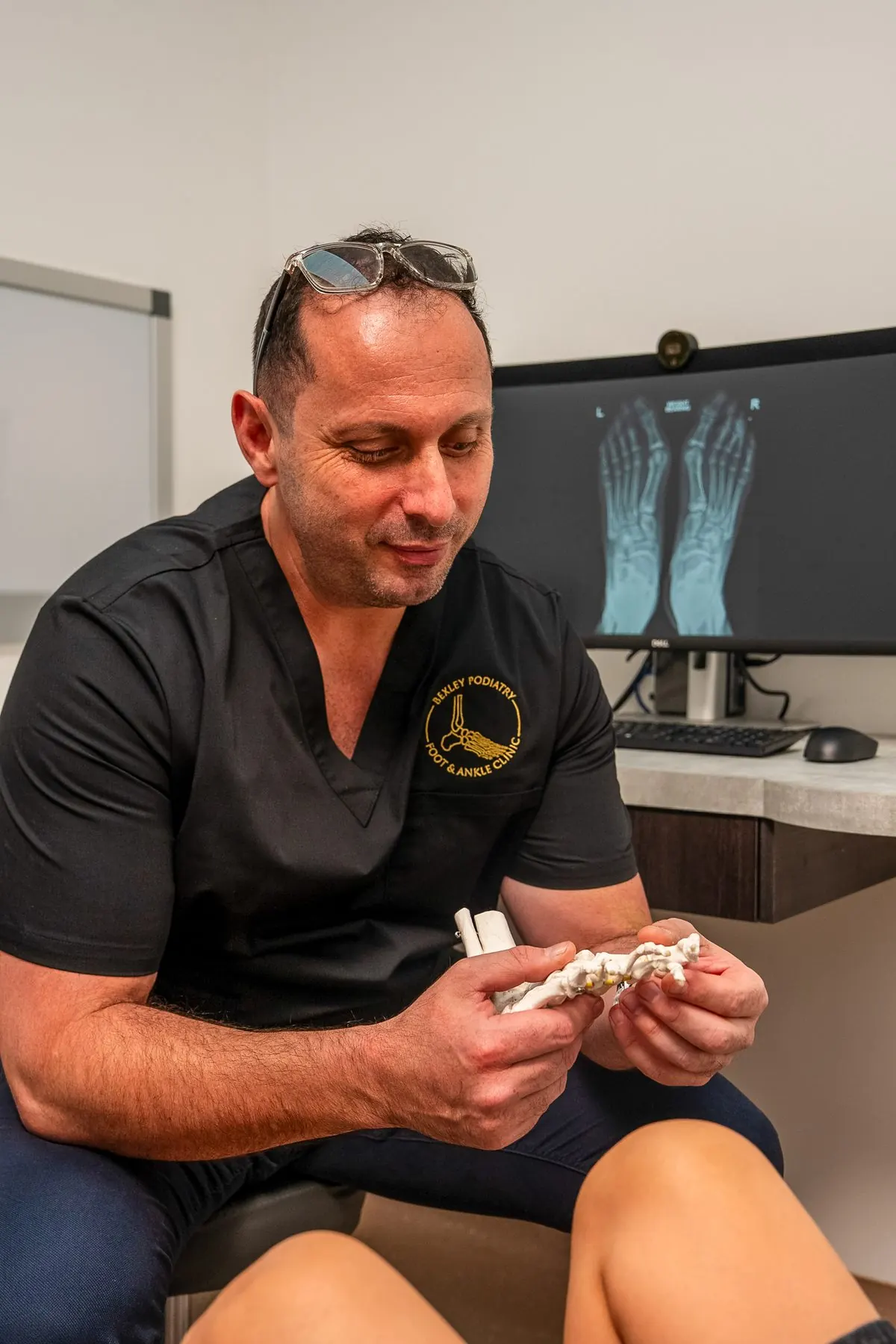
Achilles Care for Active Feet Across St George
Whether you run the Cooks River path or chase kids around the backyard, a sore Achilles slows everything down. Bexley Podiatry: Foot and Ankle Clinic at 390 Forest Rd, Bexley, treats Achilles tendinopathy for patients from Arncliffe, Brighton-Le-Sands, Rockdale and beyond. Call 1300 345 226 to get it assessed.
Related conditions
Peroneal Tendon Disorders
Pain along the outer ankle from the peroneal tendons - often mistaken for a simple sprain that will not settle.
Learn moreTendon Tears
A partial or complete tear of a foot or ankle tendon - accurately diagnosed with ultrasound and managed on its severity.
Learn moreHeel Pain
That first-step morning stab or a heel that aches by evening - assessed with in-clinic ultrasound and treated.
Learn moreRequest an appointment
Send a few details and our team will be in touch to arrange a time that suits you.
Visit the clinic
Bexley, NSW 2207