

Peroneal Tendon Disorder Treatment in Bexley
Pain running along the outer edge of your ankle and foot that has outlasted what a sprain should? The peroneal tendons are often the overlooked culprit - and getting the diagnosis right is the key to settling it.
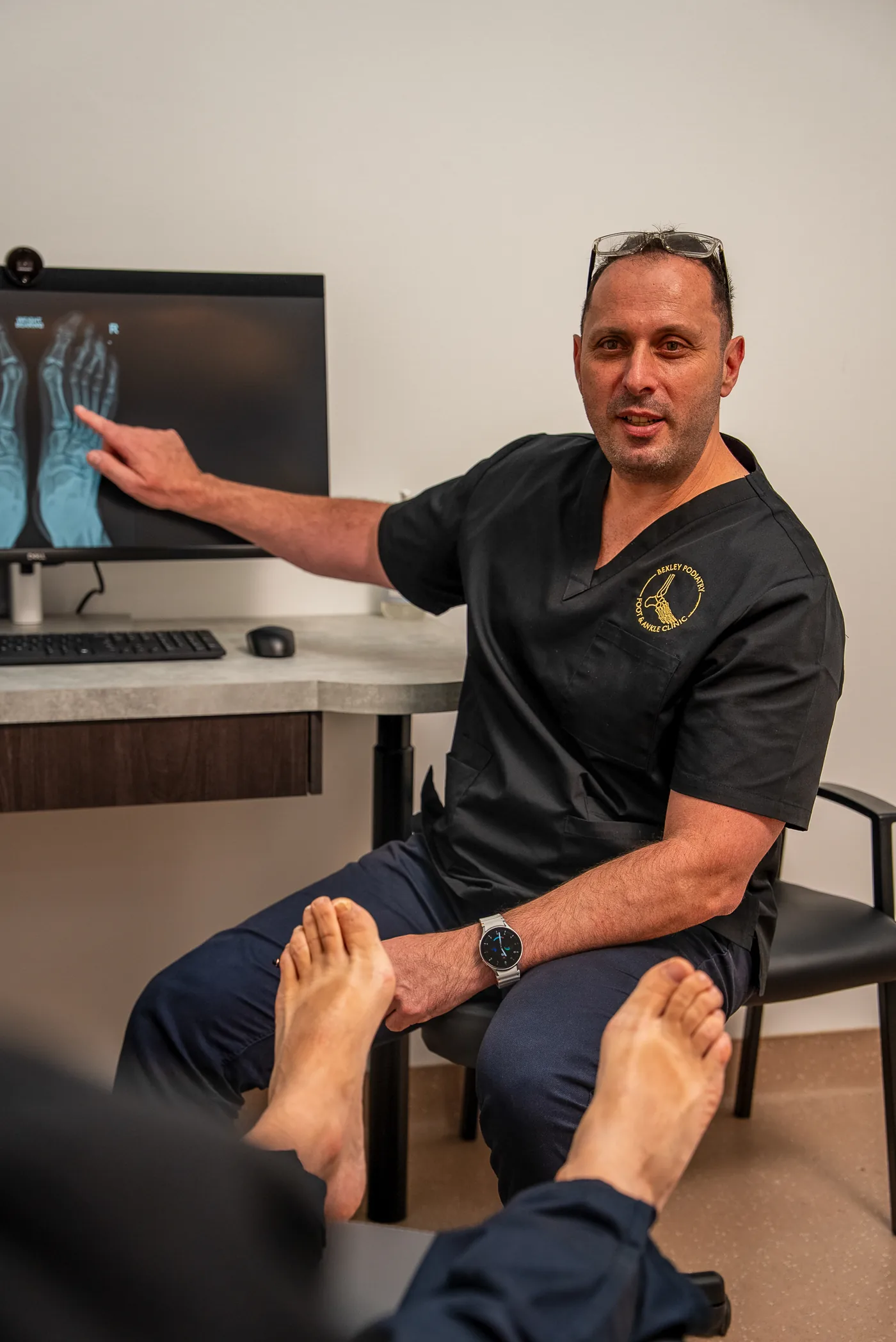
- In-clinic diagnostic ultrasound
- Graded tendon loading
- Bracing and orthotic support
- 60+Years Combined Experience
- 4.9Google Rating (250+)
- Podiatric surgical registrar on team
- Endorsed for Scheduled Medicines
What the Peroneal Tendons Do
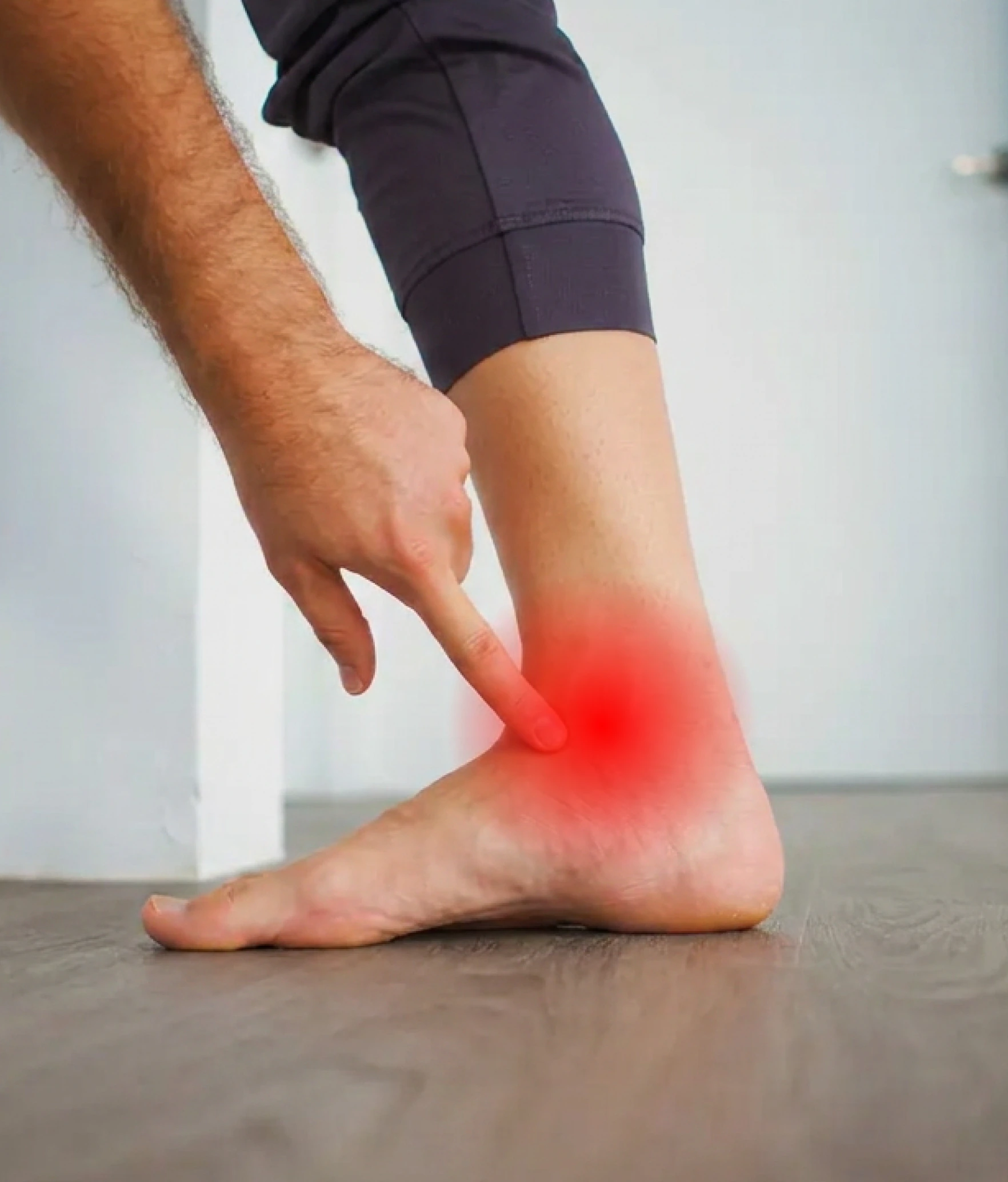
The peroneal tendons are two tendons - peroneus longus and peroneus brevis - that run down the outside of the lower leg, curve behind the bony bump on the outer ankle, and help stabilise the ankle while turning the foot outward. They are central to keeping your ankle steady on uneven ground, which is why problems here so often follow ankle sprains.
Peroneal tendon disorders cover a range: tendinopathy, where the tendon becomes overloaded and degenerative; tenosynovitis, where the sheath around the tendons is inflamed; tears, usually longitudinal splits in the brevis tendon; and subluxation, where the tendons slip forward over the outer ankle bone. Because the symptoms overlap with a lingering sprain, these disorders are frequently missed - which is exactly why persistent outer-ankle pain deserves a proper look.
Why They Become a Problem
Peroneal tendon trouble usually stems from overload, instability or injury. Common contributors include:
Previous ankle sprains
past sprains that strained the tendons or left the ankle unstable
Ankle instability
a repeatedly rolling ankle that keeps overloading the peroneals
High-arched feet
a foot posture that tips extra load onto the outer ankle
Training spikes
a rapid increase in running or activity on uneven surfaces
Unsupportive footwear
shoes that fail to control the outer ankle during activity
Symptoms to Watch For
Outer-ankle pain
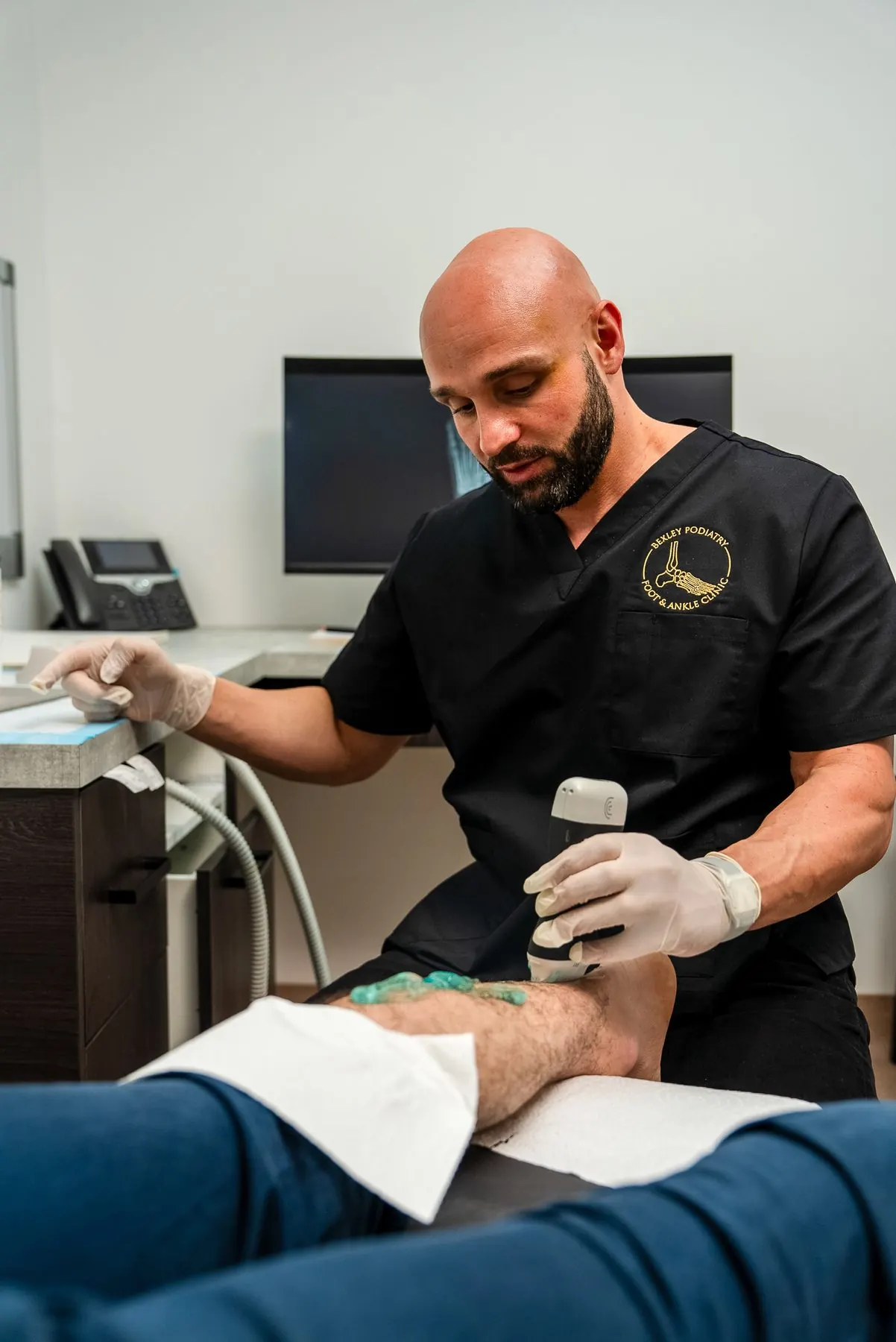
Pain and tenderness along the outer ankle and foot, behind the bony bump.
Swelling
Puffiness along the line of the tendons.
Instability
A sense the ankle is weak or rolling, especially on uneven ground.
Snapping sensation
A snapping or clicking over the outer ankle if the tendons are subluxing.
Worse with activity
Pain that builds with walking, running or side-to-side movement.
How We Assess It
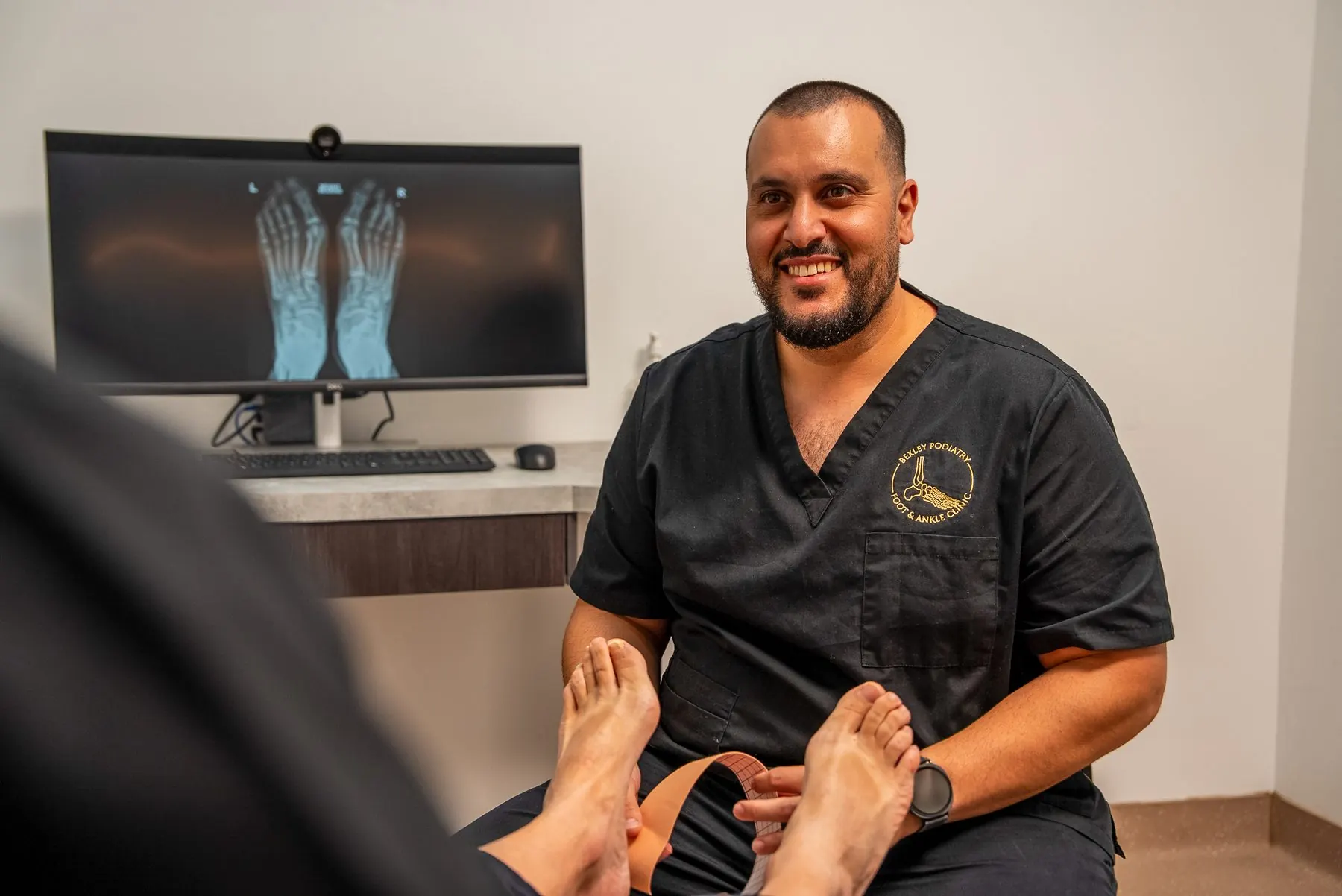
Assessment aims to identify which tendon and which problem is involved, and to separate it from a simple sprain or ankle instability. It usually includes:
Clinical examination
palpating and load-testing the tendons and checking for subluxation.
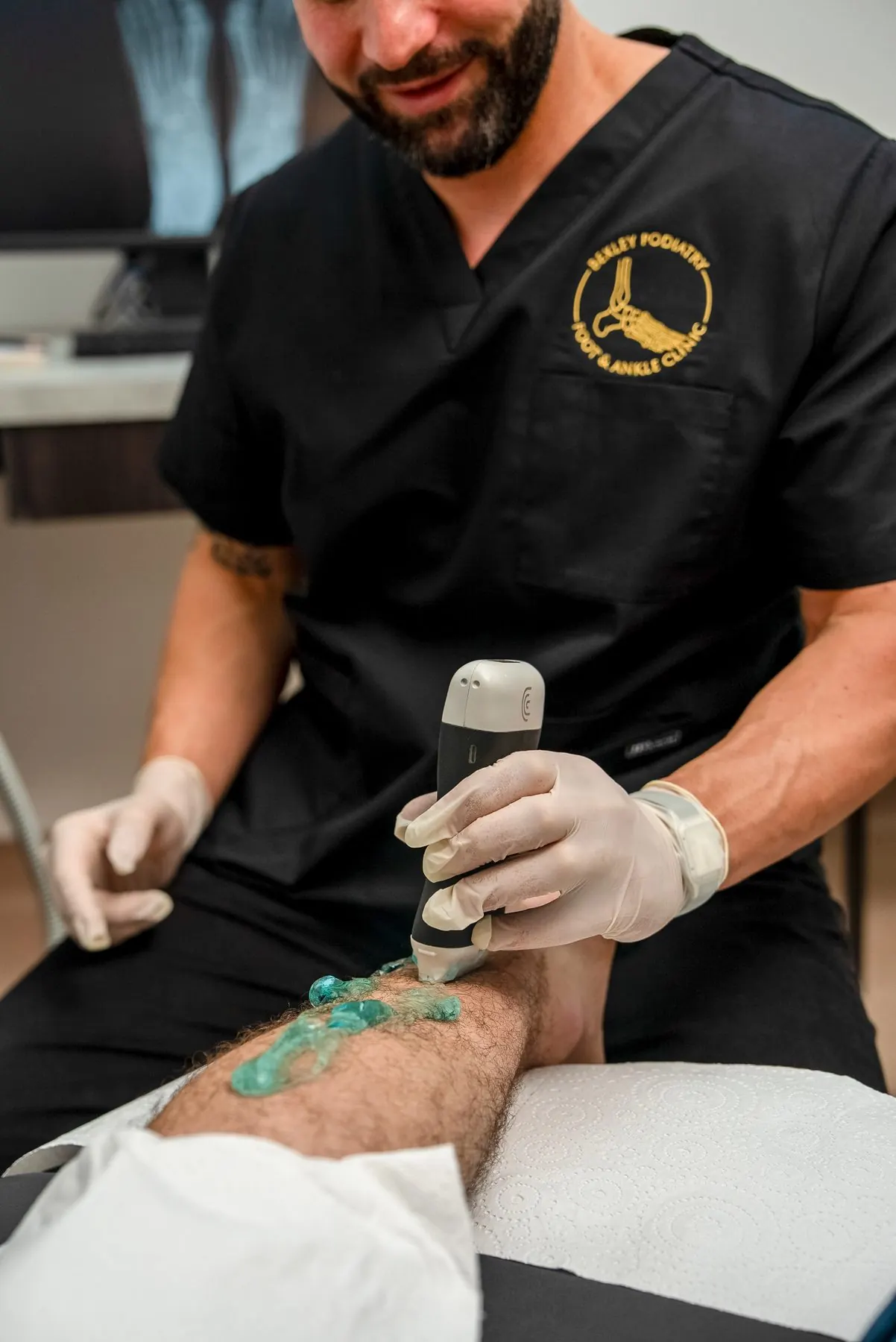
In-clinic diagnostic ultrasound
imaging the tendons dynamically to detect tears, inflammation and slipping in real time.
Ankle stability testing
assessing whether underlying instability is driving the overload.
MRI referral
where a significant tear or complex pathology needs clarifying.
Conservative Management
Many peroneal tendon problems settle with load management, targeted strengthening and support - the same principles that stabilise the ankle overall. Your plan may include:
- Activity modification - reducing aggravating load while the tendon settles, without full rest
- Progressive strengthening - rebuilding peroneal strength and ankle control
- Bracing or taping - supporting the outer ankle during recovery and activity
- Custom orthotic therapy - correcting a high-arched or outward-tilted foot that overloads the tendons
- Shockwave therapy - on site, for stubborn degenerative tendinopathy
- Footwear advice - choosing stable shoes that control the outer ankle
Tendinopathy and tenosynovitis often respond over several months of consistent loading and support. Recurrent subluxation or a significant tear may need more.
When Symptoms Persist
If conservative care has not resolved the problem - particularly with a significant tendon tear or recurrent subluxation - advanced options are considered. Our podiatric surgical registrar can review persistent peroneal tendon disorders, and where surgical repair or stabilisation is warranted the case is referred to an appropriate surgical specialist. We continue managing your rehabilitation alongside.
Peroneal Tendon Disorders FAQs
Why does my ankle still hurt months after a sprain?
Persistent outer-ankle pain after a sprain is often a peroneal tendon problem rather than the ligaments. A sprain can injure the tendons too, and if that is missed the pain lingers. In-clinic ultrasound lets us look directly at the tendons to find out.
What is that snapping feeling on the outside of my ankle?
A snapping or clicking over the outer ankle bone can mean the peroneal tendons are subluxing - slipping out of their normal groove. It is worth assessing, because recurrent subluxation can damage the tendons over time.
Can peroneal tendon pain be treated without surgery?
In most cases, yes. Tendinopathy and inflammation usually respond to load management, strengthening and support. Surgery is reserved for significant tears or recurrent subluxation that has not responded to conservative care.
Is peroneal tendon pain linked to my rolling ankle?
Very often, yes. Ankle instability and peroneal tendon overload feed each other, so we assess and treat both together. Restoring ankle stability takes load off the tendons and helps them settle.
Outer-Ankle Pain Assessed in Bexley
If the outside of your ankle has been sore for longer than a sprain should last, it is worth a closer look. Bexley Podiatry: Foot and Ankle Clinic, 390 Forest Rd, Bexley, treats peroneal tendon disorders for patients from Rockdale, Brighton-Le-Sands, Arncliffe and across southern Sydney. Call 1300 345 226 to book.
Related conditions
Ankle Instability
An ankle that keeps rolling or gives way - usually the legacy of sprains that never fully rehabilitated.
Learn moreAchilles Tendinopathy
Pain and stiffness in the tendon at the back of the heel - managed with graded loading, not rest alone.
Learn moreTendon Tears
A partial or complete tear of a foot or ankle tendon - accurately diagnosed with ultrasound and managed on its severity.
Learn moreRequest an appointment
Send a few details and our team will be in touch to arrange a time that suits you.
Visit the clinic
Bexley, NSW 2207