

Diabetic Foot Care in Bexley
Diabetes changes what your feet need, because reduced sensation and circulation can turn a small problem into a serious one. The reassuring news is that the great majority of diabetic foot complications are preventable with regular care and early attention.
- High-risk foot assessment
- Wound care and offloading
- NDIS registered, bulk billing for eligible EPC patients
- 60+Years Combined Experience
- 4.9Google Rating (250+)
- Podiatric surgical registrar on team
- Endorsed for Scheduled Medicines
Why the Diabetic Foot Needs Special Care
Diabetes affects the feet in two important ways that, together, make even minor problems potentially serious. Over time, high blood glucose can damage the nerves in the feet, a condition called peripheral neuropathy, reducing your ability to feel pain, pressure and temperature. It can also narrow and damage the blood vessels, a condition called peripheral arterial disease, reducing the blood flow that wounds need to heal.
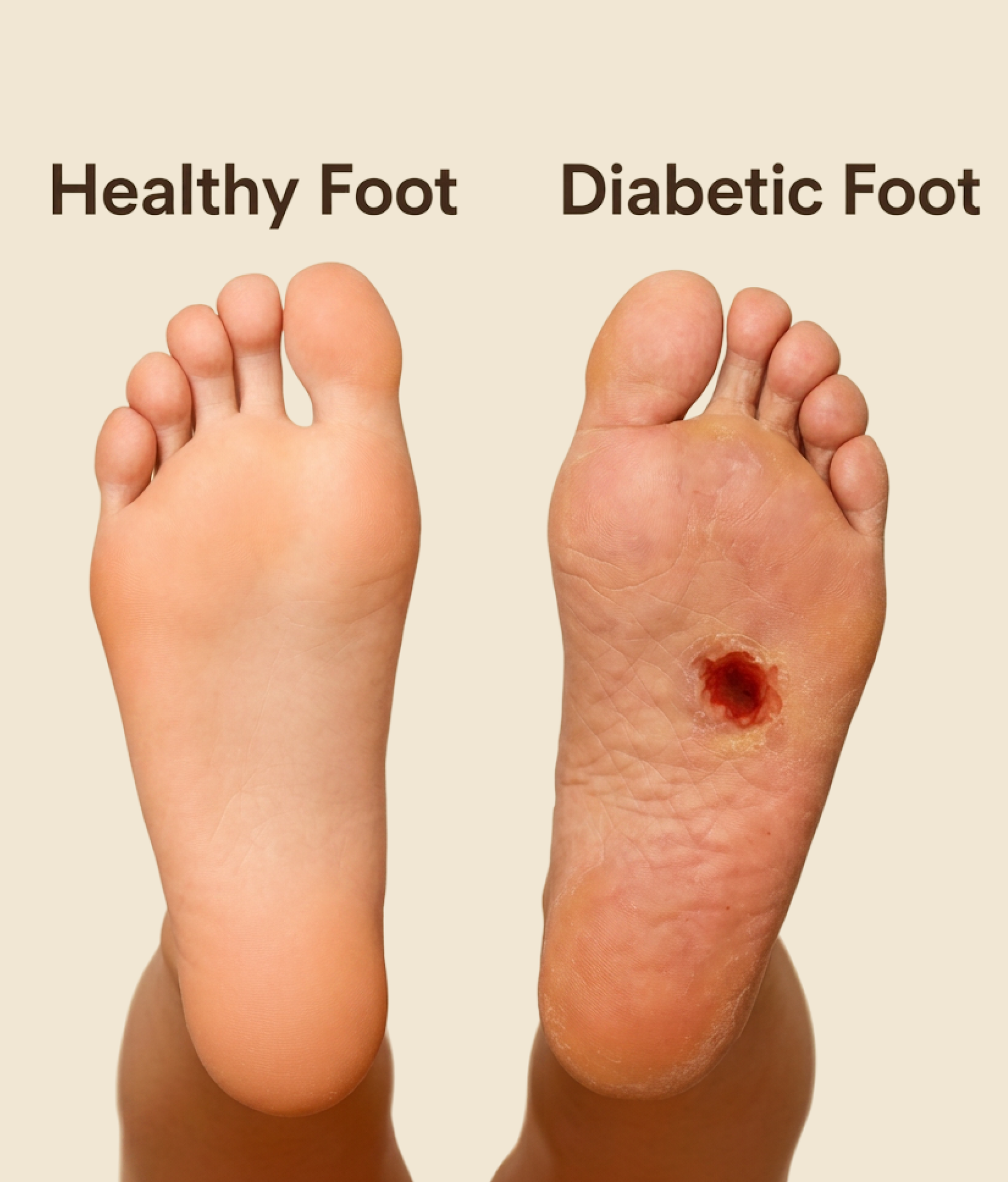
The consequence is that a small injury, blister, corn or cut may go unnoticed because it is not felt, and then heal poorly because of reduced circulation. Left unchecked, it can progress to an ulcer and, in severe cases, a deep infection. In Australia, diabetes-related foot complications remain a leading cause of non-traumatic lower-limb amputation - yet the overwhelming majority are preventable. Regular, structured foot care is one of the most effective ways to protect your feet and your mobility.
Understanding Your Risk
Several factors raise the risk to a diabetic foot, and knowing your risk level guides how often you should be reviewed:
Peripheral neuropathy
reduced sensation, so injuries are not felt and go unaddressed
Peripheral arterial disease
reduced blood flow that impairs healing
Reduced immunity
a higher chance of infection that is harder to control
Foot deformity
bunions, hammer toes and prominences that create pressure points
Previous ulcer or amputation
a strong predictor of future problems, requiring close monitoring
Warning Signs to Act On
Because a diabetic foot problem may not hurt, regular visual checks are essential, and anything unusual should be assessed promptly rather than watched. Seek care if you notice:
Any open wound
A sore, blister or break in the skin, particularly on the sole or over a bony area.
Callus with dark tissue
A corn or callus with dark or soft tissue beneath it.
Redness, warmth or swelling
Signs of inflammation or infection around any area of the foot.
Discharge or odour
Any weeping or unusual smell from the foot.
Discoloured skin
Blackened or discoloured skin, which needs urgent attention.

The Diabetic Foot Assessment
A diabetic foot assessment establishes your risk level and catches problems early, and everyone with diabetes should have one regularly. At Bexley Podiatry: Foot and Ankle Clinic it includes:
Neurological testing
checking sensation with monofilament and vibration tests to detect neuropathy.
Vascular assessment
checking pulses and blood flow, including Doppler where needed.
Structure and pressure review
identifying deformities and pressure points that could break down.
Skin and nail care
safely managing callus, corns and nails that could otherwise cause injury.
Footwear review
checking that footwear is protecting rather than harming the feet.
Medical coordination
liaising with your GP, endocrinologist or the relevant specialists where needed.
Prevention and Ongoing Care
For the diabetic foot, prevention is the priority, and regular podiatry care is central to it. Ongoing care may include:
- Regular foot review - scheduled checks at an interval matched to your risk level
- Skin and nail care - safe, professional management of callus, corns and nails to prevent injury
- Pressure offloading - orthotic therapy and appropriate footwear to reduce high-pressure areas
- Footwear advice - guidance on protective, well-fitting footwear
- Education - how to inspect your feet daily and recognise early warning signs
- Glucose management support - working with your GP or endocrinologist, since blood glucose strongly affects foot health

The frequency of review depends on your risk. Lower-risk feet may be checked annually, while feet with neuropathy, poor circulation or a history of ulceration need much closer monitoring. We are NDIS registered, and bulk billing is available for eligible patients on a GP care plan.
Wound Care and Escalation
If an ulcer or wound develops, prompt, structured care gives the best chance of healing - and diabetic foot wounds do not follow the usual wait-and-see approach. Treatment includes regular debridement, appropriate dressings, offloading pressure from the wound, and managing infection. Where a wound is deep, infected, involves bone, or fails to heal, care is escalated urgently - our podiatric surgical registrar can assist with in-clinic procedures, and we maintain strong referral links with vascular, infectious diseases and surgical specialists for cases that need them.
Diabetic Foot FAQs
How often should I have my diabetic feet checked?
It depends on your risk level. Lower-risk feet are generally reviewed once a year, while feet with neuropathy, poor circulation or a past ulcer need more frequent checks - sometimes every few weeks. Your assessment sets the right interval for you.
My foot problem does not hurt - does that mean it is fine?
Not necessarily, and this is the crucial point with diabetes. Reduced sensation from neuropathy means a serious problem may not be painful at all. A painless wound, callus or infection still needs assessment - lack of pain is not a sign that all is well.
Can I treat corns and calluses myself if I have diabetes?
We strongly advise against self-cutting or using over-the-counter acid products if you have diabetes, as they can cause a wound that heals poorly. Callus can also hide a developing ulcer. Regular professional care is far safer and helps catch problems early.
Are diabetic foot complications really preventable?
The great majority are. Regular podiatry review, daily home foot checks, protective footwear, prompt attention to any change, and good blood glucose management together prevent most complications. Consistent care is genuinely protective for your feet and your mobility.
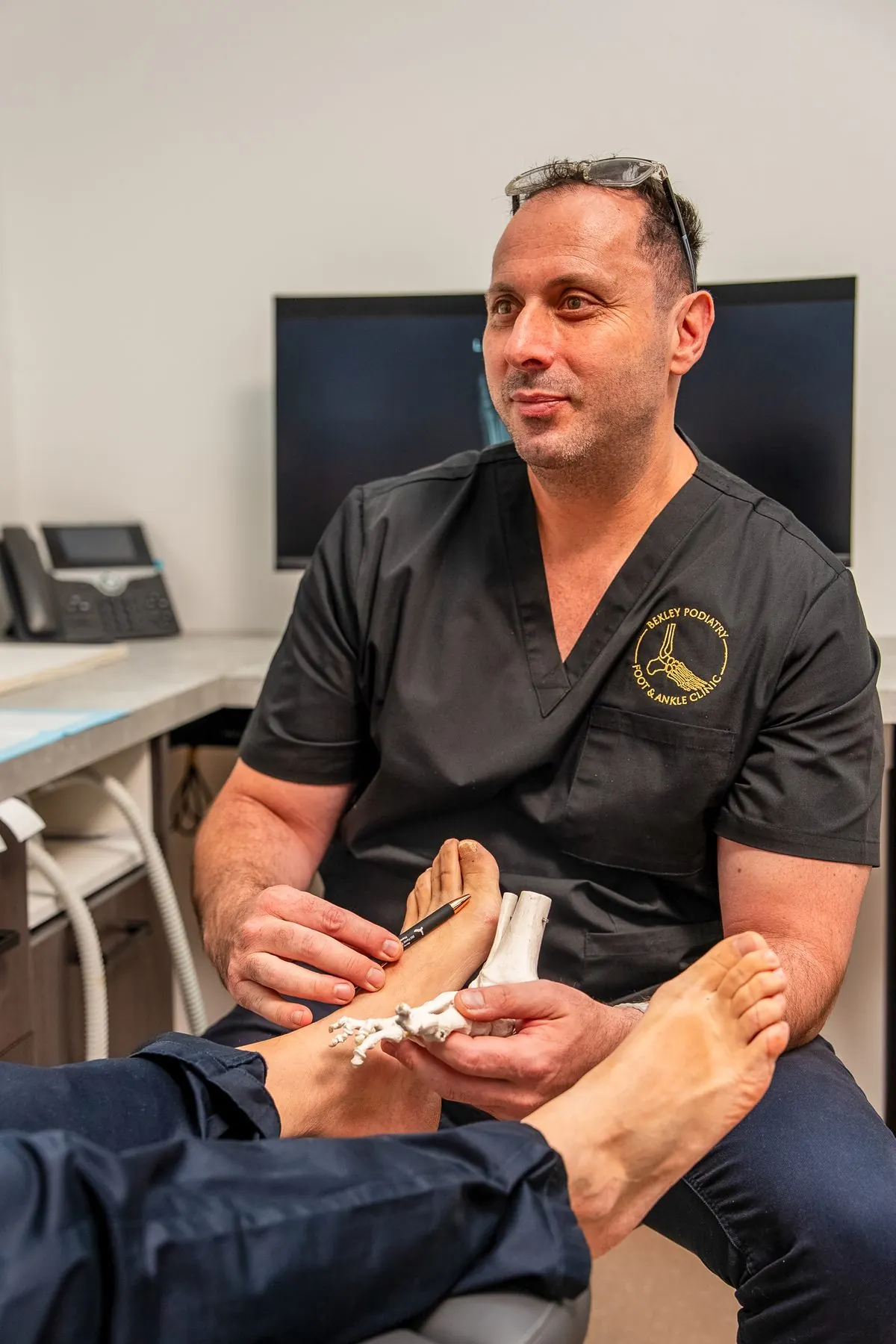
Protect Your Feet - Diabetic Foot Care in Bexley
If you have diabetes and it has been a while since your last foot check, now is the time. Bexley Podiatry: Foot and Ankle Clinic, 390 Forest Rd, Bexley, provides diabetic foot care for patients from Rockdale, Kogarah, Hurstville, Beverly Hills and across the St George area. We are NDIS registered with bulk billing for eligible EPC patients. Call 1300 345 226 to book a diabetic foot assessment.
Related conditions
Cracked Heels
Dry, splitting skin around the heel - relieved professionally and prevented, and taken seriously in diabetes.
Learn moreFungal Nails
Thick, discoloured, crumbly toenails from a fungal infection - confirmed by testing and treated properly.
Learn moreIngrown Toenails
A nail edge digging into the skin - relieved conservatively, or fixed for good with a minor in-clinic procedure.
Learn moreRequest an appointment
Send a few details and our team will be in touch to arrange a time that suits you.
Visit the clinic
Bexley, NSW 2207