

Hallux Rigidus Treatment in Bexley
A big-toe joint that has become stiff and painful, especially when you push off or bend it back? Hallux rigidus is arthritis of that joint - and while it does not reverse, the right care can ease the pain, protect movement and keep you walking comfortably.
- Weight-bearing X-ray review
- Stiffening orthotic therapy
- Surgical assessment when needed
- 60+Years Combined Experience
- 4.9Google Rating (250+)
- Podiatric surgical registrar on team
- Endorsed for Scheduled Medicines
What Hallux Rigidus Is
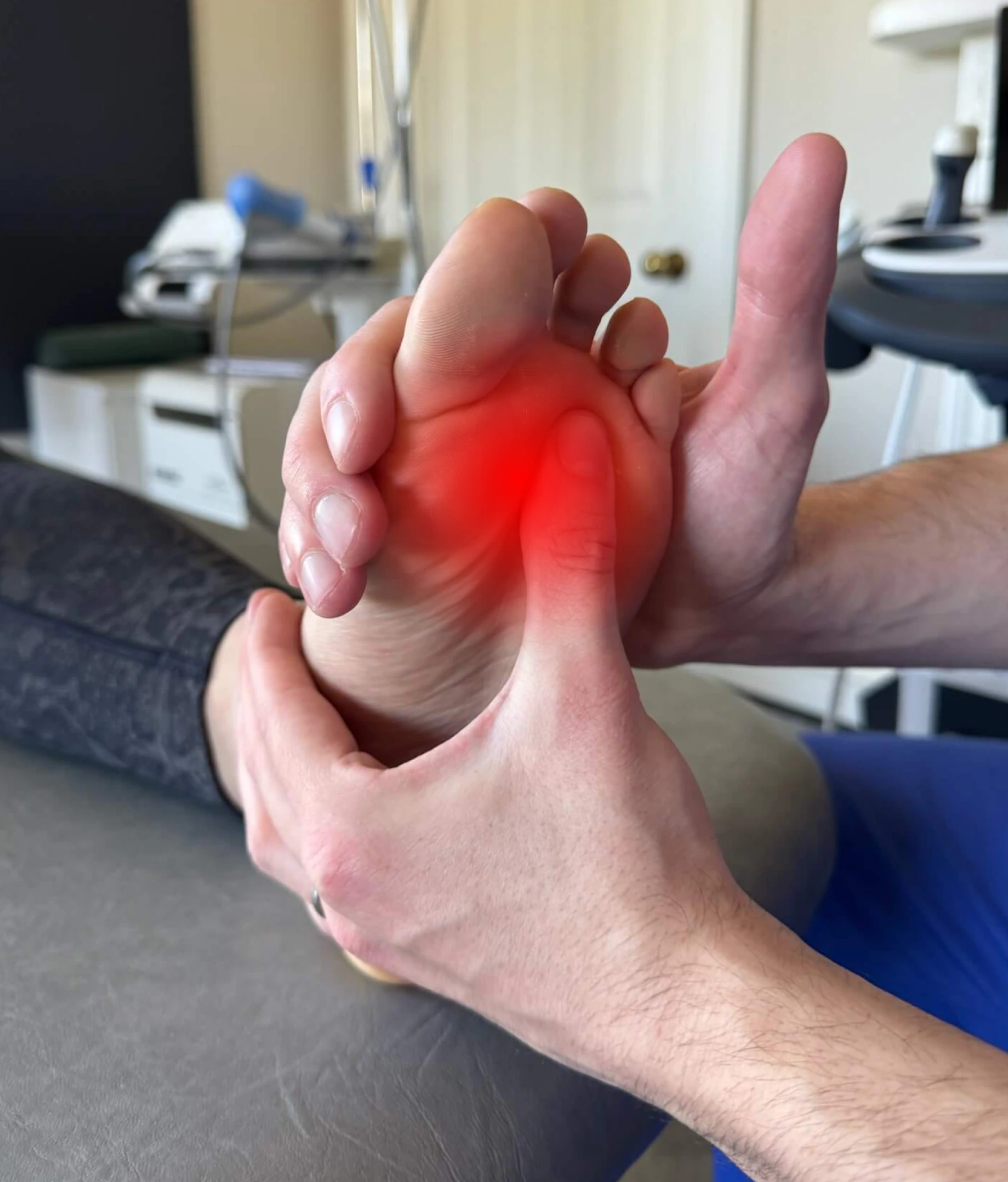
Hallux rigidus is osteoarthritis of the joint at the base of the big toe - the same joint affected by bunions, but here the problem is joint wear rather than deviation. The name means stiff big toe, which captures the hallmark of the condition: the joint gradually loses its ability to bend, particularly to bend upward, which is exactly the movement you need every time you push off to walk.
It usually begins as hallux limitus, where movement is reduced and painful but still present, and can progress to hallux rigidus, where the joint becomes very stiff or effectively fused by arthritic change. As the cartilage wears and bony spurs form around the joint, walking, squatting and wearing certain shoes become increasingly uncomfortable. Catching it early gives the best chance of preserving what movement remains.
Why It Develops
Hallux rigidus develops when the big-toe joint wears or is overloaded. Contributing factors include:
Past injury
an old stubbed toe, fracture or repeated minor trauma to the joint
Foot mechanics
foot structure that places excess load or jamming on the joint
Family history
an inherited foot type predisposing to joint wear
Inflammatory arthritis
conditions such as gout or rheumatoid arthritis affecting the joint
Repetitive loading
activities and occupations that repeatedly stress the big-toe joint
Signs and Symptoms
Stiffness
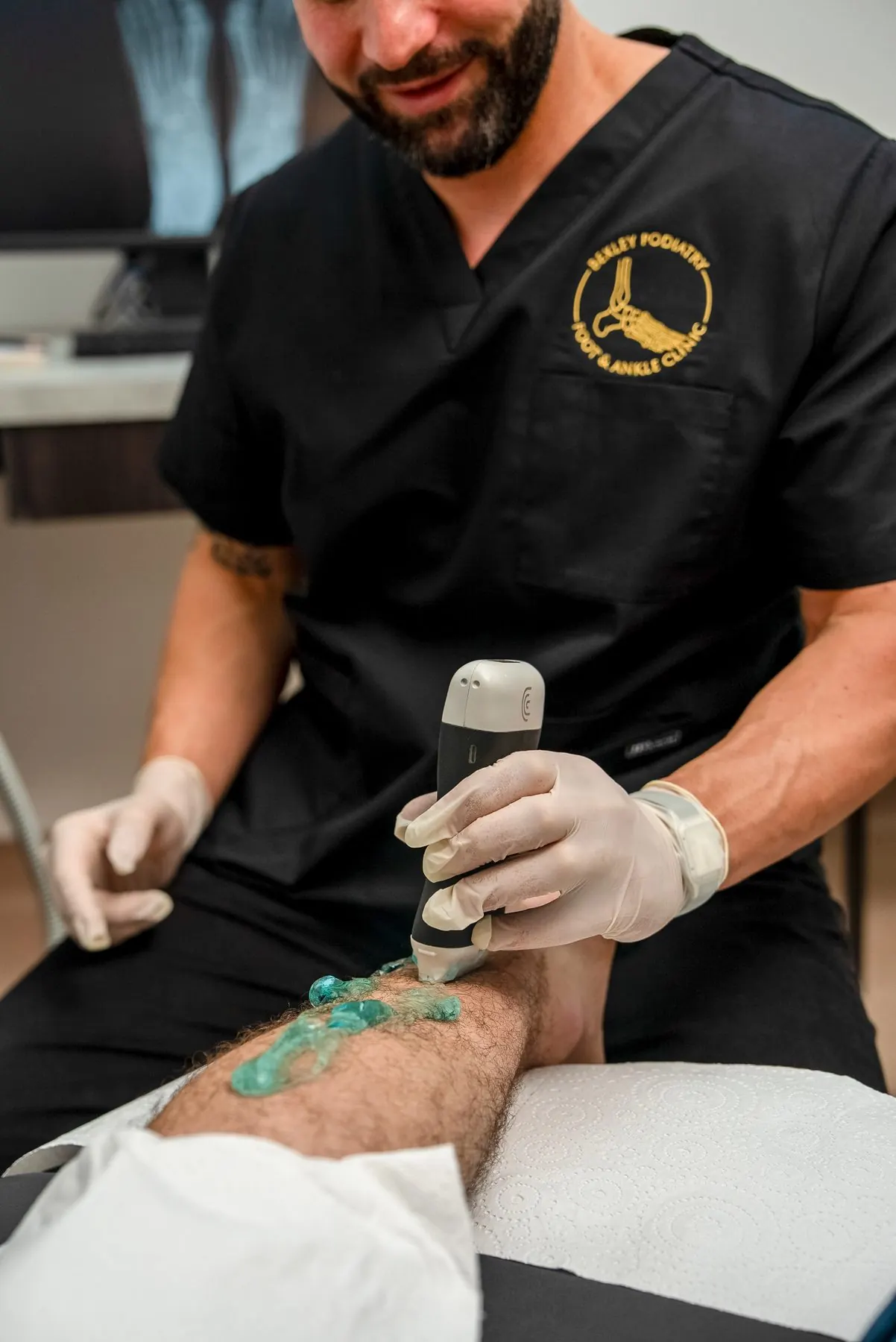
Reduced ability to bend the big toe, especially upward.
Pain on push-off
Pain in the joint when walking, squatting or pushing off.
A bony bump
A lump on top of the joint from arthritic spurs, which can rub in shoes.
Swelling
Intermittent swelling and inflammation around the joint.
Altered walking
Rolling onto the outside of the foot to avoid bending the toe, straining other areas.
How We Assess It
Assessment gauges how much movement and cartilage remain, which guides whether the focus is preserving the joint or planning around its stiffness. It typically includes:
Joint examination
measuring the range of movement and locating the pain and spurs.
Gait assessment
seeing how you compensate for the stiff joint when walking.
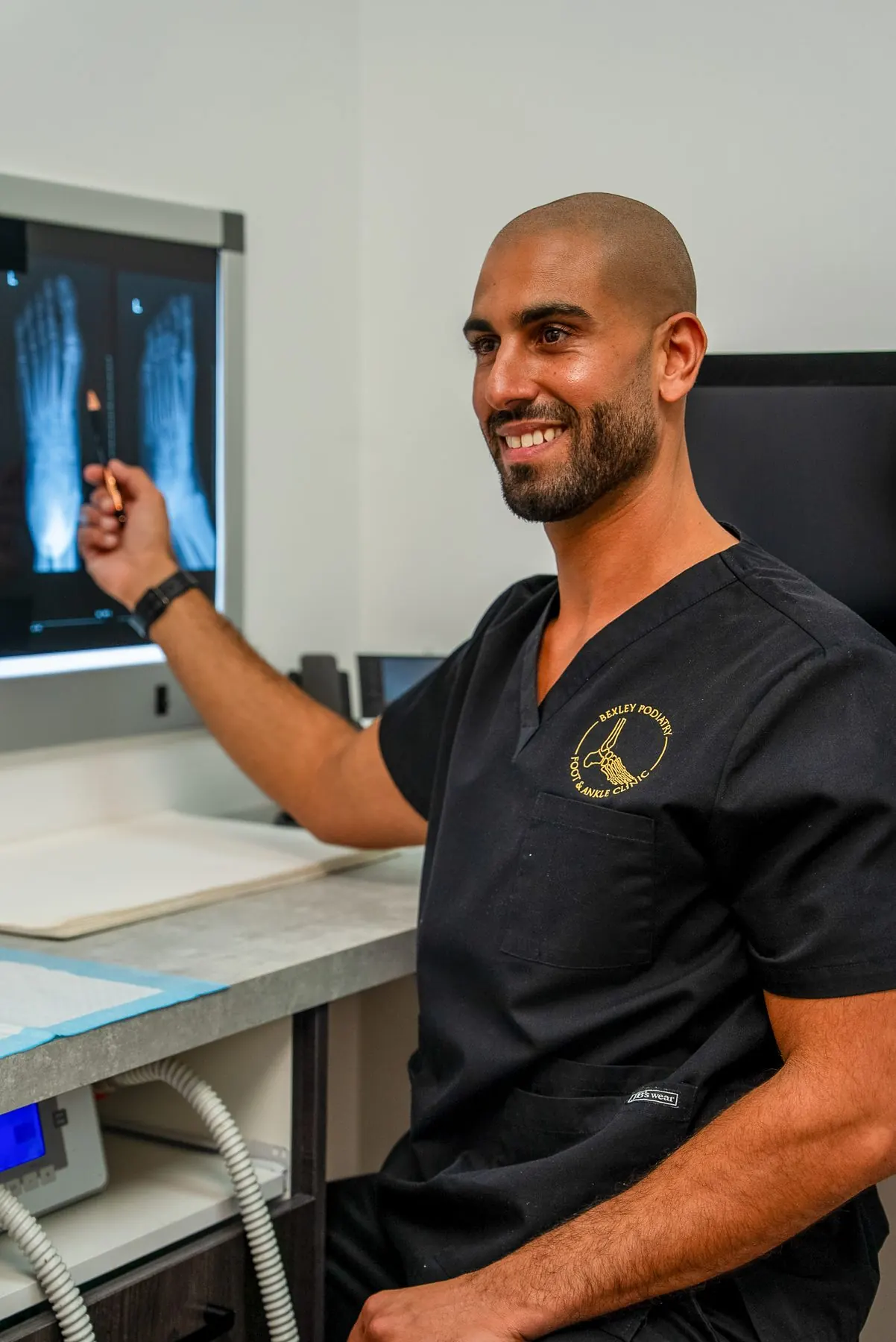
Weight-bearing X-ray review
grading the degree of arthritis and spur formation, which shapes the plan.
Conservative Management
Conservative care aims to reduce the pain, limit the jarring of the joint and keep you comfortable, especially in the earlier stages. Your plan may include:
- Stiffening orthotic therapy - a device or plate that limits painful bending of the joint during push-off
- Rocker-sole footwear - shoes with a stiff, rocker sole that reduce how much the toe has to bend
- Activity modification - adjusting activities that jam or overload the joint
- Joint mobilisation and exercises - maintaining movement in the earlier stages
- Injection therapy - an injection to settle a painful flare where appropriate
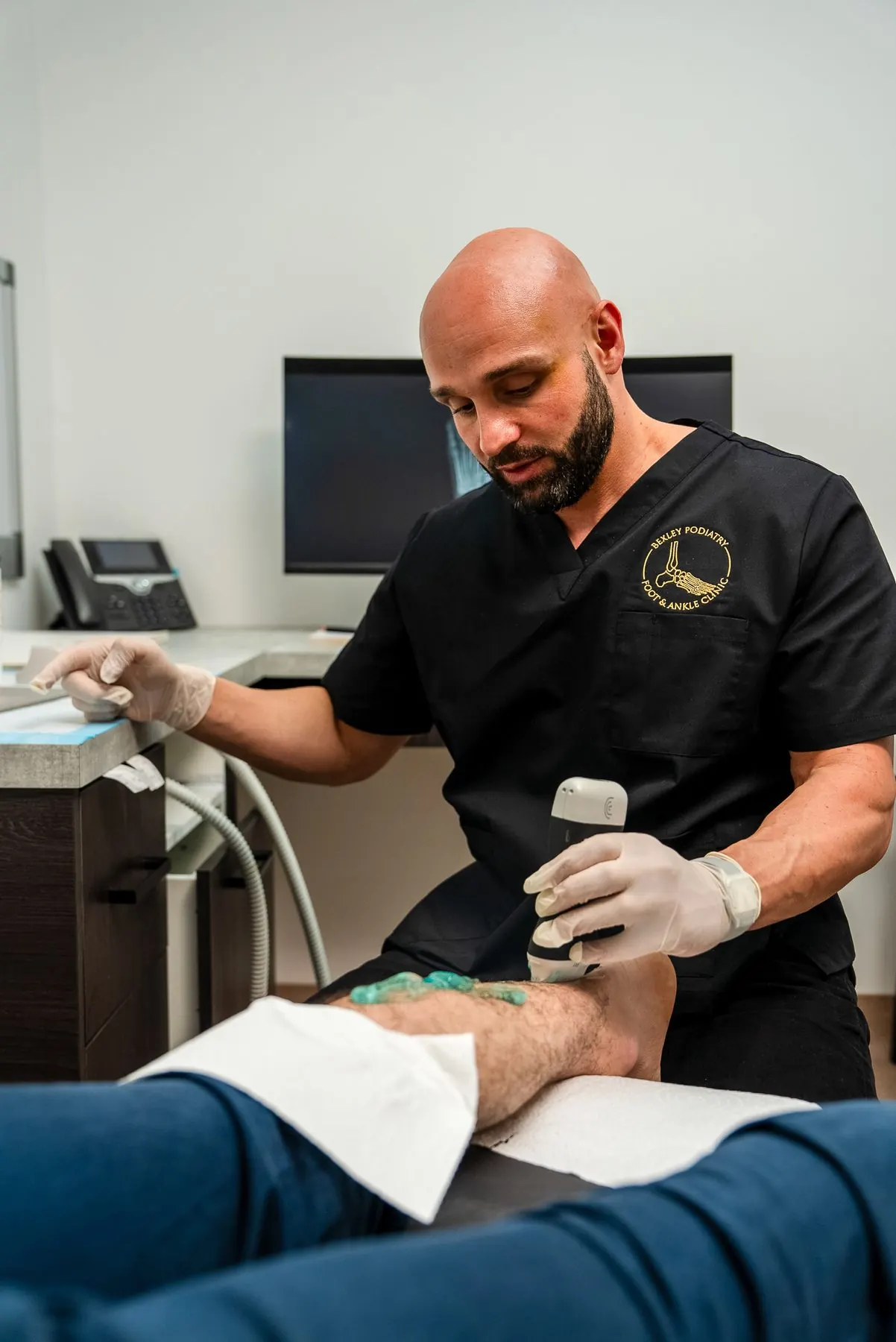
Conservative care manages symptoms well in earlier hallux limitus, but it cannot reverse the arthritis. As the joint stiffens further, the focus shifts to offloading and footwear.
When Surgery Is Considered
When the joint is significantly arthritic and painful despite good conservative care, surgical options may be considered - ranging from cleaning up the spurs to preserve movement, through to procedures that address the worn joint itself. Our podiatric surgical registrar can assess which approach suits your stage and needs, and complex cases are referred to an appropriate surgical specialist.
Hallux Rigidus FAQs
Is hallux rigidus the same as a bunion?
No, though they affect the same joint. A bunion is a change in alignment where the toe deviates sideways, whereas hallux rigidus is arthritis of the joint causing stiffness and pain. They can coexist, and the distinction matters because they are managed differently.
Can the stiffness be reversed?
Unfortunately not - the arthritis and lost cartilage do not regrow. However, the pain can be managed well, and stiff-soled footwear and orthotics that limit painful bending keep many people comfortable and active for a long time without surgery.
Why does my big toe hurt when I push off?
Push-off requires the big-toe joint to bend upward, and in hallux rigidus that movement is exactly what the arthritic joint struggles with. Footwear and orthotics that reduce how much the joint has to bend often relieve this pain considerably.
Will I need my big toe joint fused?
Not necessarily. Several surgical options exist depending on the stage, some of which preserve movement. Fusion is one option for advanced arthritis and, while it stiffens the joint, it is very effective at relieving pain. Our podiatric surgical registrar can talk through what suits your case.
Big-Toe Joint Care Across Bexley and St George
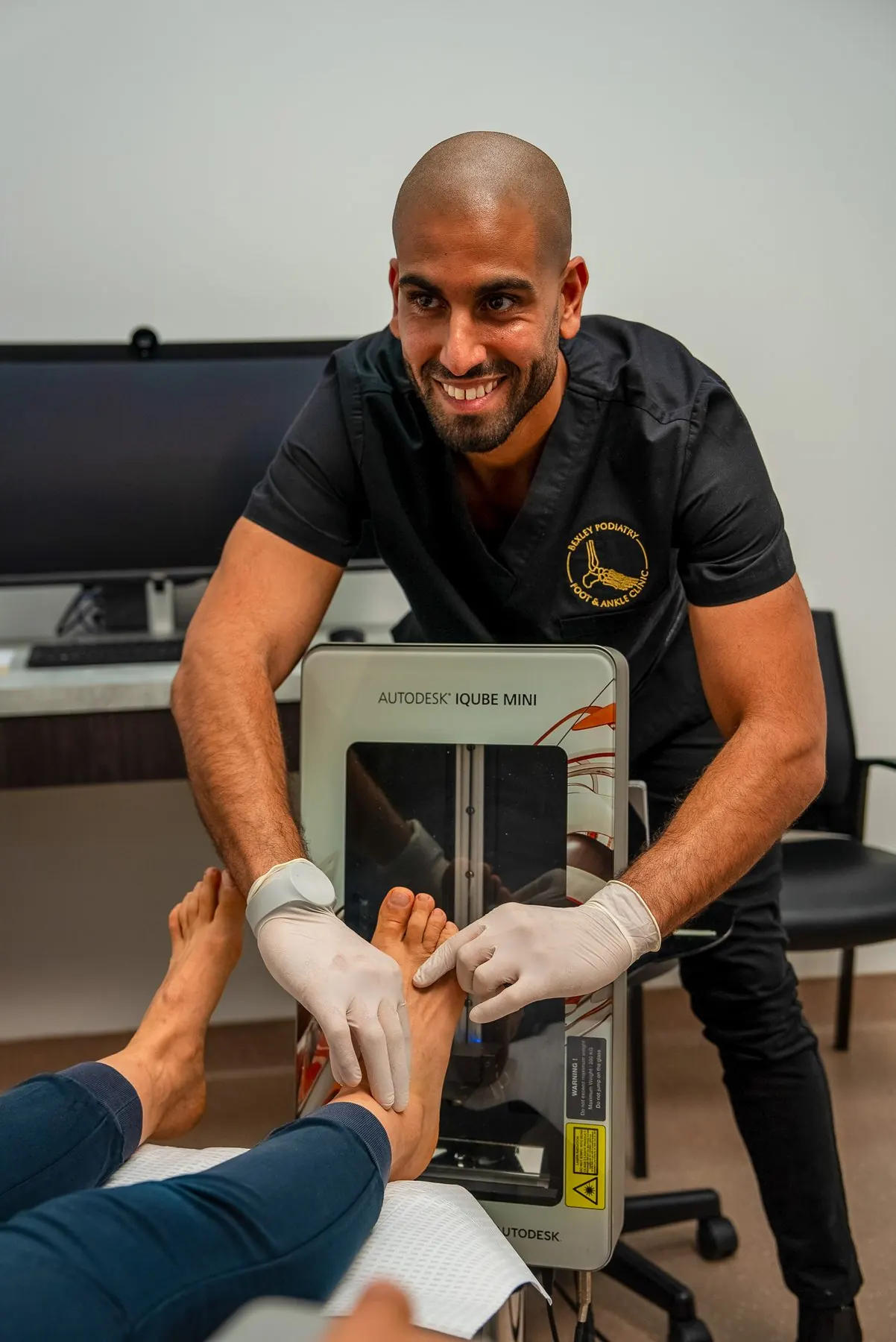
A stiff, painful big toe changes the way you walk and wears on the rest of your foot. Bexley Podiatry: Foot and Ankle Clinic, 390 Forest Rd, Bexley, treats hallux rigidus for patients from Hurstville, Kogarah, Carlton and the St George area, with surgical assessment available in-house. Call 1300 345 226 to book.
Related conditions
Bunions
A progressive big-toe-joint deformity - managed early to control pain and slow it, corrected surgically when needed.
Learn moreFoot & Ankle Arthritis
Wear or inflammation in the foot and ankle joints - managed to reduce pain, protect joints and keep you moving.
Learn moreHammer Toes
Toes that buckle into a bent position - managed to keep them flexible and comfortable, corrected surgically if fixed.
Learn moreRequest an appointment
Send a few details and our team will be in touch to arrange a time that suits you.
Visit the clinic
Bexley, NSW 2207