

Tendon Tear Treatment in Bexley
A sudden sharp pain, a pop, or unexpected weakness in a foot or ankle tendon? Tendon tears range from small partial tears to complete ruptures - and getting an accurate diagnosis quickly is what shapes the right treatment and recovery.
- In-clinic diagnostic ultrasound
- Accurate tear grading
- Surgical referral when needed
- 60+Years Combined Experience
- 4.9Google Rating (250+)
- Podiatric surgical registrar on team
- Endorsed for Scheduled Medicines
Understanding Tendon Tears
A tendon tear is a disruption of the fibres of a tendon - the strong cords that connect muscle to bone and transmit the force that moves your foot and ankle. Tears range from a partial tear, where some fibres are disrupted but the tendon remains in continuity, to a complete rupture, where the tendon separates entirely. The tendons most commonly affected in the foot and ankle include the Achilles at the back of the heel, the posterior tibial tendon on the inner ankle, and the peroneal tendons on the outer ankle.
Tears happen in two broad ways. An acute tear results from a sudden force - often felt as a sharp pain, a pop, or the sensation of being kicked or struck. A degenerative tear develops gradually within a tendon already weakened by long-standing tendinopathy, sometimes without a dramatic moment. Distinguishing which tendon is involved and how severe the tear is matters greatly, because it drives whether the tendon is managed conservatively or needs surgical repair.

Causes and Risk Factors
Tendon tears result from force, degeneration or a combination of the two. Common contributors include:
Sudden force
an explosive push-off, awkward landing or direct blow that overloads the tendon
Pre-existing tendinopathy
a tendon already weakened and degenerative, which tears more easily
Age
reduced tendon quality and resilience with age
Medical factors
certain medications and health conditions that weaken tendon tissue
Chronic overload
long-standing overuse and instability, particularly for the ankle tendons
Signs and Symptoms
Sudden pain or a pop
A sharp pain or audible pop at the moment of an acute tear.
Weakness
Loss of strength or the inability to push off, rise onto the toes or move the foot normally.
Swelling and bruising
Swelling, and sometimes bruising, around the affected tendon.
A gap or change in shape
A palpable gap or altered contour where a tendon has ruptured.
Altered function
A change in how the foot works, such as a collapsing arch with a posterior tibial tear.
How We Diagnose It
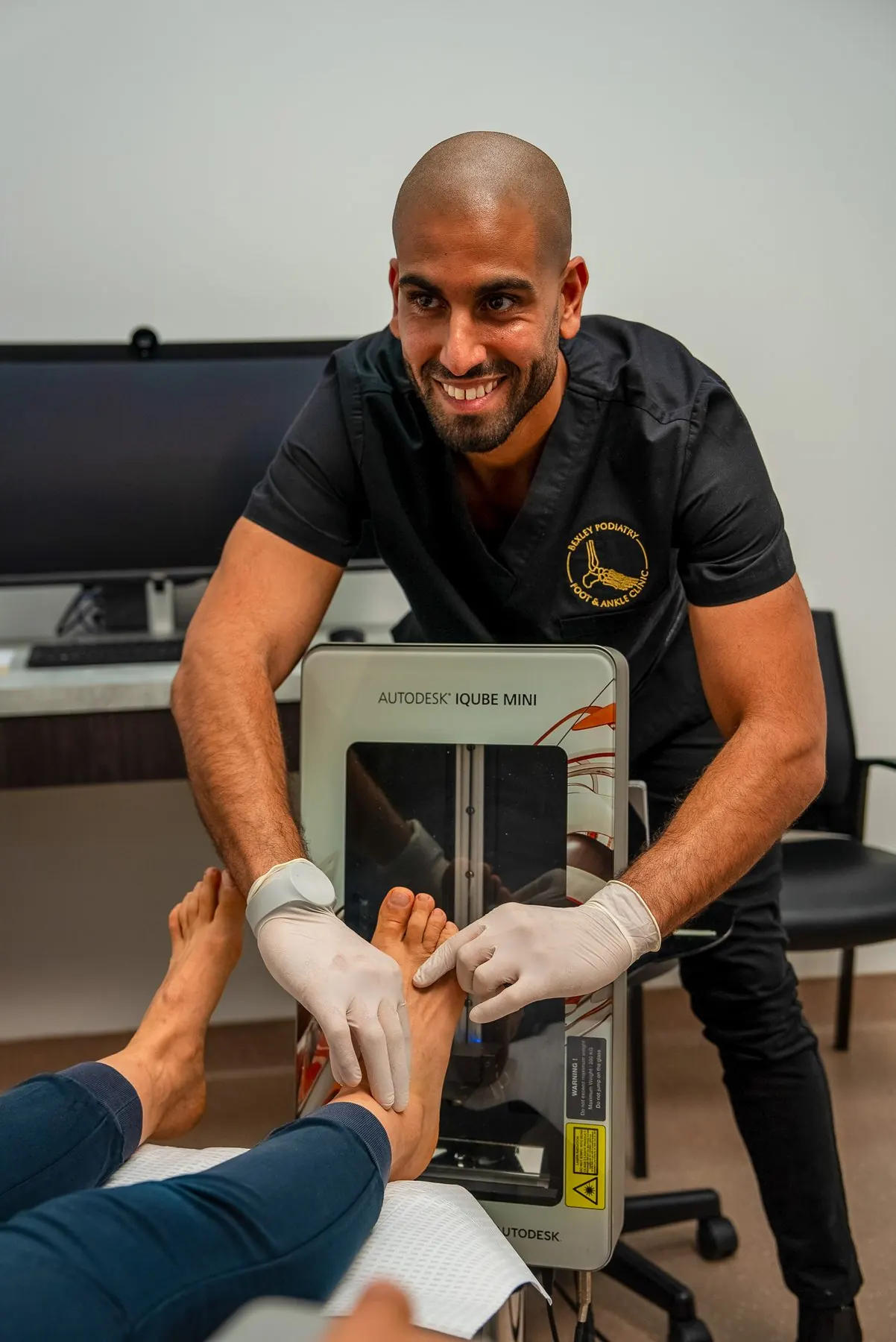
Accurate diagnosis - which tendon, and how much of it is torn - is the foundation of the treatment plan, and having ultrasound in the clinic means we can often assess it straight away. It typically includes:
Clinical examination
specific strength and function tests for each tendon to locate and gauge the tear.
In-clinic diagnostic ultrasound
imaging the tendon dynamically to distinguish a partial tear from a complete rupture in real time.
Injury history
understanding how the injury happened and any prior tendon problems.
MRI referral
where the extent of the tear or surgical planning needs further detail.
Conservative Management
Many partial tears, and some complete tears depending on the tendon and the person, are managed without surgery through protected healing and progressive rehabilitation. Conservative care may include:
- Immobilisation or bracing - protecting the tendon in a boot or brace to allow the fibres to heal
- Progressive loading - a staged rehabilitation programme rebuilding strength once healing allows
- Activity modification - managing load carefully through the healing and rebuilding phases
- Custom orthotic therapy - supporting the foot and offloading the healing tendon
- Shockwave therapy - on site, for degenerative tendon tissue where appropriate
- Return-to-activity progression - a graded plan back to full function to reduce the risk of re-tear

The right path depends heavily on which tendon, the size of the tear, and your goals and activity level. Prompt, accurate diagnosis is what allows the best decision to be made early.
When Surgery Is Considered
Complete ruptures and significant tears - particularly in active people, or where a tendon such as the posterior tibial is failing and the foot is deforming - are often best managed with surgical repair. Time can matter with certain tears, which is another reason for prompt assessment. Our podiatric surgical registrar can help coordinate care, and tendon repair is referred to an appropriate surgical specialist. We manage the rehabilitation that follows.
Tendon Tears FAQs
How do I know if I have torn a tendon rather than strained it?
A tear is often marked by a sudden sharp pain or pop, noticeable weakness, or a change in how the foot works - for example being unable to push off. A strain tends to be sore but functional. In-clinic ultrasound lets us look directly at the tendon and tell the difference quickly.
Do all tendon tears need surgery?
No. Many partial tears, and some complete tears depending on the tendon, heal well with protected loading and rehabilitation. Surgery is more often considered for complete ruptures, active patients, or a failing tendon that is deforming the foot. The right choice depends on your specific injury and goals.
Should I be assessed urgently?
Prompt assessment is wise, because with some tears the treatment options - and results - are better when addressed early. If you have had a sudden pop, marked weakness or a visible change in the tendon, it is worth being seen promptly so the right plan starts without delay.
Can a tendon tear happen without an injury?
Yes. Degenerative tears develop within a tendon already weakened by long-standing tendinopathy and can occur with little or no dramatic moment. This is common in the posterior tibial and Achilles tendons, which is why gradual weakness or a changing foot shape is worth assessing.
Suspected Tendon Tear? Prompt Assessment in Bexley
A sudden weakness or pop in a foot or ankle tendon should be assessed without delay. Bexley Podiatry: Foot and Ankle Clinic, 390 Forest Rd, Bexley, diagnoses tendon tears with in-clinic ultrasound for patients from Hurstville, Kogarah, Arncliffe and across St George, coordinating surgical care when needed. Call 1300 345 226.
Related conditions
Achilles Tendinopathy
Pain and stiffness in the tendon at the back of the heel - managed with graded loading, not rest alone.
Learn morePeroneal Tendon Disorders
Pain along the outer ankle from the peroneal tendons - often mistaken for a simple sprain that will not settle.
Learn moreAnkle Instability
An ankle that keeps rolling or gives way - usually the legacy of sprains that never fully rehabilitated.
Learn moreRequest an appointment
Send a few details and our team will be in touch to arrange a time that suits you.
Visit the clinic
Bexley, NSW 2207