

Bunion Treatment in Bexley
A bony bump on the inside of the foot that is slowly getting bigger and more tender? Bunions are progressive - and while they will not straighten on their own, early care controls the pain, slows the change, and can put surgery off for years or avoid it altogether.
- Weight-bearing X-ray review
- Custom orthotic therapy
- Surgical assessment when needed
- 60+Years Combined Experience
- 4.9Google Rating (250+)
- Podiatric surgical registrar on team
- Endorsed for Scheduled Medicines
What a Bunion Is
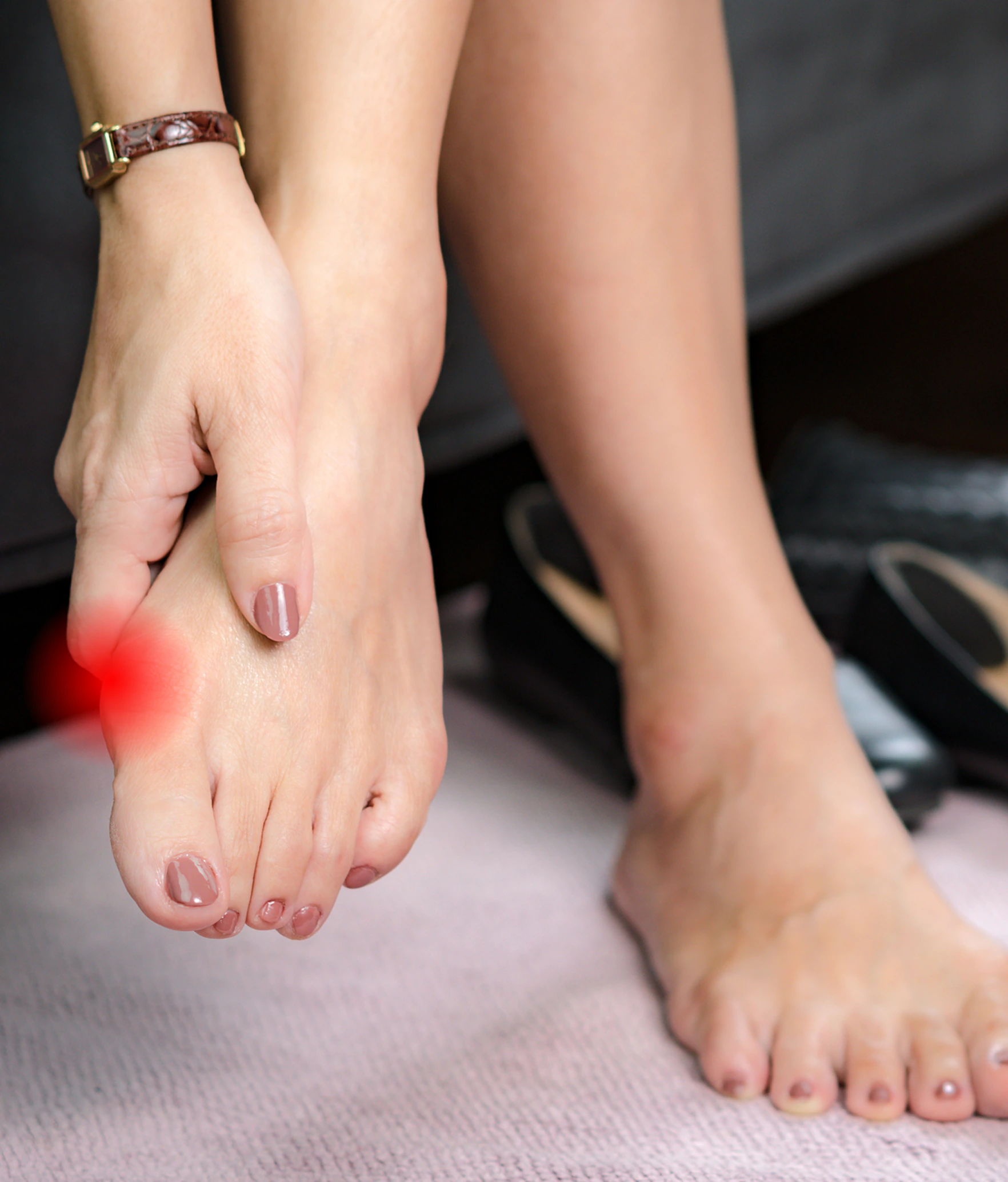
A bunion, known medically as hallux valgus, is a progressive change at the joint at the base of the big toe. The big toe drifts toward the smaller toes while the joint itself pushes outward, forming the familiar bump on the inside of the foot. It is not simply a growth of extra bone - it is a gradual shift in the alignment of the whole joint.
Bunions develop slowly and tend to worsen over years. Early on they may be more of a cosmetic concern, but as the joint deviates further it can become painful, make shoes uncomfortable, and place strain on the neighbouring toes. Because the underlying mechanics keep driving it, a bunion will not reverse without surgery - but the pain and progression can very often be managed well.
Why Bunions Form
Bunions arise from a combination of inherited foot structure and the loads placed on the joint. Contributing factors include:
Family history
an inherited foot shape and joint mechanics that predispose to bunions
Foot mechanics
flat feet and excessive inward rolling that overload the big-toe joint
Footwear
tight, narrow or high-heeled shoes that can accelerate a bunion in a susceptible foot
Joint flexibility
generally loose or hypermobile joints
Inflammatory arthritis
conditions such as rheumatoid arthritis that affect the joint
Signs and Symptoms
The bump
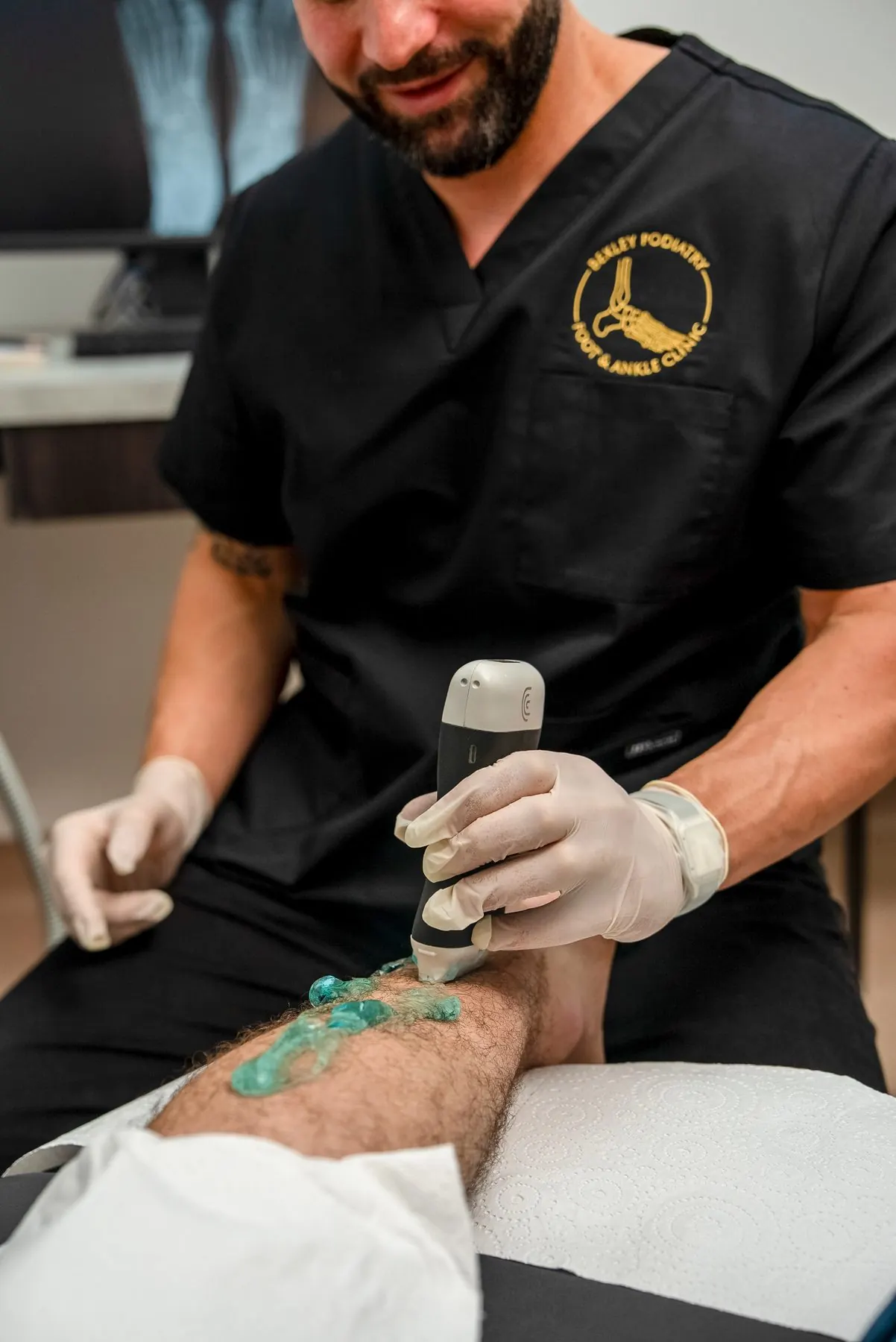
A visible bony prominence on the inside of the foot at the big-toe joint.
Joint pain
Aching or soreness in the joint, worse in tight shoes or after activity.
Redness and swelling
Inflammation over the bump where it rubs against footwear.
Toe crowding
The big toe pressing on or under the second toe, sometimes causing corns.
Shoe difficulty
Trouble finding comfortable shoes as the foot widens.
How We Assess a Bunion
Assessment gauges the severity of the deformity, how it is affecting you, and what is driving it - which guides whether conservative care or surgical referral is the right path. It typically includes:
Joint examination
assessing the alignment, movement and tenderness of the big-toe joint.
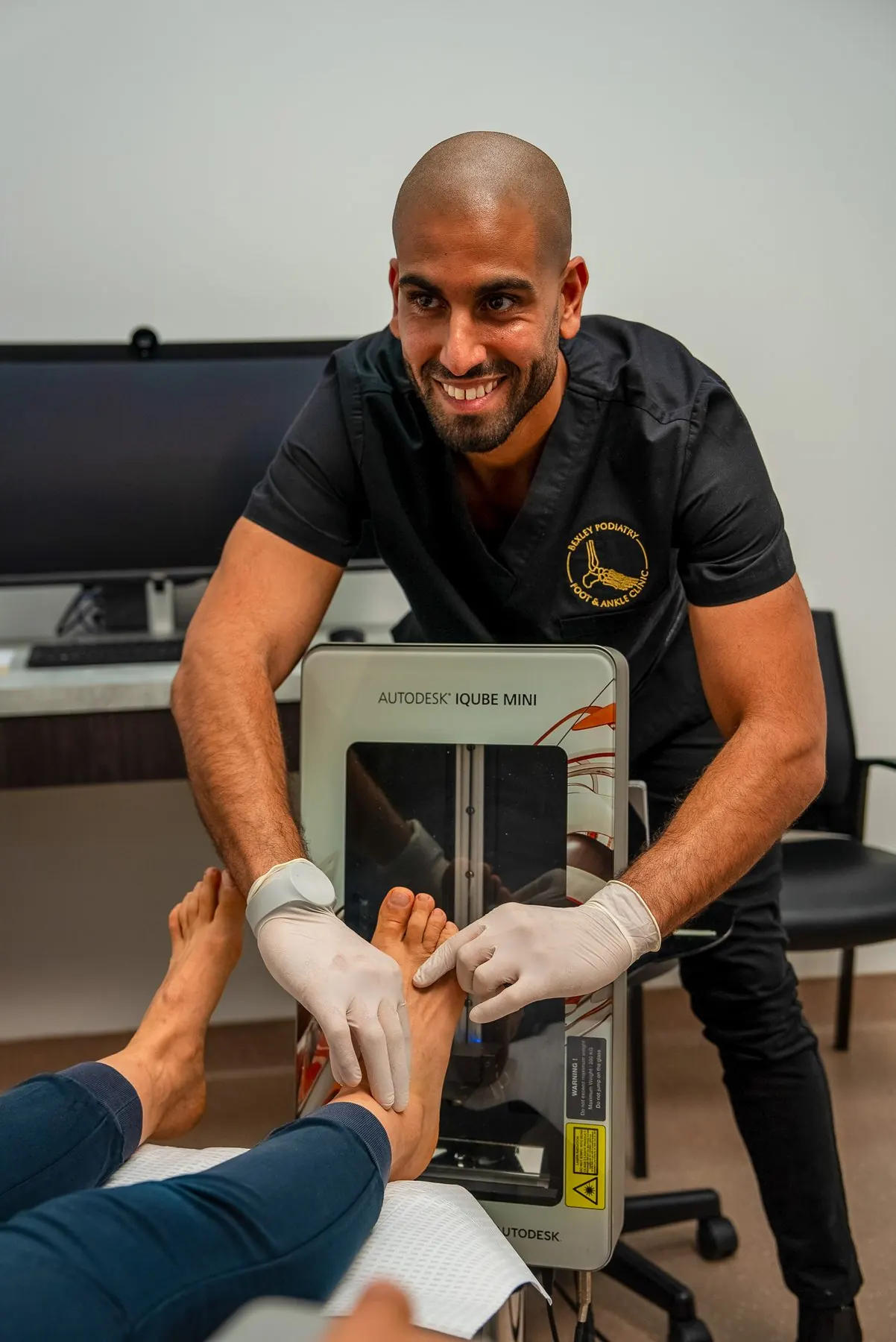
Biomechanical assessment
identifying the foot mechanics feeding the deformity.
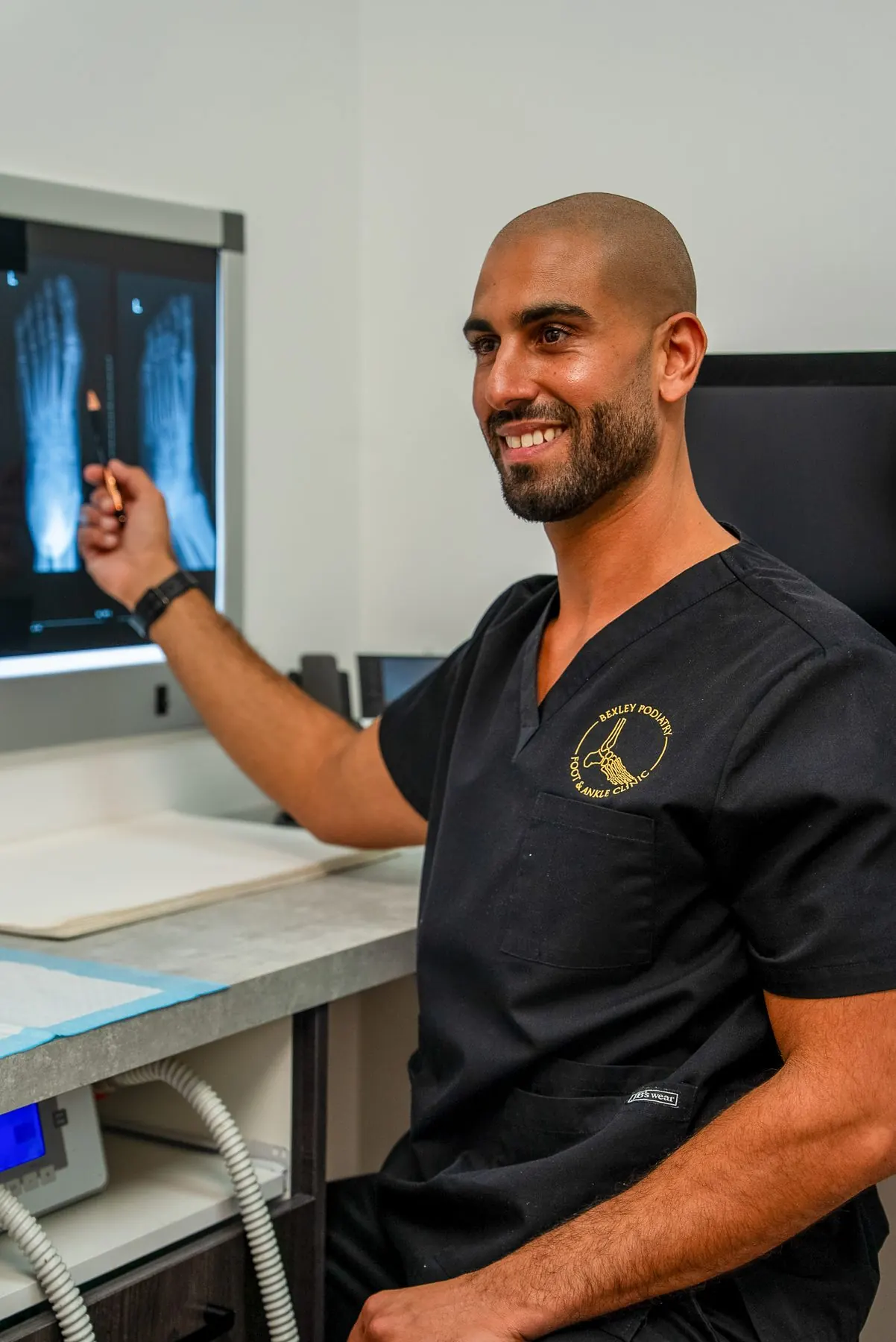
Weight-bearing X-ray review
measuring the angle of deviation and checking for joint arthritis, which shapes the plan.
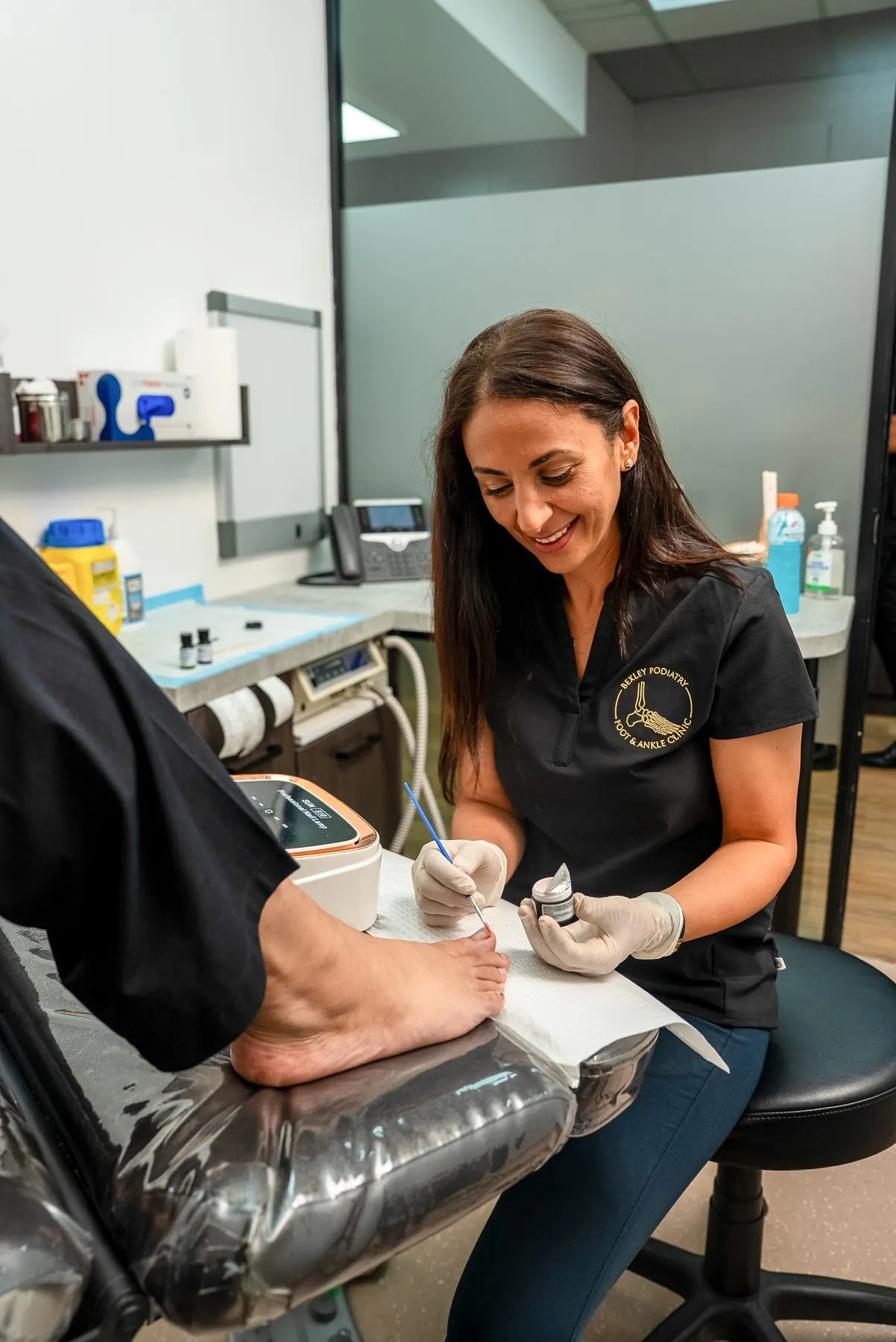
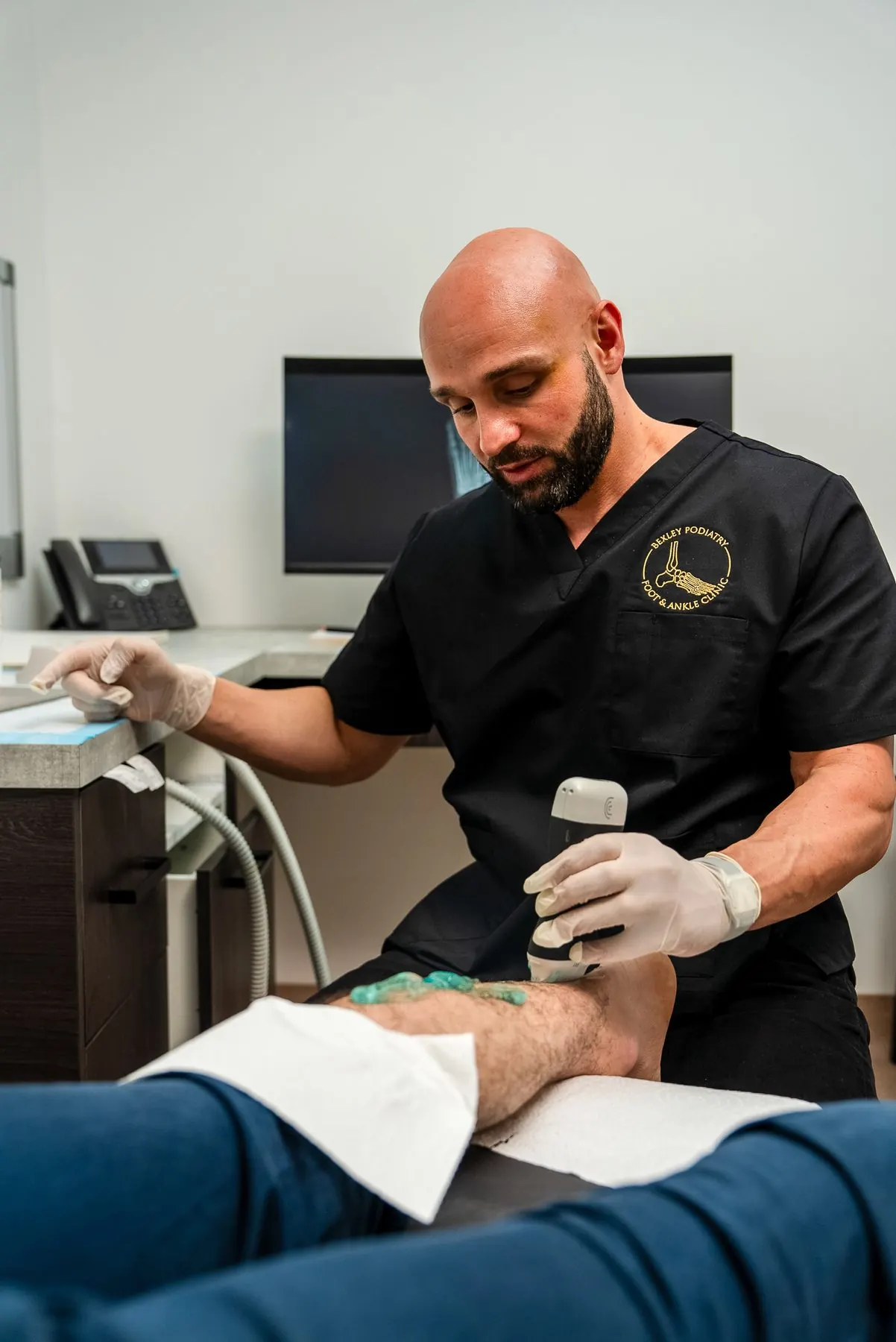
In-clinic diagnostic ultrasound
assessing the bursa and soft tissue around the joint where useful.
Conservative Management
Conservative care cannot straighten a bunion, but it very often controls the pain, slows progression and keeps you comfortable in shoes. Your plan may include:
- Footwear advice - wider, softer shoes with a roomy toe box to stop the bump being aggravated
- Custom orthotic therapy - improving foot mechanics to reduce the forces driving the bunion
- Padding and toe spacers - protecting the bump and easing pressure between the toes
- Joint mobilisation and exercises - maintaining movement and strength around the joint
- Offloading of related problems - treating corns and calluses caused by the crowding
The earlier a bunion is managed, the more effectively pain and progression can be controlled - and the longer surgery can be delayed or avoided.
When Surgery Is Considered
Surgery is the only way to genuinely correct a bunion, but it is reserved for painful bunions that are limiting daily life despite good conservative care - not for appearance alone. Our podiatric surgical registrar can assess whether correction is appropriate and discuss what it involves, so any decision is well informed. Complex cases are referred to an appropriate surgical specialist. Modern bunion correction generally has good outcomes with careful patient selection.
Bunions FAQs
Can I straighten a bunion without surgery?
No - splints, spacers and exercises cannot reverse the bony change, and no conservative treatment straightens a bunion permanently. What they can do very effectively is control the pain, protect the joint and slow progression. Surgery is the only way to correct the alignment itself.
Will my bunion keep getting worse?
Bunions tend to progress gradually over years, though the pace varies a lot. Good footwear, orthotic support and early management slow that progression and keep you comfortable, which is why acting early is worthwhile.
Do I have to have surgery?
Usually not, at least not for a long time. Many people manage comfortably for years with conservative care. Surgery is considered when pain limits daily life despite good management - and that decision is yours to make with proper advice.
Are bunions caused by high heels?
Footwear is a contributor rather than the root cause. Bunions largely come down to inherited foot structure and mechanics, but tight, narrow or high-heeled shoes can speed up a bunion in a susceptible foot, so footwear choices still matter.
Bunion Care Across Bexley and the St George Area
Whether your bunion is a new niggle or a long-standing problem, early assessment gives you the most options. Bexley Podiatry: Foot and Ankle Clinic at 390 Forest Rd, Bexley, cares for bunions for patients from Hurstville, Kogarah, Beverly Hills and beyond, with in-house surgical assessment when it is needed. Call 1300 345 226.
Related conditions
Hallux Rigidus
Arthritis of the big-toe joint causing pain and stiffness on push-off - managed to preserve movement and comfort.
Learn moreHammer Toes
Toes that buckle into a bent position - managed to keep them flexible and comfortable, corrected surgically if fixed.
Learn moreMorton's Neuroma
A thickened, irritated nerve between the toes causing burning forefoot pain - often felt as a pebble in the shoe.
Learn moreRequest an appointment
Send a few details and our team will be in touch to arrange a time that suits you.
Visit the clinic
Bexley, NSW 2207