

Tarsal Tunnel Syndrome Treatment in Bexley
Burning, tingling or numbness spreading through the sole of your foot, often worse with activity or at night? Tarsal tunnel syndrome is a nerve compression at the inner ankle - and identifying it accurately is the key to relieving it.
- In-clinic diagnostic ultrasound
- Nerve-focused assessment
- Orthotic and injection options

- 60+Years Combined Experience
- 4.9Google Rating (250+)
- Podiatric surgical registrar on team
- Endorsed for Scheduled Medicines
What Tarsal Tunnel Syndrome Is
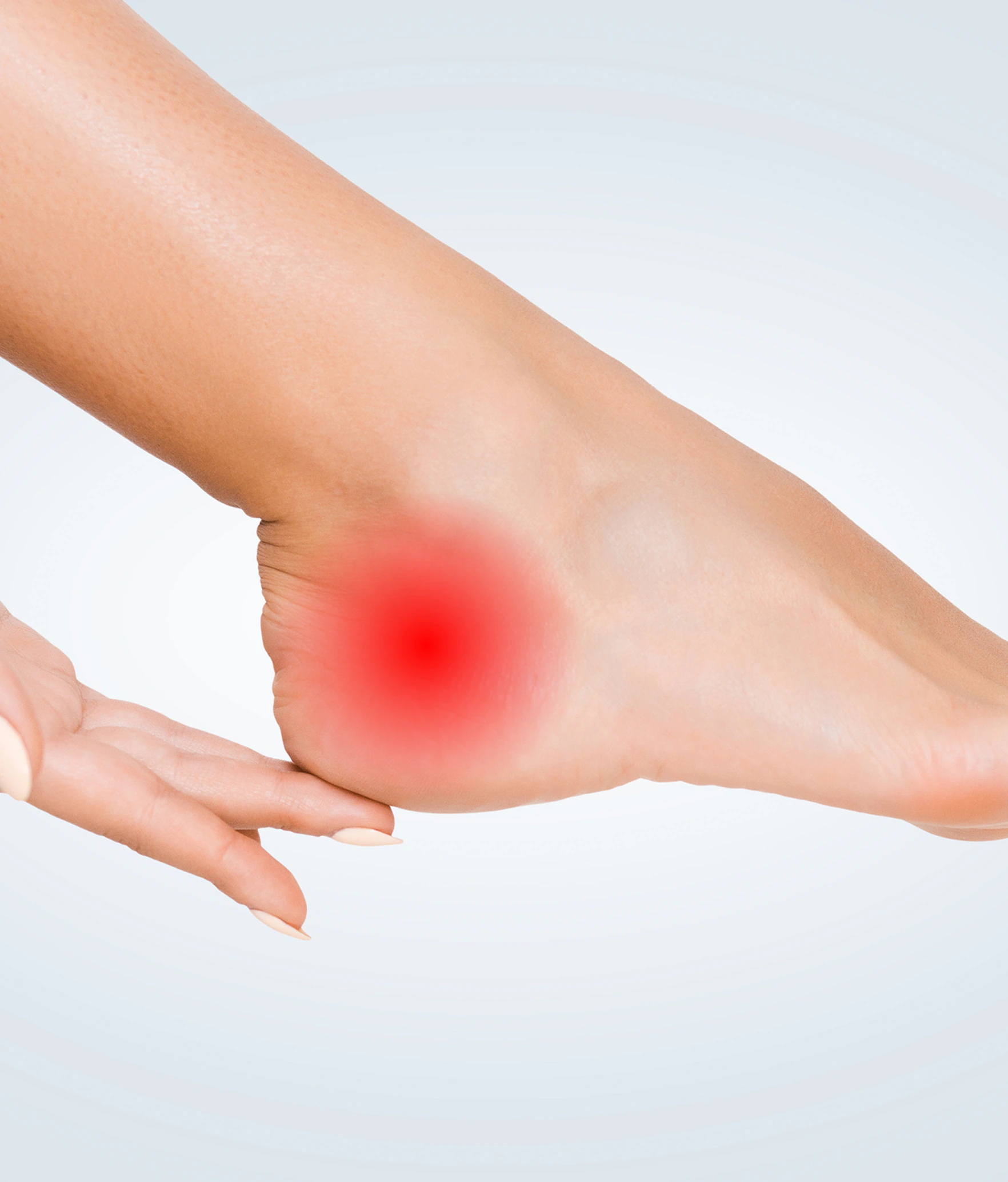
Tarsal tunnel syndrome is a nerve compression problem at the inner side of the ankle. The tibial nerve passes through a narrow space called the tarsal tunnel, behind the bony bump on the inside of the ankle, before branching into the sole of the foot. When the nerve is squeezed or irritated within this tunnel, it produces the burning, tingling and numbness that characterise the condition. It is sometimes described as the foot's equivalent of carpal tunnel syndrome in the wrist.
Because the tibial nerve supplies sensation to much of the sole, the symptoms can spread across the underside of the foot and into the toes, and they often follow the path of a particular nerve branch. Tarsal tunnel syndrome is less common than many foot problems and is frequently misattributed to other causes, so a careful, nerve-focused assessment is important to get the diagnosis right and find what is compressing the nerve.
What Compresses the Nerve
Anything that reduces the space in the tarsal tunnel or irritates the nerve can trigger symptoms. Common causes include:
Flat feet
a collapsing arch that stretches and tensions the nerve at the inner ankle
Injury
an ankle sprain or fracture that causes swelling or scarring around the nerve
Space-occupying lesions
a cyst, swollen tendon or varicose vein pressing on the nerve within the tunnel
Systemic conditions
diabetes, arthritis or swelling that affect the nerve or the tunnel
Overuse
repetitive strain and swelling from activity around the inner ankle
Signs and Symptoms
Burning and tingling
Burning, tingling or a pins-and-needles feeling in the sole and toes.
Electric-shock pain
Shooting nerve pain radiating from the inner ankle into the foot.
Numbness
Numbness across part of the sole.
Worse at night
Symptoms that intensify at night or with prolonged standing and activity.
Inner-ankle trigger
Symptoms reproduced by tapping or pressing over the nerve at the inner ankle.

How We Assess It
Assessment confirms the nerve is the source, works out what is compressing it, and rules out other causes of foot pain and numbness. It typically includes:
Nerve examination
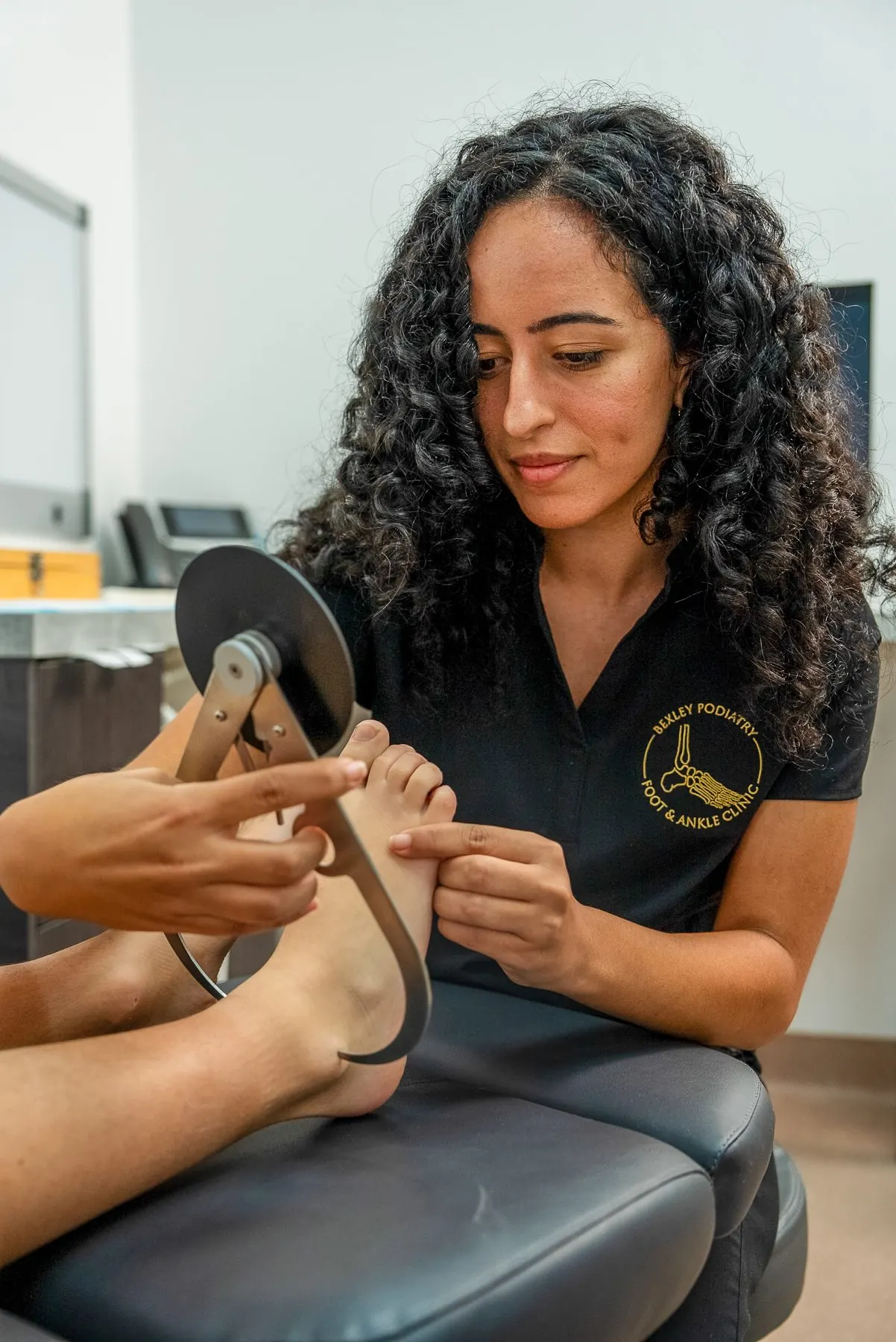
tests that tap or compress the nerve to reproduce your symptoms, and sensation testing.
Foot posture assessment
checking for a flat foot or mechanics that tension the nerve.
In-clinic diagnostic ultrasound
imaging the tunnel to look for a cyst, swelling or other cause pressing on the nerve.
Nerve studies referral
arranging nerve conduction studies or MRI where needed to confirm and localise the compression.
Conservative Management
Many cases of tarsal tunnel syndrome improve once the source of compression is addressed and the nerve is offloaded. Your plan may include:
- Custom orthotic therapy - supporting a flat foot to reduce the tension and stretch on the nerve
- Activity modification - reducing the loading and swelling that aggravate the nerve
- Footwear advice - choosing supportive footwear that improves foot position
- Injection therapy - an ultrasound-guided injection to settle inflammation around the nerve where appropriate
- Treating the cause - managing an underlying tendon problem, swelling or systemic condition contributing to it
- Medical coordination - working with your GP where a systemic cause such as diabetes is involved
Conservative care resolves or substantially improves many cases, particularly where a flat foot or inflammation is the driver. A structural cause within the tunnel may need more.
When Surgery Is Considered
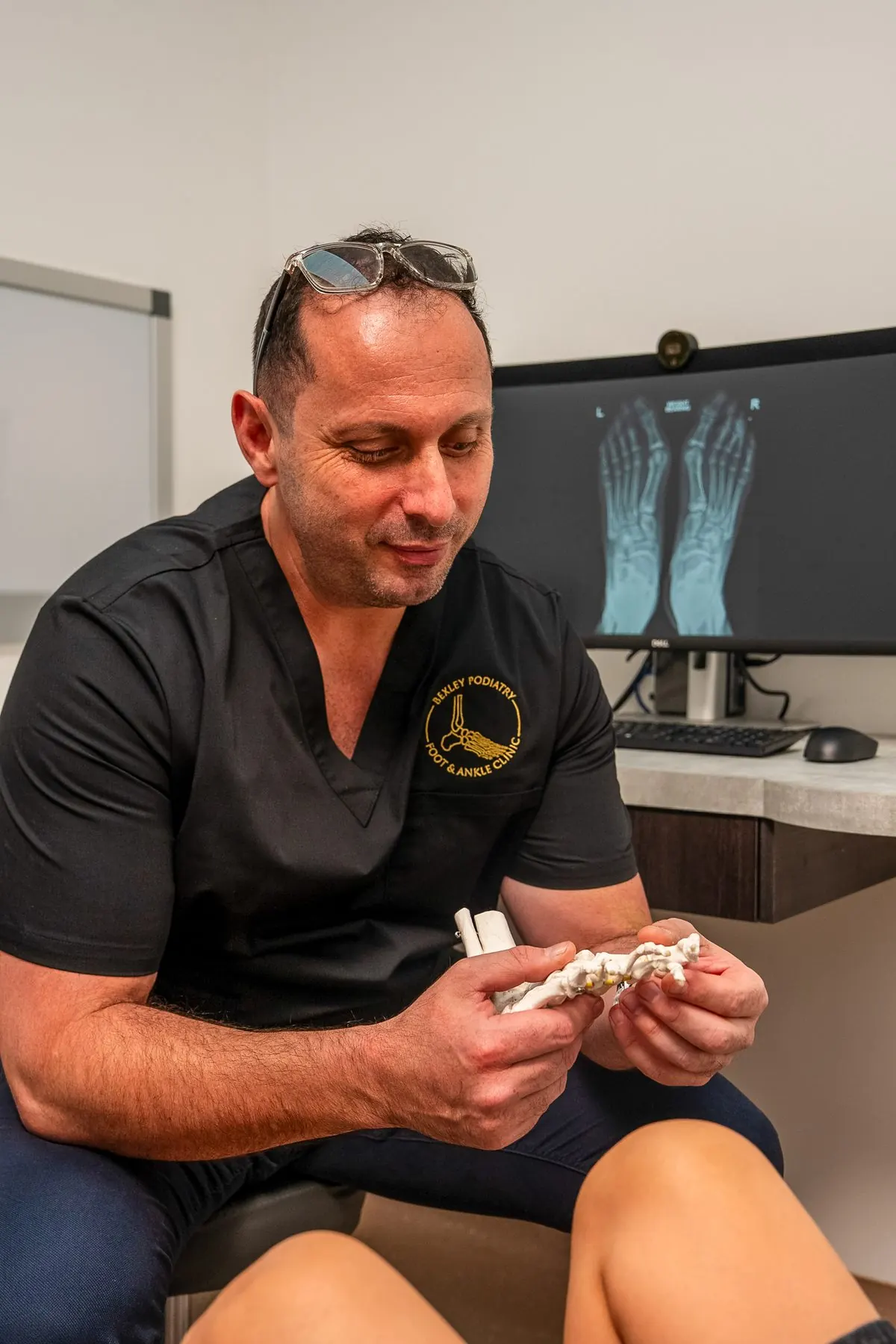
Where a clear structural cause is compressing the nerve - such as a cyst or a space-occupying lesion - or where symptoms persist despite thorough conservative care and nerve studies confirm significant compression, surgical release of the tarsal tunnel may be considered. Our podiatric surgical registrar can review these cases, and tarsal tunnel decompression is referred to an appropriate surgical specialist. We continue to manage supportive care throughout.
Tarsal Tunnel Syndrome FAQs
Why does the bottom of my foot feel like it is burning?
A burning sole is a classic sign of nerve involvement, and tarsal tunnel syndrome is one cause - the tibial nerve at the inner ankle becomes compressed and refers burning and tingling into the foot. A nerve-focused assessment can confirm whether this is what is happening.
Is tarsal tunnel syndrome like carpal tunnel?
Yes, in principle. Both involve a nerve being compressed as it passes through a confined tunnel - carpal tunnel at the wrist, tarsal tunnel at the inner ankle. The symptoms of burning, tingling and numbness follow the same pattern in the affected limb.
Can flat feet cause tarsal tunnel syndrome?
They can contribute. A collapsing arch increases tension and stretch on the tibial nerve at the inner ankle, which is one reason supporting the foot with orthotic therapy can relieve symptoms in flat-footed patients.
Will I need nerve tests or a scan?
Sometimes. Our in-clinic ultrasound can look for a cause within the tunnel, and we may arrange nerve conduction studies or an MRI to confirm and pinpoint the compression, particularly if symptoms are persistent or surgery is being considered.
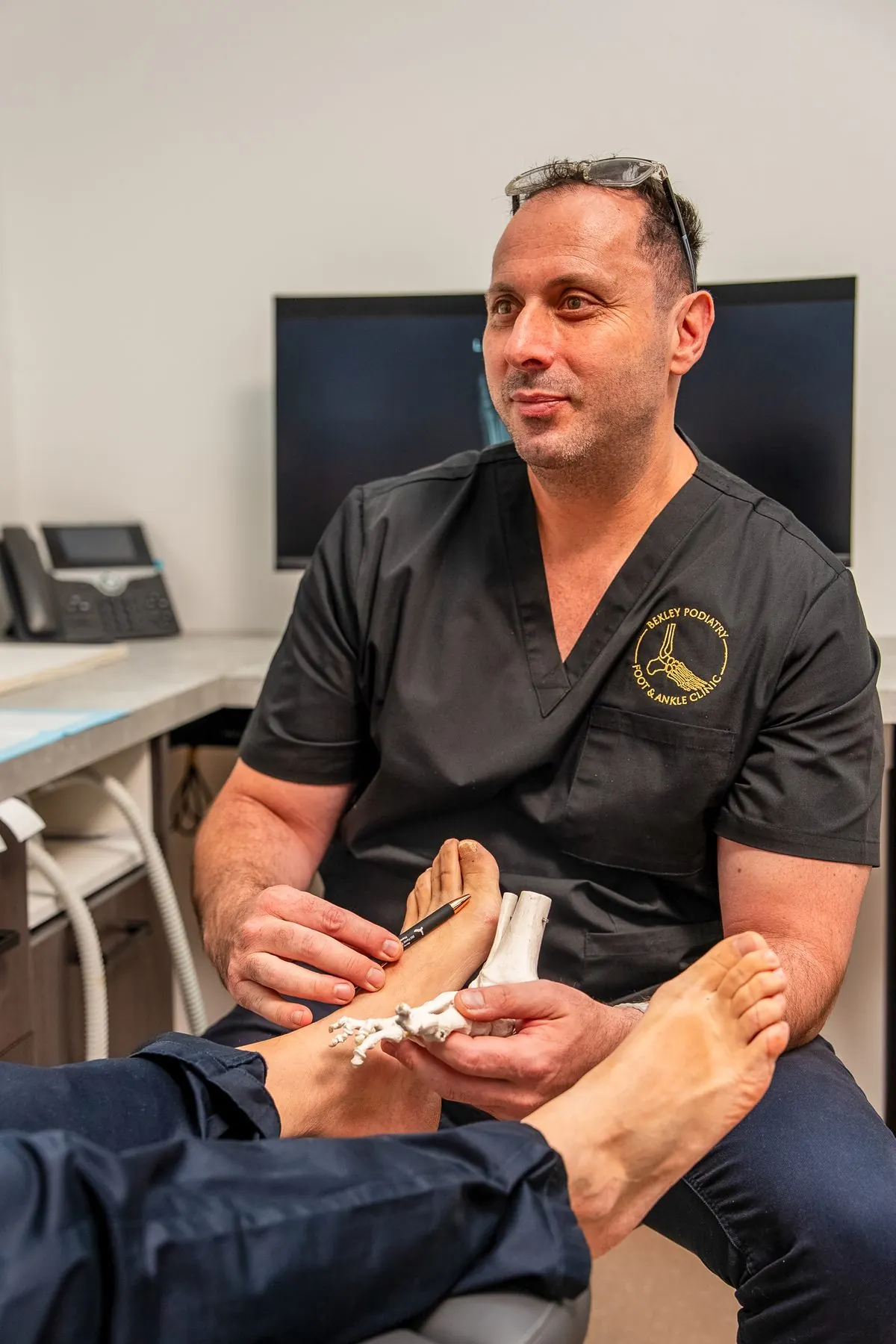
Nerve Pain in the Foot? Assessed in Bexley
Burning and tingling in the foot deserve an accurate diagnosis. Bexley Podiatry: Foot and Ankle Clinic, 390 Forest Rd, Bexley, assesses tarsal tunnel syndrome for patients from Kogarah, Hurstville, Kingsgrove and across the St George area, with in-clinic ultrasound on hand. Call 1300 345 226 to book.
Related conditions
Heel Pain
That first-step morning stab or a heel that aches by evening - assessed with in-clinic ultrasound and treated.
Learn morePlantar Fasciitis
The leading cause of heel pain - an overloaded band of tissue under the arch that responds well to structured care.
Learn moreFlatfoot
A low or collapsed arch - often harmless, but worth assessing when it causes pain or is progressing.
Learn moreRequest an appointment
Send a few details and our team will be in touch to arrange a time that suits you.
Visit the clinic
Bexley, NSW 2207