

Chronic Ankle Instability Treatment in Bexley
Does your ankle keep rolling on uneven ground, or feel like it might give way without warning? Chronic ankle instability is usually the unfinished business of past sprains - and with the right rehabilitation, most people regain a stable, confident ankle.
- In-clinic diagnostic ultrasound
- Balance and strength rehab
- Bracing and orthotic support
- 60+Years Combined Experience
- 4.9Google Rating (250+)
- Podiatric surgical registrar on team
- Endorsed for Scheduled Medicines
What Chronic Ankle Instability Is
Chronic ankle instability is the persistent sense that your ankle is unreliable - it rolls easily, gives way unexpectedly, or simply never feels trustworthy since an earlier injury. It develops when one or more ankle sprains fail to heal and rehabilitate fully, leaving the supporting ligaments stretched and the ankle's control systems blunted.
There are two overlapping parts to it. Mechanical instability means the ligaments themselves have loosened and no longer restrain the joint properly. Functional instability means the ankle's balance and coordination - its sense of position, called proprioception - has been dulled, so it fails to react quickly enough to stop a roll. Most people have a blend of both, which is why treatment has to address strength, balance and, sometimes, the ligaments.

Why It Keeps Happening
Repeated giving-way is rarely bad luck. It usually traces back to identifiable factors:
Past sprains
earlier ankle sprains that were never rehabilitated beyond the sore stage
Lost proprioception
reduced balance and joint awareness after injury, so the ankle reacts too slowly
Weak stabilisers
under-strength peroneal and lower-leg muscles that guard the outer ankle
Foot shape
a higher-arched or inward-tilted foot that predisposes to rolling outward
Footwear and surfaces
unsupportive shoes and uneven terrain that expose the weakness
Signs of an Unstable Ankle
Recurrent rolling
The ankle turns out repeatedly, often on kerbs, sport or uneven ground.
Giving way
A sudden sense that the ankle is about to collapse under you.
Low confidence
Avoiding uneven surfaces, sport or heels because you do not trust the ankle.
Lingering swelling
Ongoing puffiness or aching after activity.
Outer-ankle tenderness
Persistent soreness over the outer ligaments.
How We Assess Ankle Instability
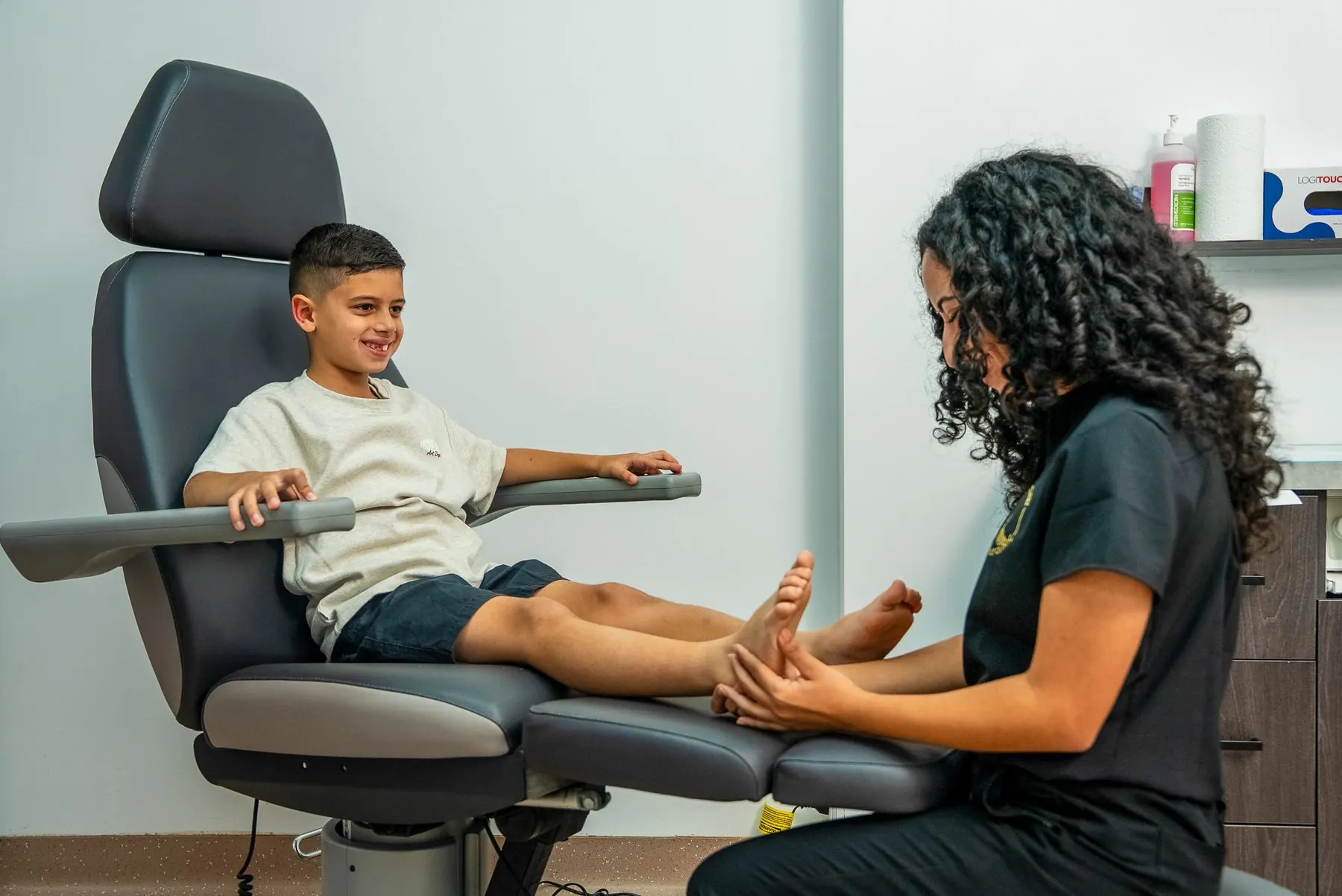
Assessment aims to gauge how loose the ligaments are, how well the ankle balances and controls itself, and whether any other damage was left behind by past sprains. It typically includes:
Ligament stability testing
hands-on tests that gently stress the outer ankle ligaments.
Balance and strength testing
assessing proprioception, single-leg control and peroneal strength.
In-clinic diagnostic ultrasound
imaging the outer ligaments and tendons to check for damage or laxity.
Foot posture and gait review
identifying mechanics that predispose you to rolling.
MRI referral
where a cartilage lesion or other joint injury is suspected.
Conservative Rehabilitation
Most unstable ankles respond well to a structured rehabilitation programme that rebuilds strength, balance and control - the parts that past sprains left behind. Your plan may include:
- Balance and proprioception training - progressive single-leg and unstable-surface work to sharpen the ankle's reflexes
- Peroneal strengthening - targeted work for the muscles that guard against rolling
- Bracing or taping - external support during sport or high-risk activity while control is rebuilt
- Custom orthotic therapy - correcting a foot posture that predisposes the ankle to roll
- Footwear advice - choosing stable, supportive shoes for your activities
- Return-to-sport progression - a graded plan back to cutting, jumping and uneven ground
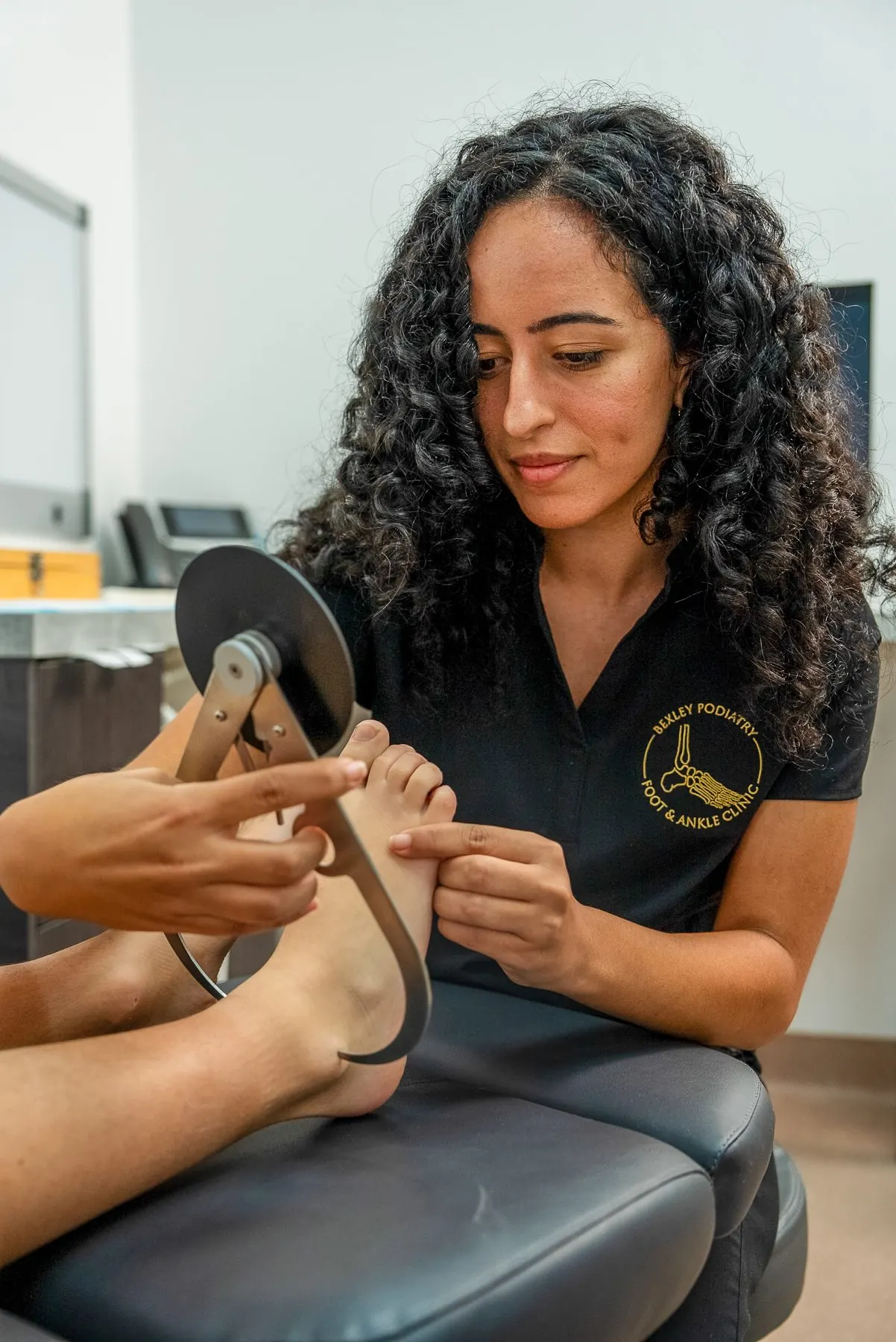
A committed rehabilitation programme run over 8 to 12 weeks resolves the instability for most people. Skipping the balance work is the usual reason an ankle keeps rolling.
When the Ligaments Need More
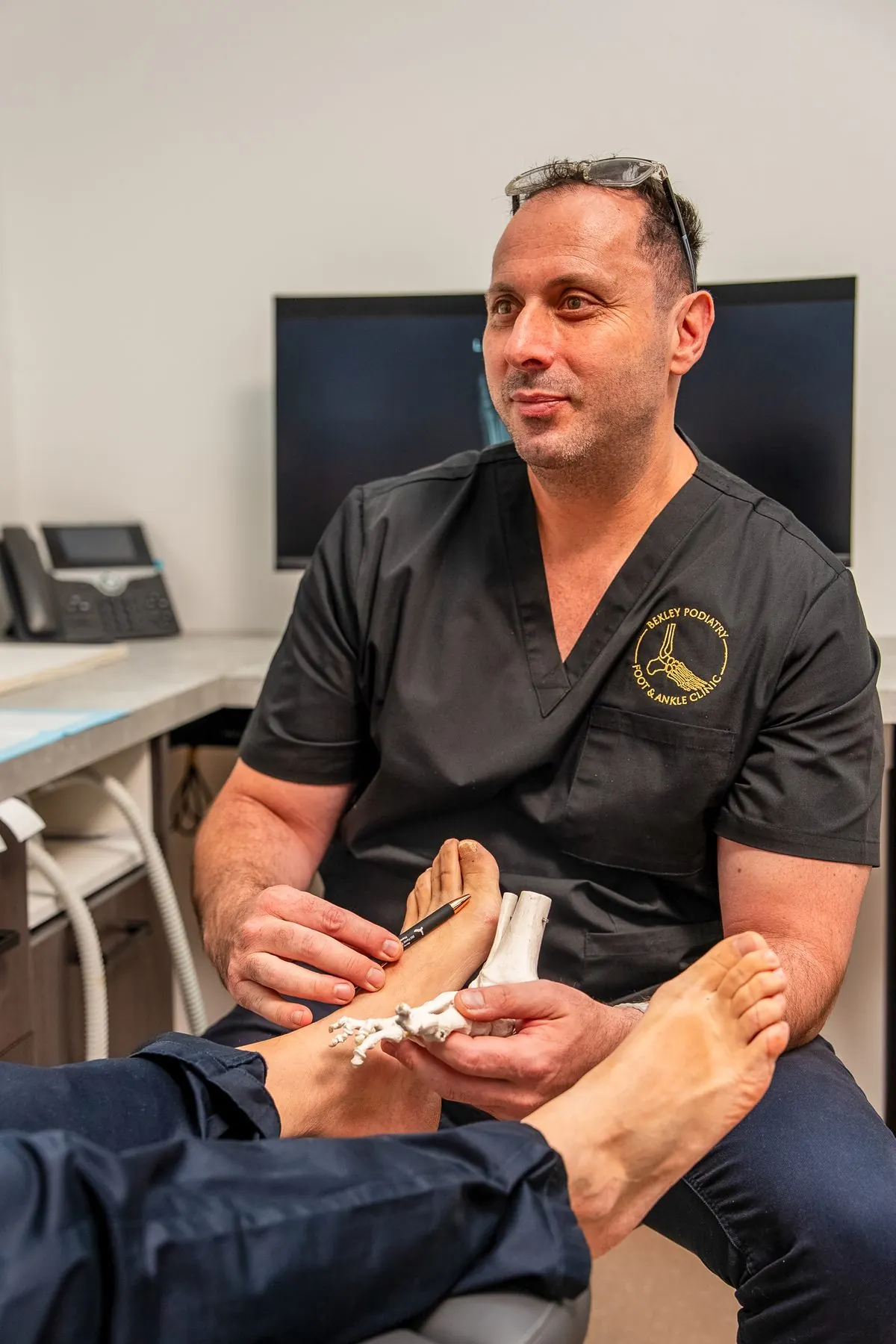
If genuine, structured rehabilitation has not restored a stable ankle - particularly where the ligaments are significantly lax or a cartilage injury has been uncovered - advanced options are considered. Our podiatric surgical registrar can review the ankle, and where ligament reconstruction is warranted the case is referred to an appropriate surgical specialist. We continue to manage your rehabilitation throughout.
Chronic Ankle Instability FAQs
Why does my ankle keep rolling even though the sprain healed?
Because the ligament healing is only half the job. Sprains also dull the ankle's balance and weaken its guarding muscles, and if those are not retrained the ankle keeps rolling. Rebuilding strength and proprioception is what breaks the cycle.
Do I need a brace forever?
Usually not. A brace is helpful for support during sport while you rebuild control, but the goal of rehabilitation is a naturally stable ankle. Many people wean off bracing once their strength and balance return.
Can an old ankle sprain cause arthritis later?
Repeated instability and untreated cartilage damage can contribute to ankle arthritis over time, which is one reason addressing instability properly matters. Restoring stability protects the joint for the long term.
Is surgery likely for my unstable ankle?
For most people, no. Rehabilitation resolves the majority of cases. Surgery is reserved for ankles with significant ligament laxity or joint damage that has not responded to a genuine rehab programme, and those cases are referred to an appropriate surgical specialist.
Steady Your Ankle - Serving Bexley and St George
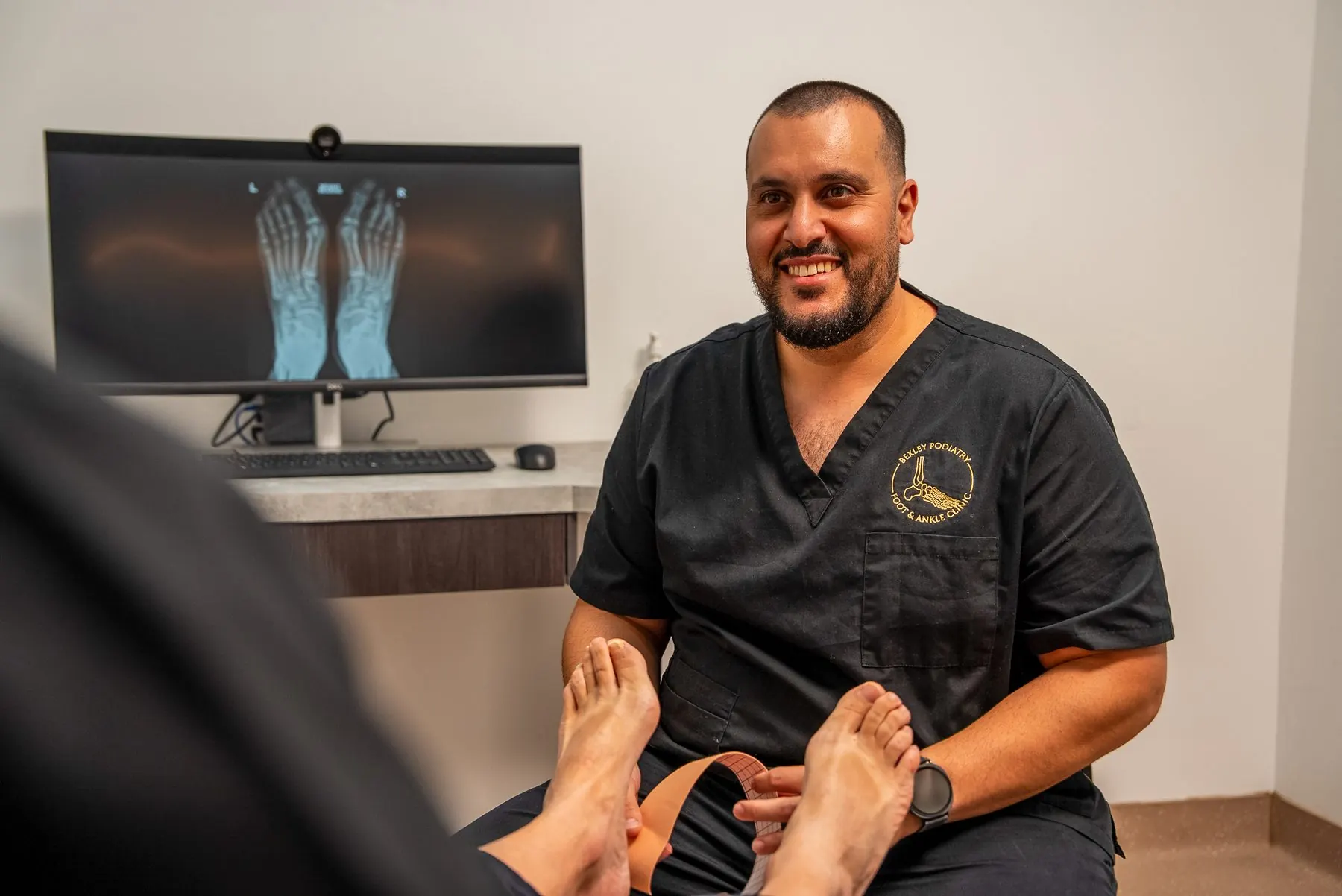
A wobbly ankle should not dictate where you walk or whether you play sport. Bexley Podiatry: Foot and Ankle Clinic, 390 Forest Rd, Bexley, rehabilitates unstable ankles for patients from Hurstville, Kingsgrove, Beverly Hills and across the St George area. Call 1300 345 226 to book an assessment.
Related conditions
Peroneal Tendon Disorders
Pain along the outer ankle from the peroneal tendons - often mistaken for a simple sprain that will not settle.
Learn moreOsteochondral Lesions
A cartilage-and-bone injury inside the ankle joint - often the reason deep ankle pain lingers after a sprain.
Learn moreFoot & Ankle Arthritis
Wear or inflammation in the foot and ankle joints - managed to reduce pain, protect joints and keep you moving.
Learn moreRequest an appointment
Send a few details and our team will be in touch to arrange a time that suits you.
Visit the clinic
Bexley, NSW 2207