

Foot and Ankle Arthritis Treatment in Bexley
Stiff, aching, swollen joints in the foot or ankle that are worse in the morning or after activity? Arthritis in the foot and ankle is common and, while it cannot be cured, it can be managed well - reducing pain and keeping you active and independent.
- Weight-bearing X-ray review
- Offloading orthotic therapy
- Multidisciplinary care

- 60+Years Combined Experience
- 4.9Google Rating (250+)
- Podiatric surgical registrar on team
- Endorsed for Scheduled Medicines
Understanding Foot and Ankle Arthritis
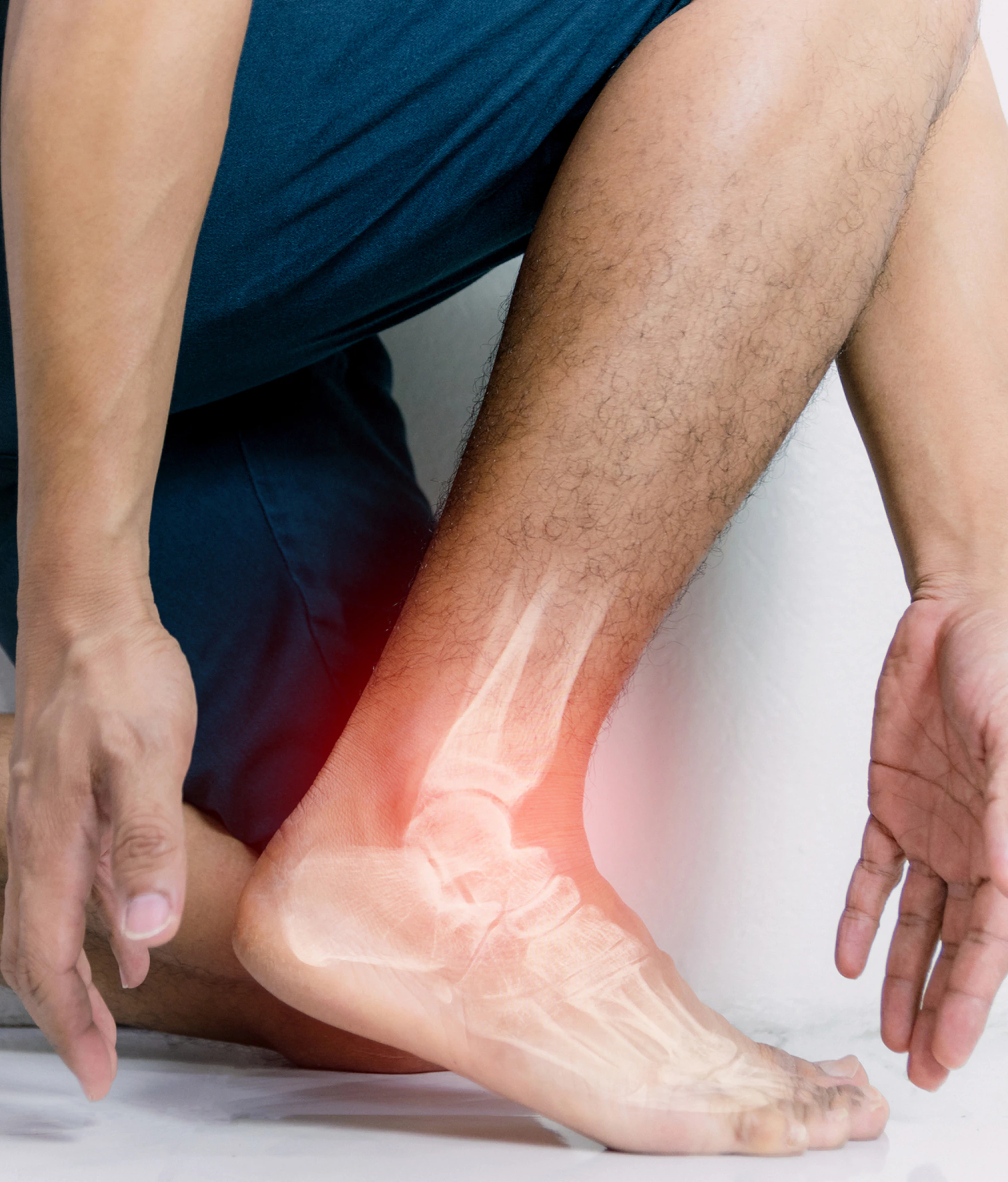
Arthritis means inflammation and damage within a joint, and the foot and ankle contain more than thirty joints that can be affected. Osteoarthritis, the wear-and-tear type, is the most common - the smooth cartilage that lets joints glide gradually wears down, leaving bone rubbing on bone. Inflammatory types such as rheumatoid arthritis, and metabolic types such as gout, are also frequently seen in the foot, and each behaves differently.
Common sites include the big-toe joint, the midfoot and the ankle. Arthritis often follows an old injury - a badly sprained ankle or a previous fracture can lead to arthritis in that joint years later. While arthritis is not reversible, the aim of care is very achievable: reduce the load on the painful joints, control symptoms, protect the joints from further strain, and keep you moving.
Types and Causes
Understanding which type of arthritis is present matters, because it changes the treatment. Common forms and causes include:
Osteoarthritis
wear-and-tear loss of cartilage, often with age or after overload
Post-traumatic arthritis
arthritis developing in a joint years after a fracture or bad sprain
Rheumatoid arthritis
an inflammatory condition where the immune system attacks the joints
Gout
a metabolic form causing sudden, severe joint attacks, often at the big toe
Deformity-related
arthritis accelerated by bunions, flatfoot or other altered mechanics
Signs and Symptoms
Joint pain
Pain in the affected joint, typically worse with activity or at the end of the day.
Stiffness
Morning stiffness or stiffness after rest that eases with gentle movement.
Swelling and warmth
Swelling around the joint, sometimes with warmth in inflammatory types.
Reduced movement
A joint that no longer moves through its full range.
Changed walking
Limping or altered gait to avoid loading the painful joint.
How We Assess It
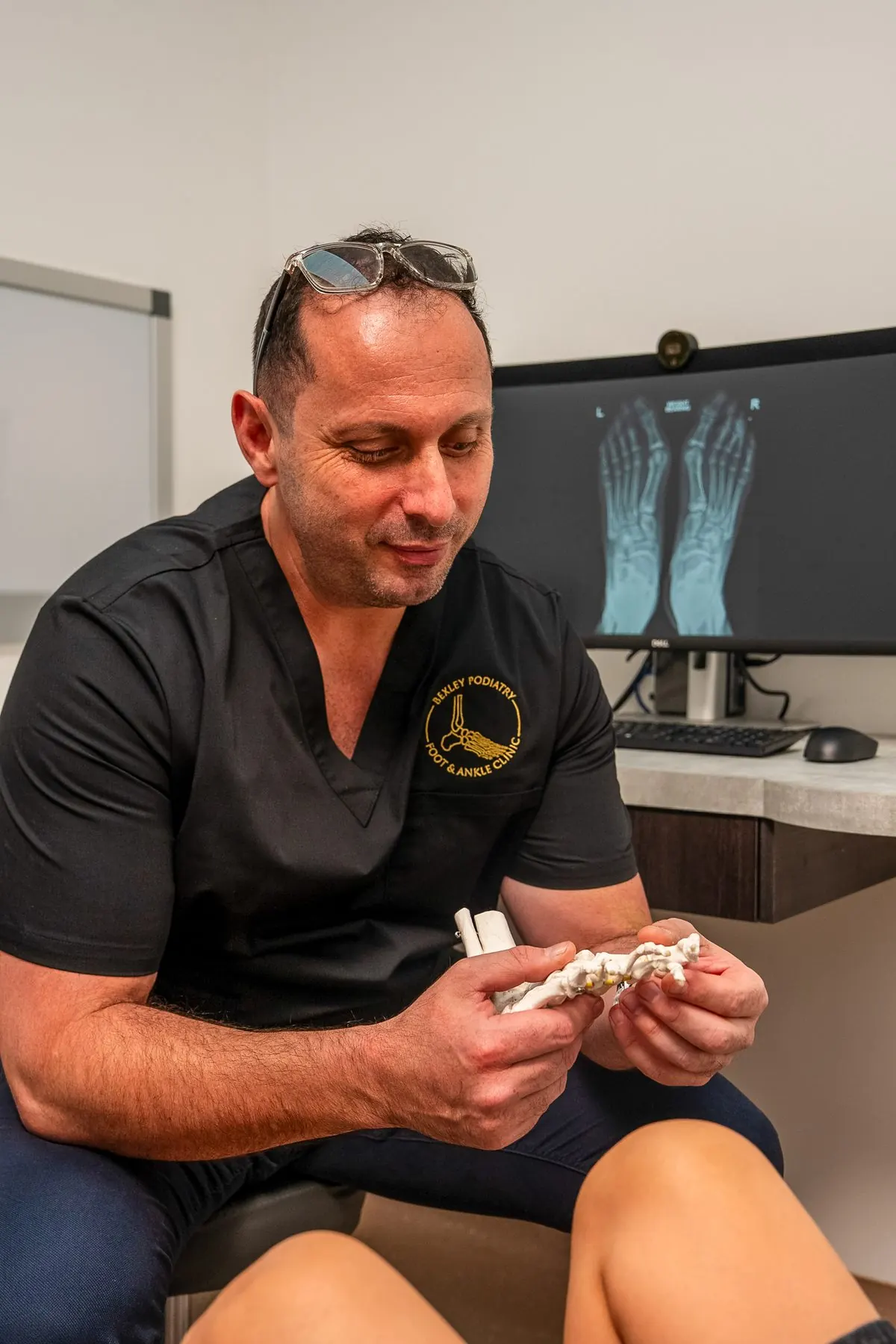
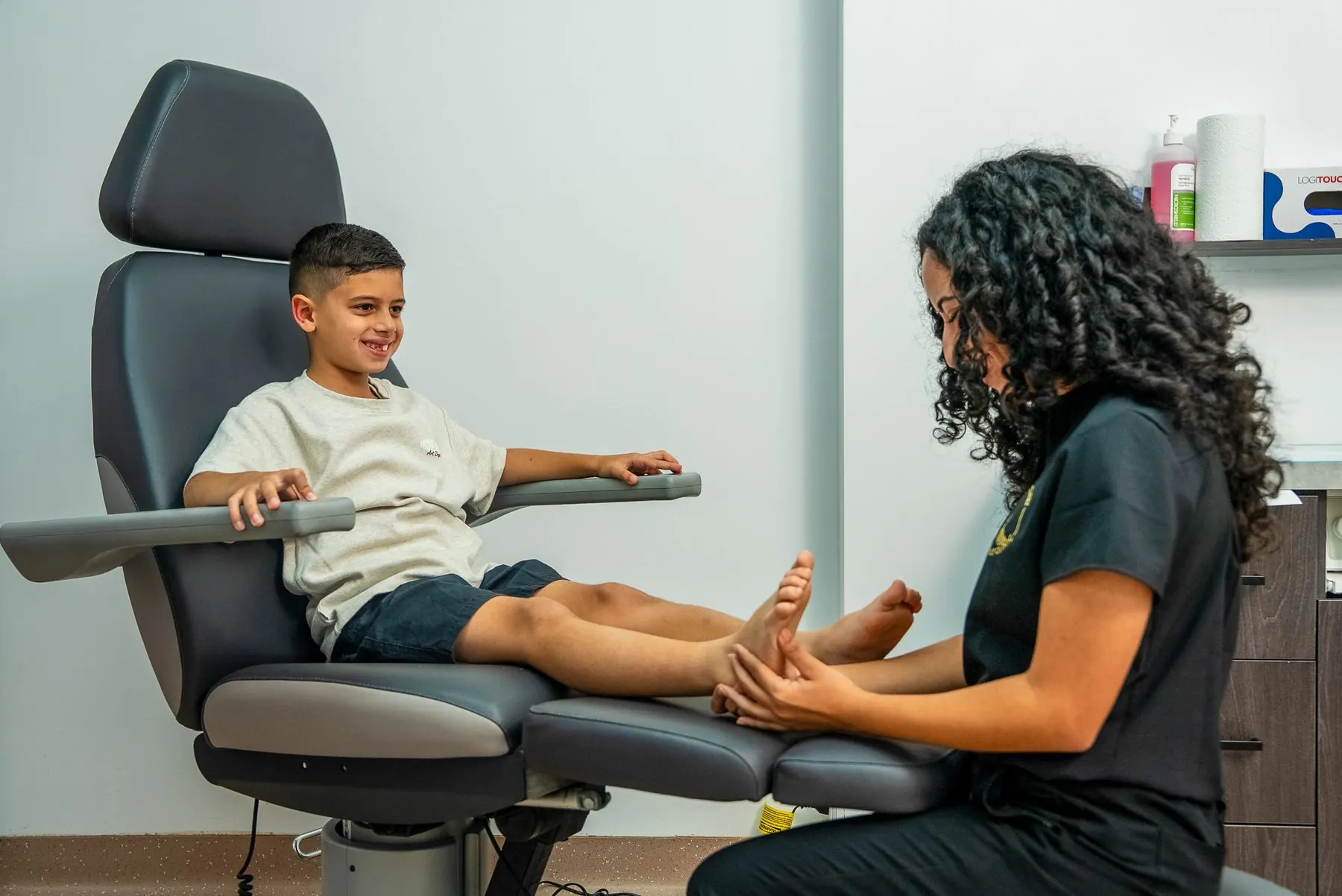
Assessment identifies which joints are involved, what type of arthritis is present, and how it is affecting your walking - which guides both treatment and any onward referral. It typically includes:
Joint examination
assessing the affected joints for movement, swelling and tenderness.
Gait and load analysis
seeing how arthritis is changing the way you move and load the foot.
Weight-bearing X-ray review
confirming the pattern and severity of joint changes.
Medical liaison
coordinating with your GP or rheumatologist where inflammatory arthritis or gout is involved.
Conservative Management
The goals of care are to reduce pain, offload the affected joints and keep you moving. A well-designed plan makes a substantial difference to comfort and function. It may include:
- Custom orthotic therapy - offloading and supporting the arthritic joints to reduce painful loading
- Supportive and rocker footwear - shoes that cushion and reduce the demand on stiff, painful joints
- Activity and load management - adjusting activities to protect the joints while staying active
- Strengthening and mobility work - maintaining movement and supporting the joints
- Injection therapy - settling a painful flare in a specific joint where appropriate
- Medical coordination - working with your GP or rheumatologist for inflammatory arthritis and gout
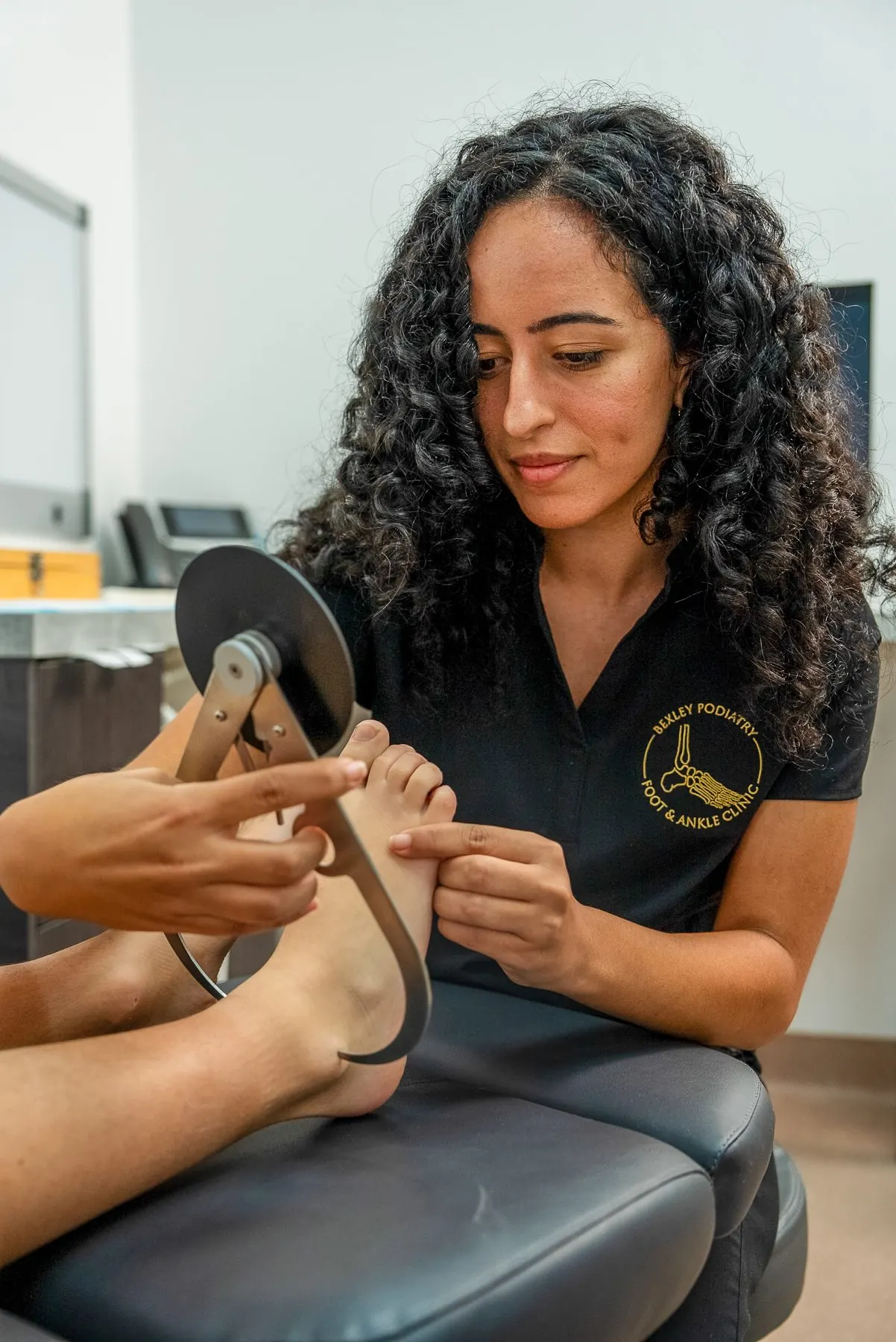
Conservative care does not reverse arthritis but very effectively controls symptoms and protects function, keeping most people comfortable and active for the long term.
When Surgery Is Considered
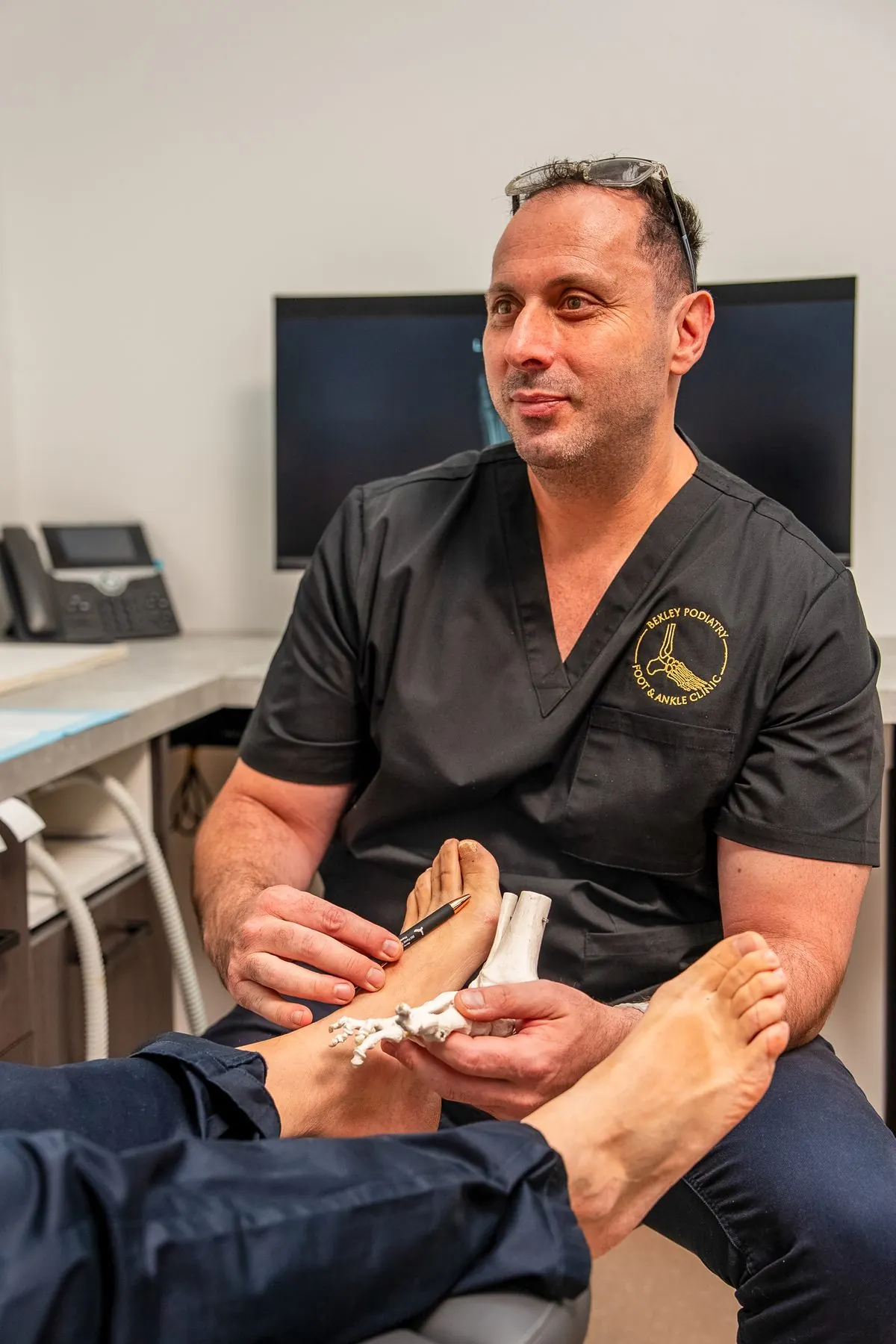
For severely arthritic joints that remain painful and limiting despite thorough conservative care, surgical options such as joint fusion or, in selected cases, joint replacement may be considered. Our podiatric surgical registrar can assess forefoot and midfoot arthritis and advise, and ankle and complex reconstructive cases are referred to an appropriate surgical specialist.
Foot & Ankle Arthritis FAQs
Can foot and ankle arthritis be cured?
Arthritis itself cannot be reversed, but that does not mean nothing can be done. Offloading the joints, supportive footwear, orthotic therapy and managing the load very effectively reduce pain and keep you active. Most people manage well for years without surgery.
Why is my arthritis worse in the morning?
Joints tend to stiffen during rest, so many people with arthritis feel most stiff and sore first thing, easing as they move. Particularly marked and prolonged morning stiffness can point to an inflammatory arthritis, which we would help investigate.
Can an old ankle injury cause arthritis now?
Yes. Post-traumatic arthritis is common - a previous ankle fracture or serious sprain can lead to arthritis in that joint years later. This is one reason we take past injuries seriously when assessing joint pain.
How can a podiatrist help my arthritis?
A podiatrist reduces the load and jarring on the arthritic joints through orthotic therapy and footwear, helps you stay active safely, treats related problems, and coordinates with your medical team. This combination often improves comfort and mobility considerably.
Arthritis Care to Keep You Moving in Bexley
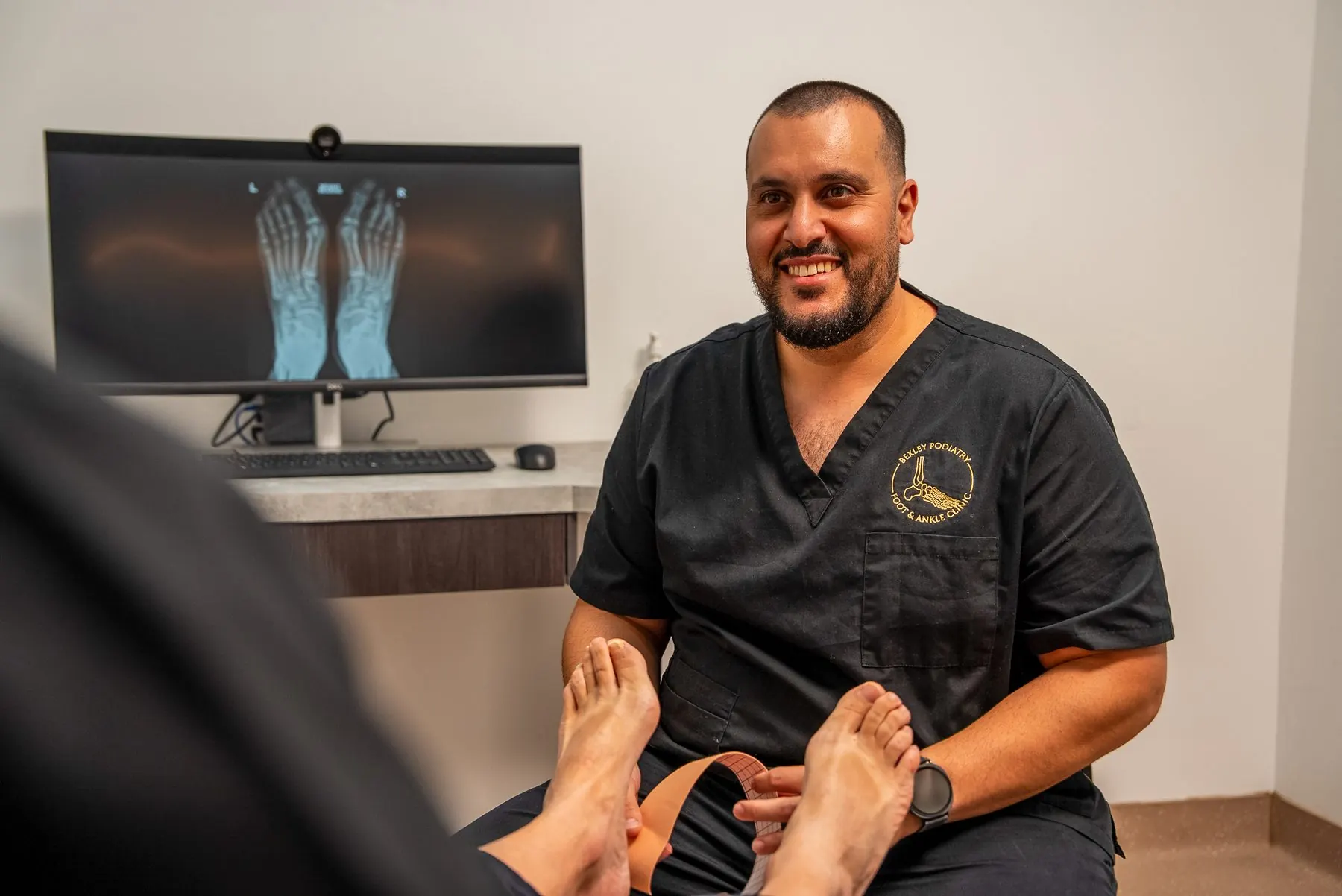
Arthritis in the feet or ankles should not keep you off your feet. Bexley Podiatry: Foot and Ankle Clinic, 390 Forest Rd, Bexley, helps patients from Kogarah, Rockdale, Beverly Hills and across the St George area manage joint pain and stay active. Call 1300 345 226 to book an assessment.
Related conditions
Flatfoot
A low or collapsed arch - often harmless, but worth assessing when it causes pain or is progressing.
Learn moreHallux Rigidus
Arthritis of the big-toe joint causing pain and stiffness on push-off - managed to preserve movement and comfort.
Learn moreAnkle Instability
An ankle that keeps rolling or gives way - usually the legacy of sprains that never fully rehabilitated.
Learn moreRequest an appointment
Send a few details and our team will be in touch to arrange a time that suits you.
Visit the clinic
Bexley, NSW 2207