

Heel Pain Treatment in Bexley
Is a sharp jab under the heel greeting you on the first steps out of bed, or does a deep ache creep in after a long day standing? Heel pain sends more people to a podiatrist than almost any other foot complaint - and the good news is that the great majority settle without an operation.
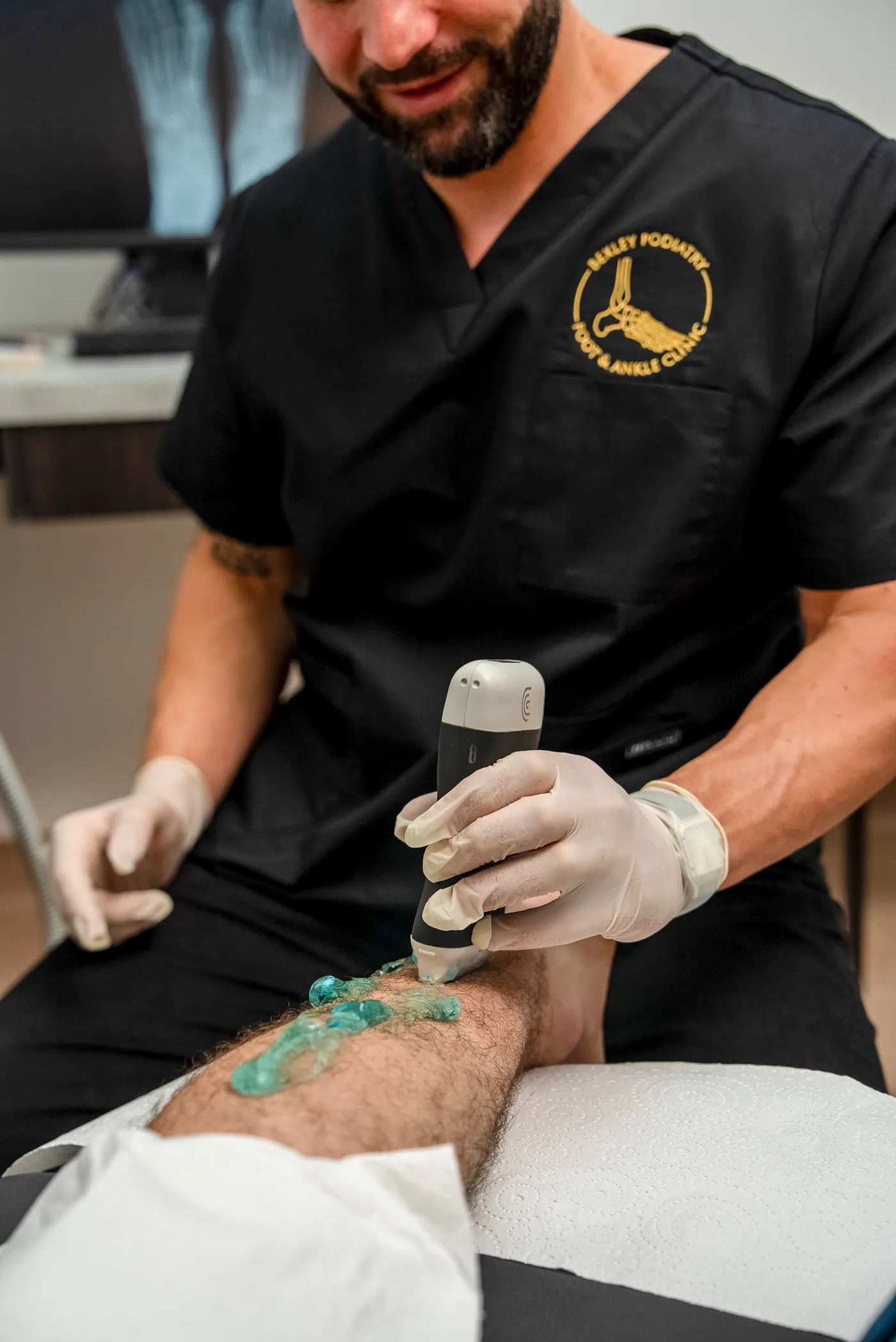
- In-clinic diagnostic ultrasound
- Custom orthotic therapy
- Shockwave therapy on site
- 60+Years Combined Experience
- 4.9Google Rating (250+)
- Podiatric surgical registrar on team
- Endorsed for Scheduled Medicines
What Heel Pain Actually Is
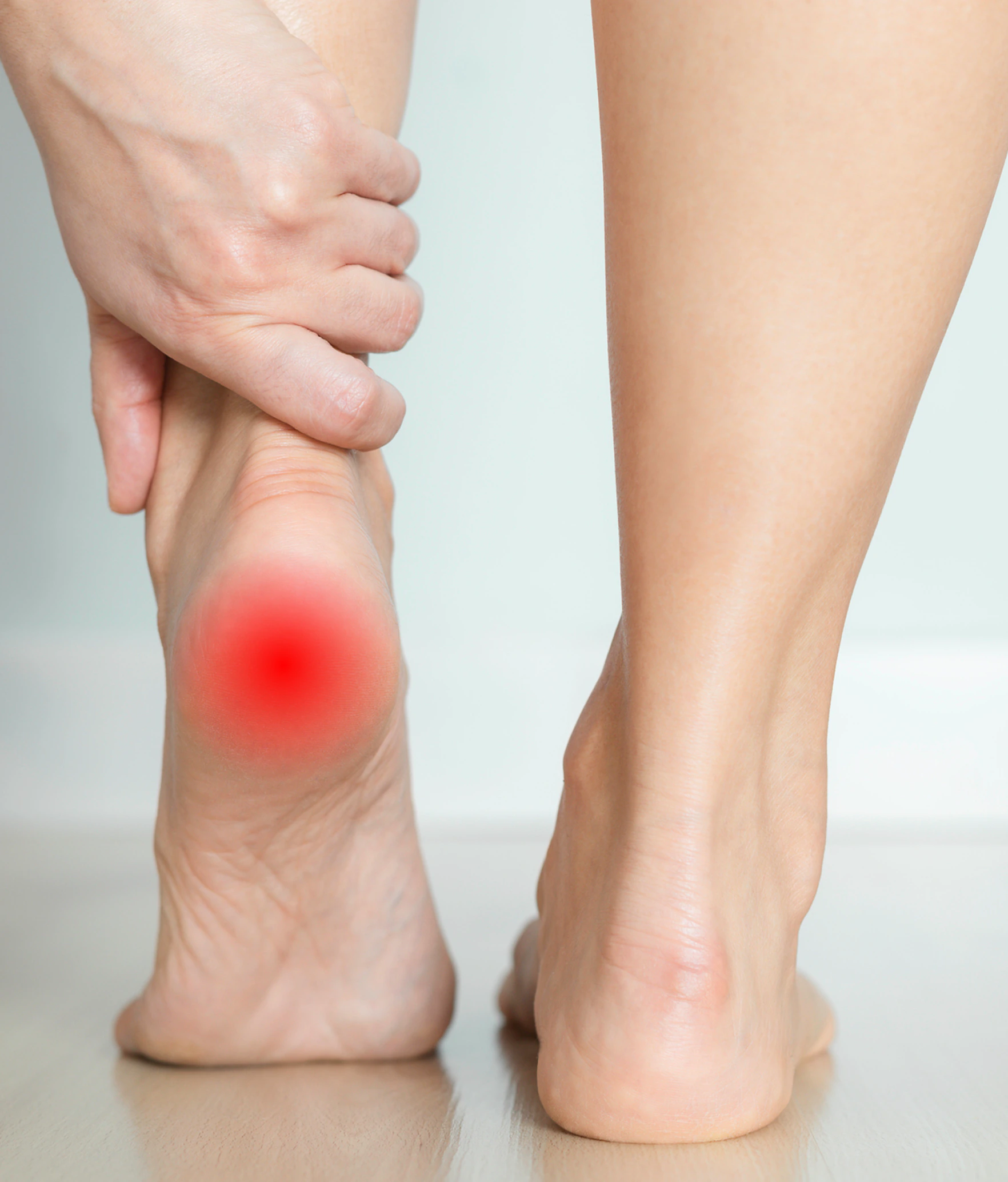
Heel pain is discomfort centred on or around the heel bone, and it covers a spectrum - from a mild niggle that builds quietly over months to a sharp, disabling stab that makes those first morning steps a genuine ordeal. Your heel bone, the calcaneus, takes the full brunt of your body weight thousands of times a day, so when the tissues that cushion and anchor it are overloaded or irritated, they let you know.
Most heel pain arrives gradually rather than through one dramatic injury, which is exactly why it is so easy to shrug off. Across Bexley and the wider St George area we see many people who lived with it for months hoping it would fade on its own. Unfortunately, a long wait usually means a longer road back.
Why Heel Pain Develops
There is seldom a single culprit behind heel pain. It typically grows out of a mix of load, footwear, activity habits and the individual way your foot is built and moves. The more common sources include:
Plantar fasciitis
irritation of the thick tissue band that spans the sole - by far the most frequent cause
Fat pad thinning
wear of the natural cushion sitting directly beneath the heel bone
Calcaneal stress fracture
a hairline crack in the heel bone from repeated impact or a spike in training
Bursitis
swelling of a fluid-filled sac at the back of the heel
Sever's disease
a growth-plate irritation seen in active children and early teens
Nerve irritation
an entrapped or inflamed nerve, sometimes linked to the tarsal tunnel
Haglund's prominence
a bony ridge at the rear of the heel that rubs and inflames nearby tissue
Signs Worth Paying Attention To
The morning stab
A sharp pain on the underside or back of the heel when you first stand up.
Warms up, then returns
Pain that fades after a few minutes of walking but sneaks back later on.
Evening heaviness
A deep, tired ache after a long stretch on your feet.
Post-activity flare
Soreness that peaks once you stop exercising rather than during it.
Point tenderness
A specific sore spot when you press on the heel.
Swelling or heat
Puffiness or redness around the heel region.
How We Diagnose Heel Pain
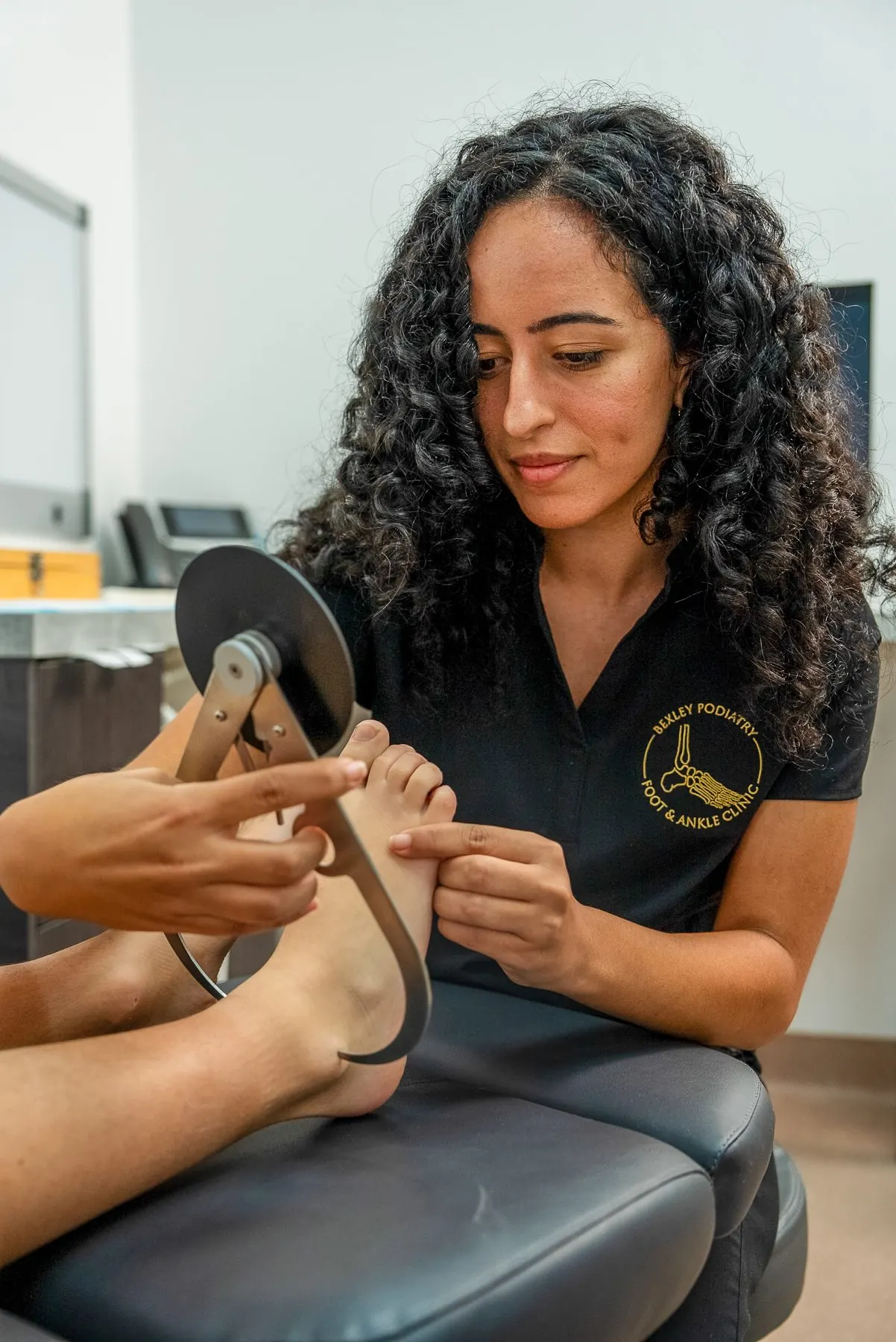
Getting heel pain right means more than poking the sore spot. At Bexley Podiatry: Foot and Ankle Clinic your assessment is built to identify the specific tissue at fault, because heel pain has several possible sources and each responds to different treatment. It typically includes:
Focused history
when the pain began, how it behaves and what eases or aggravates it.
Standing and walking review
watching how you load the heel through stance and gait.
Foot posture check
mapping arch shape and how weight travels through the foot.
Hands-on palpation
pressing key structures to pinpoint the exact origin of pain.
In-clinic diagnostic ultrasound
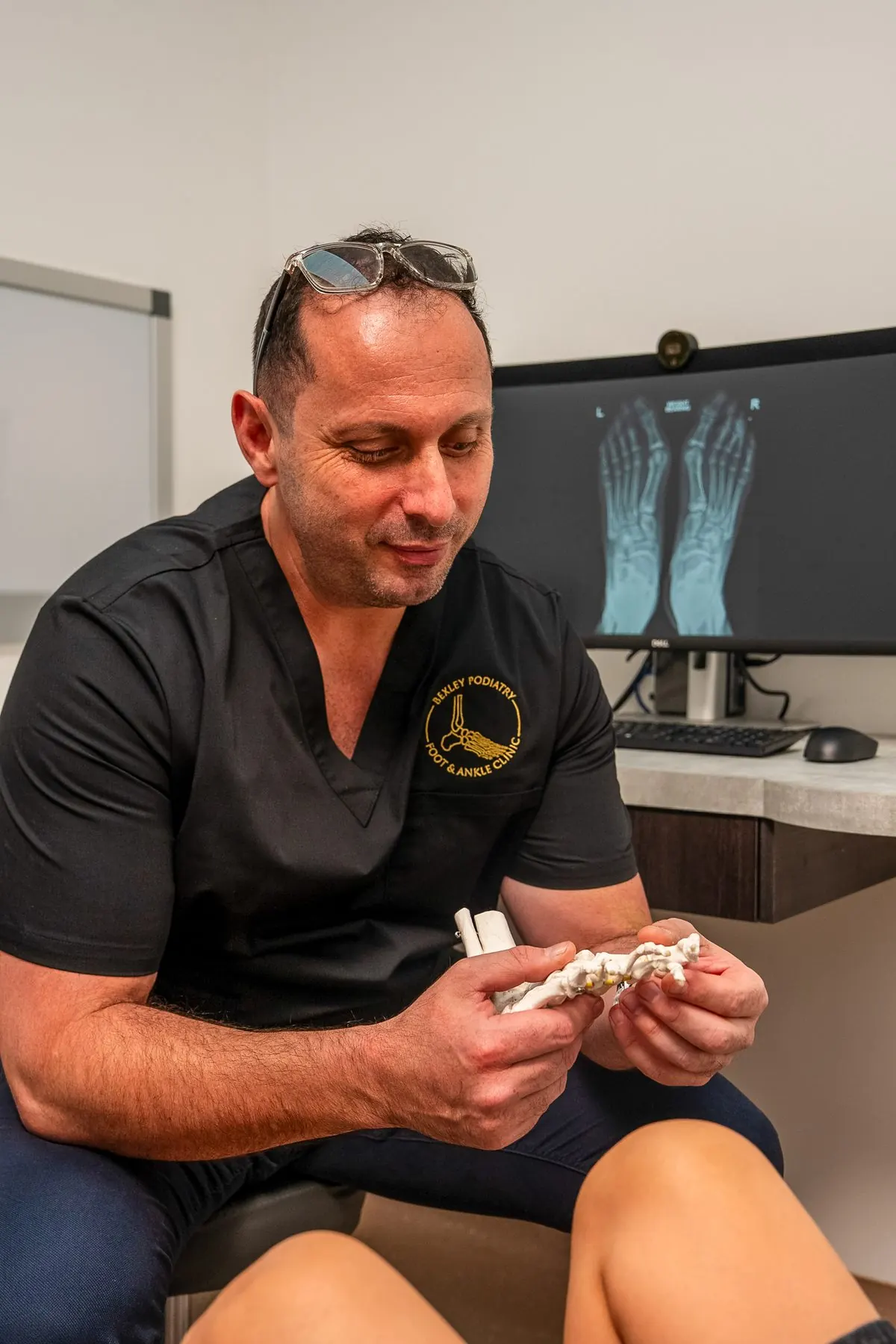
real-time imaging of the plantar fascia, fat pad and any bursa - done in the room, not weeks later.
Imaging referral
an X-ray or MRI if a stress fracture or deeper bony issue is on the cards.
Conservative Care First
Most heel pain settles with well-targeted conservative treatment, and the overwhelming majority of people never need a procedure. Depending on the cause, your plan might draw on:
- Custom orthotic therapy - devices shaped to your mechanics that shift load off the aggravated tissue
- Shockwave therapy - delivered on site and well supported for stubborn plantar fascia and heel tissue pain, usually across several sessions
- Loading and stretching - a guided calf, Achilles and plantar fascia programme to rebuild tolerance
- Footwear review - spotting shoes that feed the problem and suggesting better options
- Activity pacing - adjusting rather than abandoning what you love so the tissue can recover
- Injection therapy - ultrasound-guided when inflammation is marked and slow to settle
- Strapping and padding - short-term offloading to take the sting out of daily walking
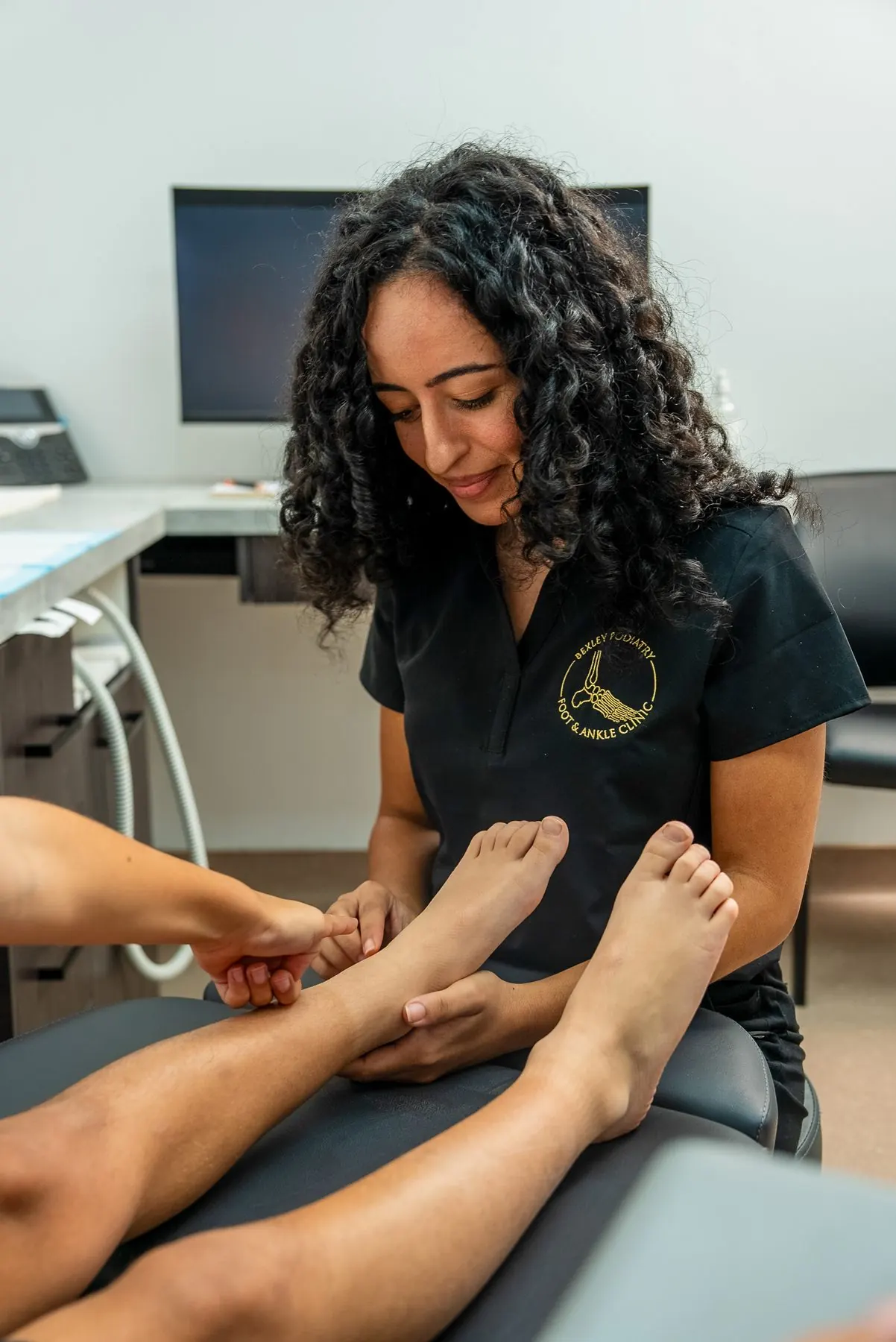
As a rough guide, milder cases often ease within 6 to 12 weeks of consistent care, while long-standing pain of a year or more takes patience. Starting early remains the single biggest lever on how quickly you recover.
Persistent Heel Pain That Will Not Settle
A minority of heels stay sore despite a genuine, structured effort. This is where a second look matters. If pain has persisted well beyond nine to twelve months, imaging shows a structural driver that conservative care cannot fix, or your quality of life is still meaningfully affected, we reassess the diagnosis and discuss advanced options - which can include ultrasound-guided procedures or, rarely, surgical release. Our podiatric surgical registrar reviews these cases, and where a matter is genuinely complex it is referred on to an appropriate surgical specialist.
Heel Pain in Children and Teenagers
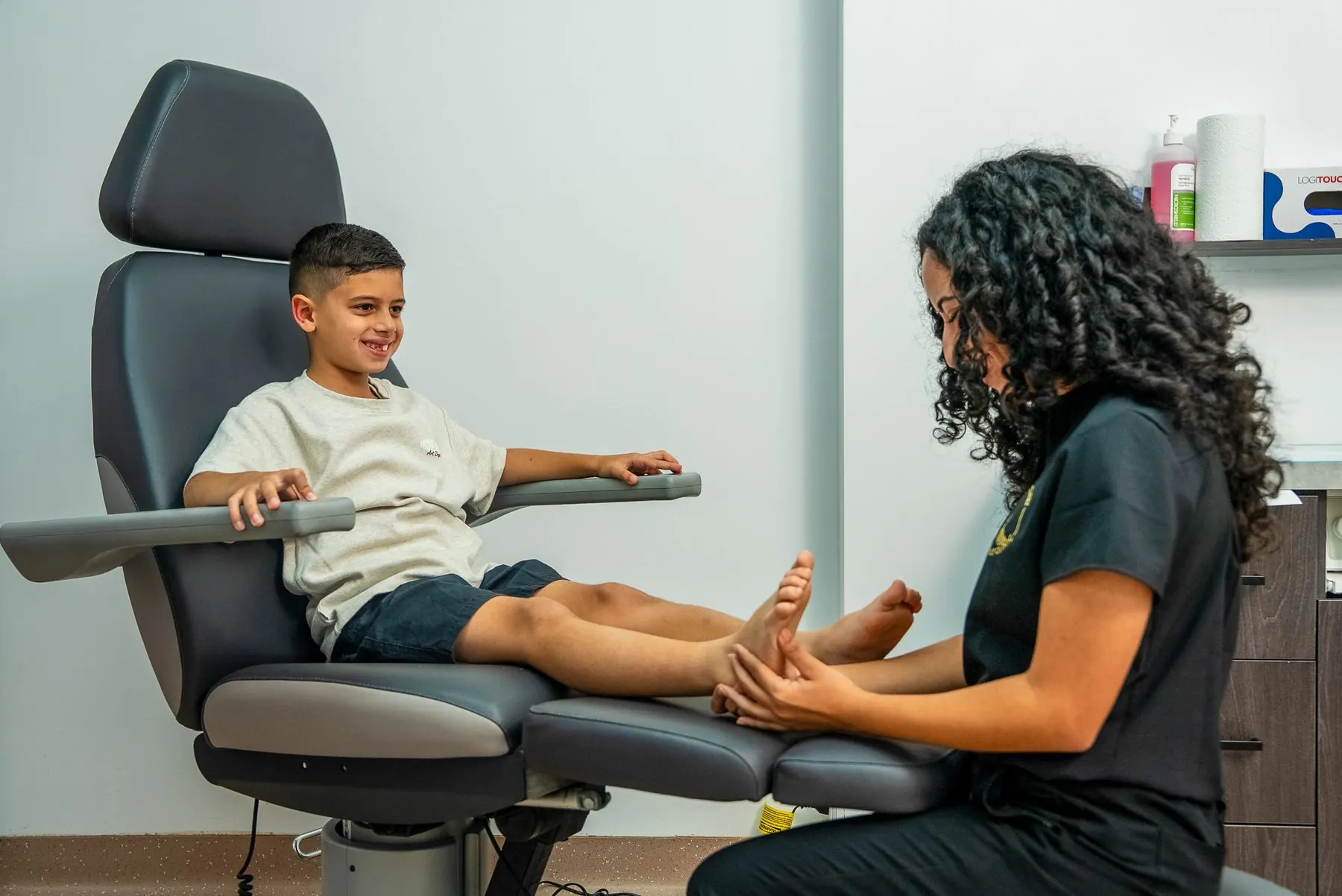
In younger patients, heel pain is most often Sever's disease - a temporary, activity-related irritation of the heel growth plate, common in sporty kids aged roughly 8 to 14. It responds very well to load management, footwear tweaks and supportive devices, and almost all children get back to full sport.
Heel Pain FAQs
How long will my heel pain take to settle?
Most people notice real improvement within 6 to 12 weeks of the right treatment. Cases that have dragged on for a year or more take longer. The earlier you start, the quicker the turnaround tends to be.
Can I keep training while my heel hurts?
In most cases yes, with some adjustment - complete rest is rarely necessary or helpful. We will map out what load is safe for your particular presentation so you keep moving without setting recovery back.
Do I definitely need an X-ray?
Not usually. Many heel problems are soft-tissue and show up clearly on the ultrasound we run in the clinic. An X-ray is reserved for ruling out stress fractures or bony changes when the picture calls for it.
Is a heel spur to blame for my pain?
Rarely on its own. Plenty of people carry a heel spur with no symptoms at all, and plenty with severe heel pain have no spur. The spur is generally a by-product of long-term tissue tension rather than its cause.
Heel Pain Care Across Bexley and St George
Bexley Podiatry: Foot and Ankle Clinic sits at 390 Forest Rd, Bexley NSW 2207, welcoming patients from Rockdale, Kogarah, Arncliffe and right across the St George area. If heel pain is stealing your mornings or shortening your walks, a proper assessment is the sensible first move - call 1300 345 226 or book online.
Related conditions
Plantar Fasciitis
The leading cause of heel pain - an overloaded band of tissue under the arch that responds well to structured care.
Learn moreAchilles Tendinopathy
Pain and stiffness in the tendon at the back of the heel - managed with graded loading, not rest alone.
Learn moreTarsal Tunnel Syndrome
Compression of a nerve at the inner ankle causing burning, tingling and numbness in the foot.
Learn moreRequest an appointment
Send a few details and our team will be in touch to arrange a time that suits you.
Visit the clinic
Bexley, NSW 2207