

Morton's Neuroma Treatment in Bexley
Burning, tingling or a feeling like a stone stuck under the ball of your foot? Morton's neuroma is an irritated nerve between the toes - and with the right offloading and treatment, most people avoid surgery.
- In-clinic diagnostic ultrasound
- Offloading and orthotic therapy
- Ultrasound-guided injection therapy
- 60+Years Combined Experience
- 4.9Google Rating (250+)
- Podiatric surgical registrar on team
- Endorsed for Scheduled Medicines
What a Morton's Neuroma Is
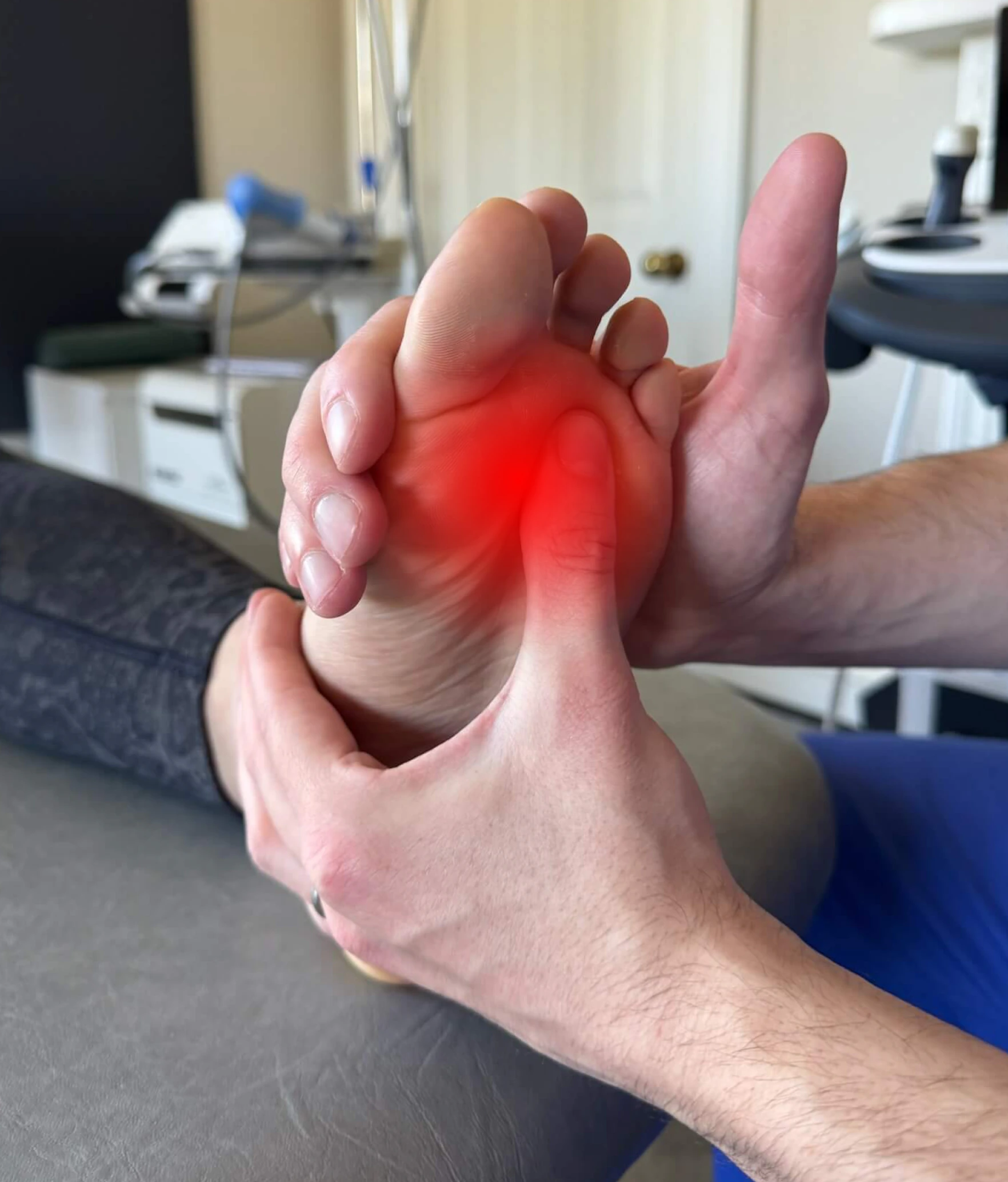
A Morton's neuroma is a thickening of the tissue around one of the nerves that runs between the long bones of the foot toward the toes, most often between the third and fourth toes. Despite the name, it is not a true tumour - it is a benign enlargement and irritation of the nerve caused by ongoing compression and friction as it passes between the metatarsal heads.
As the nerve becomes squeezed and inflamed, it sends out the burning, tingling and electric-shock sensations that give the condition away. Because the nerve sits deep in the ball of the foot, many people describe the odd feeling of walking on a marble or having a sock bunched under their toes when nothing is there.
What Leads to a Neuroma
A neuroma develops when a nerve is repeatedly compressed and irritated. Several factors commonly combine:
Tight, narrow shoes
footwear that squeezes the forefoot and presses the metatarsal heads together
High heels
shoes that load extra pressure onto the ball of the foot
Foot mechanics
flat feet, bunions or other structural issues that alter forefoot loading
High-impact activity
running and sports that repeatedly load the forefoot
Related deformities
bunions and hammer toes that crowd the forefoot and irritate the nerve
How It Feels
Burning forefoot pain
Burning or aching in the ball of the foot that can radiate into the toes.
Tingling and numbness
Pins and needles or numbness in the affected toes.
The phantom pebble
A sensation of a stone or lump under the ball of the foot.
Worse in tight shoes
Pain that eases when you take your shoe off and rub the foot.
Aggravated by walking
Symptoms that build with activity and settle with rest.
How We Diagnose It
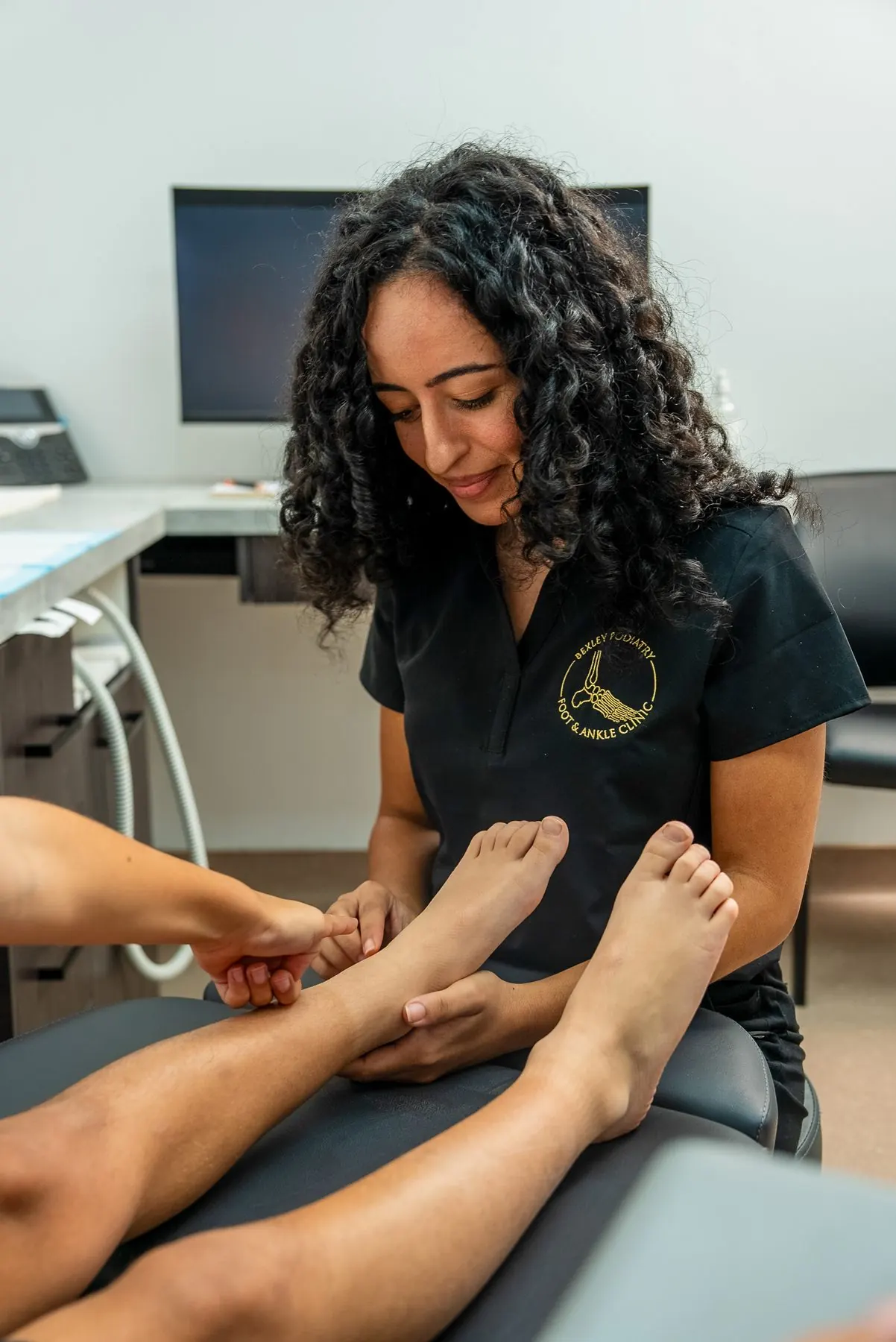
Assessment sets out to confirm the neuroma, locate which nerve is involved, and rule out other causes of forefoot pain such as a stress fracture or capsulitis. It generally includes:
Clinical examination
squeeze and palpation tests that reproduce the pain and can produce a telltale click.
In-clinic diagnostic ultrasound
imaging the nerve in real time to confirm the neuroma and measure its size.
Gait and pressure review
understanding how forefoot loading is contributing.
MRI referral
occasionally, where the diagnosis is unclear or surgery is being considered.
Conservative Treatment
Most neuromas improve considerably once the pressure on the nerve is reduced, and many people avoid any procedure. Your plan may include:
- Footwear change - wider, lower shoes with a roomy toe box to unload the forefoot - often the single most effective step
- Custom orthotic therapy - with a metatarsal dome or bar to spread the metatarsal heads and take pressure off the nerve
- Offloading padding - targeted padding to relieve the irritated nerve while symptoms settle
- Activity modification - adjusting high-impact loading during the settling phase
- Ultrasound-guided injection therapy - a corticosteroid injection placed precisely at the nerve for persistent inflammation
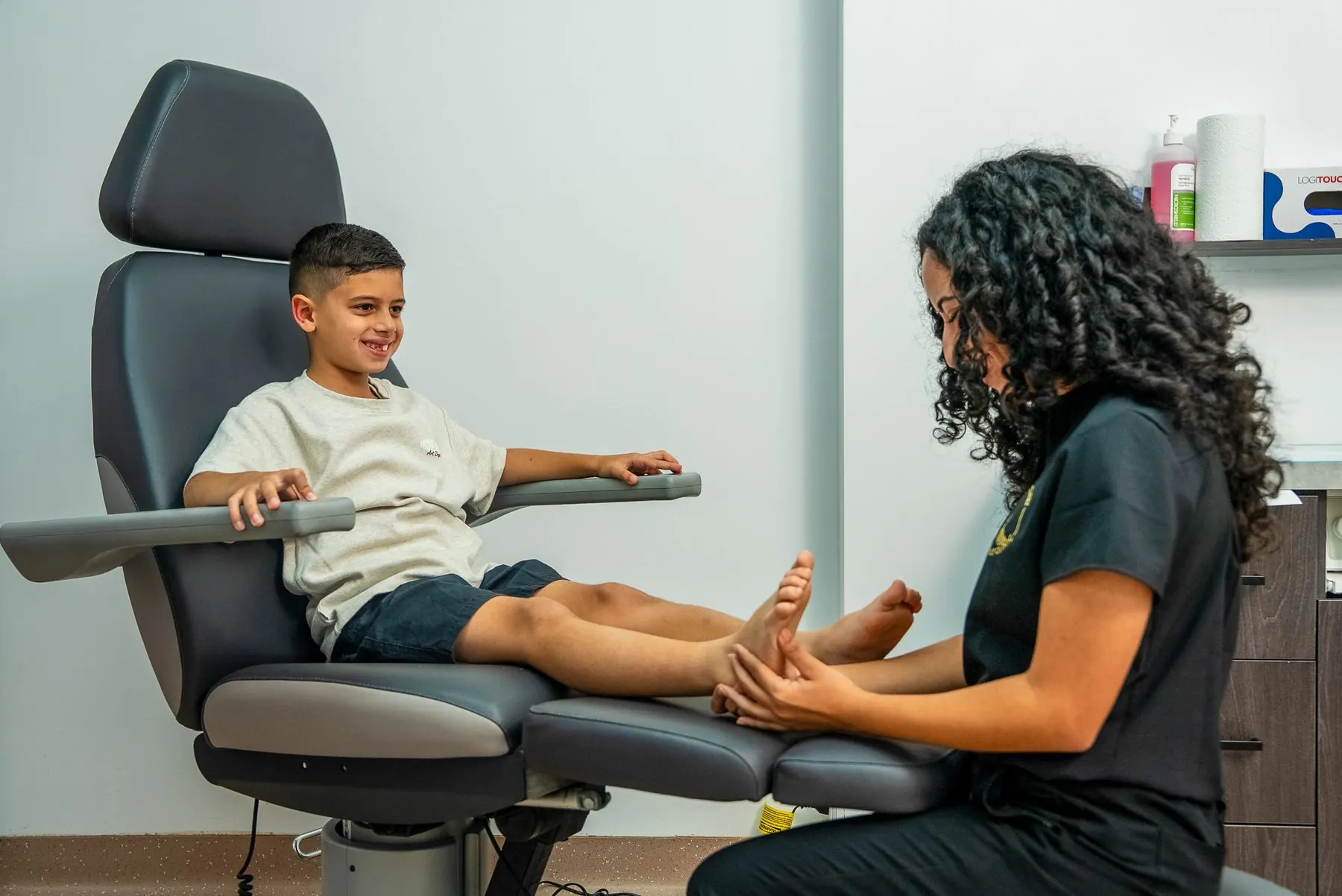
Simple footwear and orthotic changes resolve or greatly improve many neuromas. The larger and longer-standing the neuroma, the more likely additional treatment is needed.
When Symptoms Persist
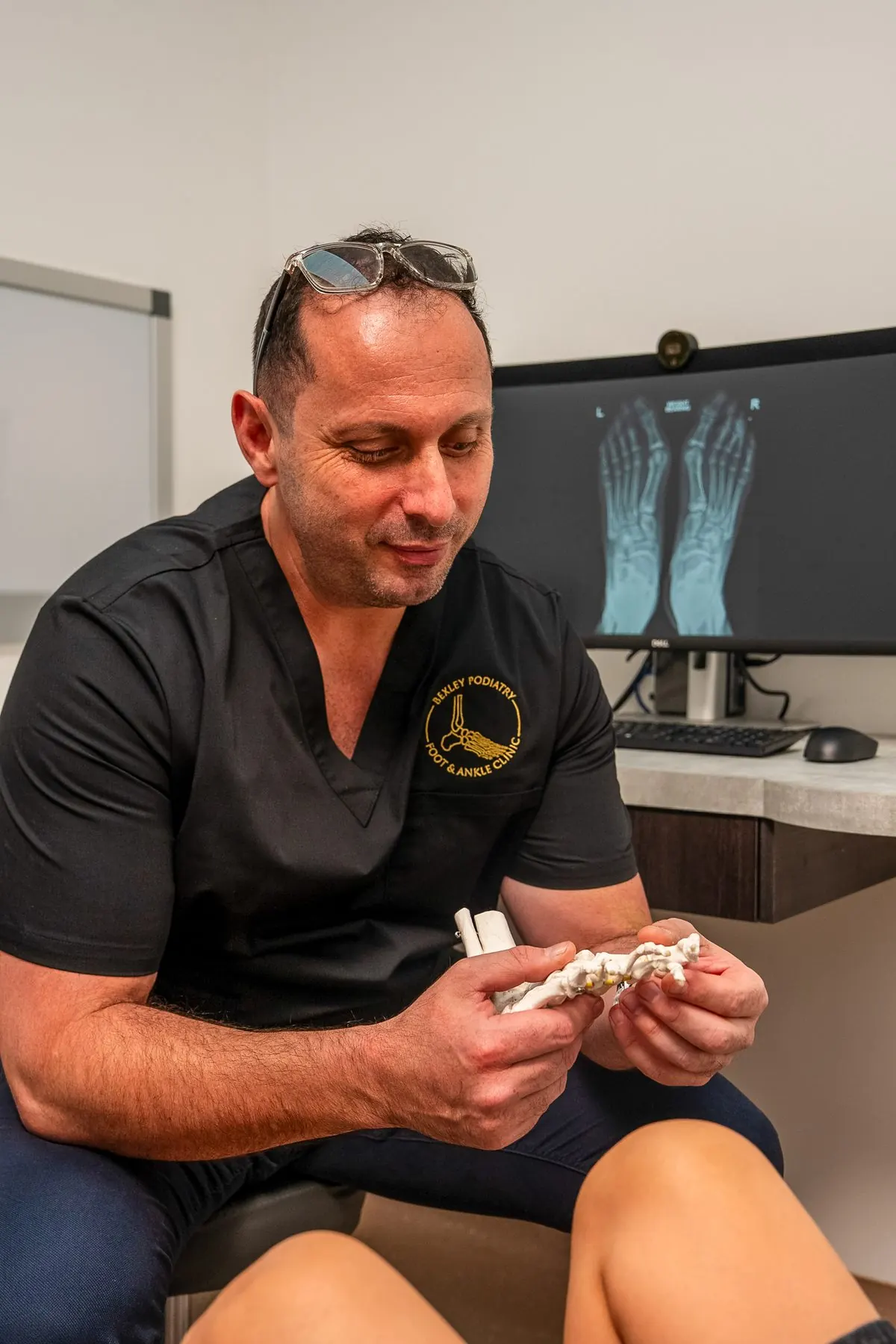
If conservative care and injections have not settled the nerve, advanced options are considered - including further ultrasound-guided procedures or, for a larger persistent neuroma, surgical removal or release of the nerve. Our podiatric surgical registrar can review persistent neuromas, and where surgery is appropriate it is arranged with an appropriate surgical specialist. Outcomes for well-selected surgical cases are generally good.
Morton's Neuroma FAQs
Does a Morton's neuroma need surgery?
Not for most people. The majority improve with footwear change, orthotic therapy and, if needed, an ultrasound-guided injection. Surgery is reserved for larger, persistent neuromas that have not responded to a genuine course of conservative care.
Why does it feel like there is a stone in my shoe?
That classic sensation comes from the thickened nerve being compressed between the metatarsal heads as you walk. There is nothing physically in your shoe - it is the irritated nerve producing the feeling, which is why offloading it helps so much.
Will the neuroma go away on its own?
It rarely disappears completely, but symptoms can be well controlled - sometimes to the point you barely notice it - by reducing the pressure on the nerve. The earlier the pressure is addressed, the better the response tends to be.
Can I keep running with a neuroma?
Often yes, with the right shoes, orthotic support and some load management. We will help you find footwear and a training approach that keeps the nerve settled so you can stay active.
Forefoot Pain Relief for Carlton, Kogarah and Bexley
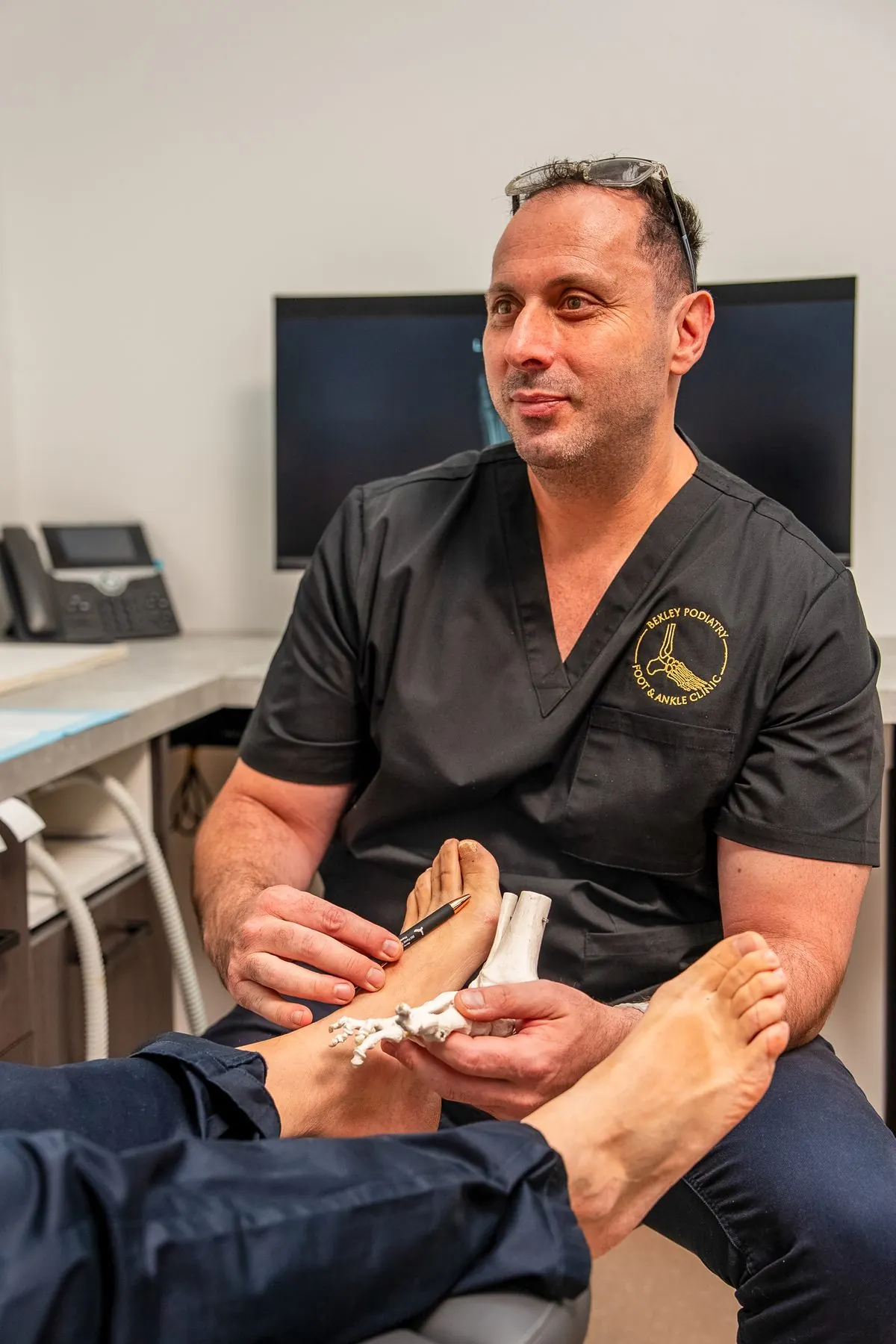
If a burning ball of the foot or a phantom pebble is cutting your walks short, we can find the cause and offload it. Bexley Podiatry: Foot and Ankle Clinic at 390 Forest Rd, Bexley, treats Morton's neuroma for patients from Carlton, Kogarah, Kingsgrove and the wider St George area. Call 1300 345 226 to book.
Related conditions
Corns & Calluses
Thickened skin from pressure or friction - relieved painlessly, with the underlying cause addressed to stop it returning.
Learn moreHammer Toes
Toes that buckle into a bent position - managed to keep them flexible and comfortable, corrected surgically if fixed.
Learn moreBunions
A progressive big-toe-joint deformity - managed early to control pain and slow it, corrected surgically when needed.
Learn moreRequest an appointment
Send a few details and our team will be in touch to arrange a time that suits you.
Visit the clinic
Bexley, NSW 2207