

Osteochondral Lesion Treatment in Bexley
Deep, aching ankle pain that has lingered long after a sprain, with catching, swelling or a sense the joint is not right? An osteochondral lesion - an injury to the cartilage and underlying bone inside the ankle - is a commonly missed cause worth investigating.
- Thorough ankle assessment
- Imaging coordination
- Surgical referral network
- 60+Years Combined Experience
- 4.9Google Rating (250+)
- Podiatric surgical registrar on team
- Endorsed for Scheduled Medicines
What an Osteochondral Lesion Is
An osteochondral lesion is an area of damage to the smooth cartilage lining a joint and the bone directly beneath it. In the foot and ankle it most often affects the talus, the bone that forms the lower part of the ankle joint. The injury ranges from a softening or bruise of the cartilage through to a fragment of cartilage and bone that has partly or fully separated from the joint surface.
These lesions frequently follow an ankle sprain or injury - the same twisting force that damages the ligaments can also damage the joint surface inside. Because the initial attention goes to the sprain, the lesion is often overlooked, and it declares itself later as deep ankle pain that will not settle. Cartilage has a limited ability to heal itself, which is why an osteochondral lesion warrants proper assessment rather than being dismissed as a slow-healing sprain.

Causes and Risk Factors
Osteochondral lesions usually relate to injury and joint loading. Common contributors include:
Ankle sprains and fractures
the most common cause, where the injury damages the joint surface as well as the ligaments
Recurrent instability
an unstable ankle that repeatedly stresses the cartilage
Repetitive loading
high-impact activity that loads the joint surface
Poor blood supply
in some lesions, limited blood flow to a small area of bone
Signs and Symptoms

Deep ankle pain
A deep, aching pain within the ankle, often worse with weight-bearing.
Persistent swelling
Ongoing or recurrent swelling that outlasts a normal sprain.
Catching or locking
A sense of catching, clicking or locking if a fragment is loose.
Giving way
A feeling of instability or the ankle not being trustworthy.
Slow recovery
An ankle injury that simply does not settle over the expected timeframe.
How We Assess It
Because osteochondral lesions are easily missed on standard checks, assessment focuses on identifying the possibility and arranging the right imaging. It typically includes:
Ankle examination
assessing the joint, its stability and where the pain localises.
Injury history
reviewing past sprains and how the ankle has behaved since.
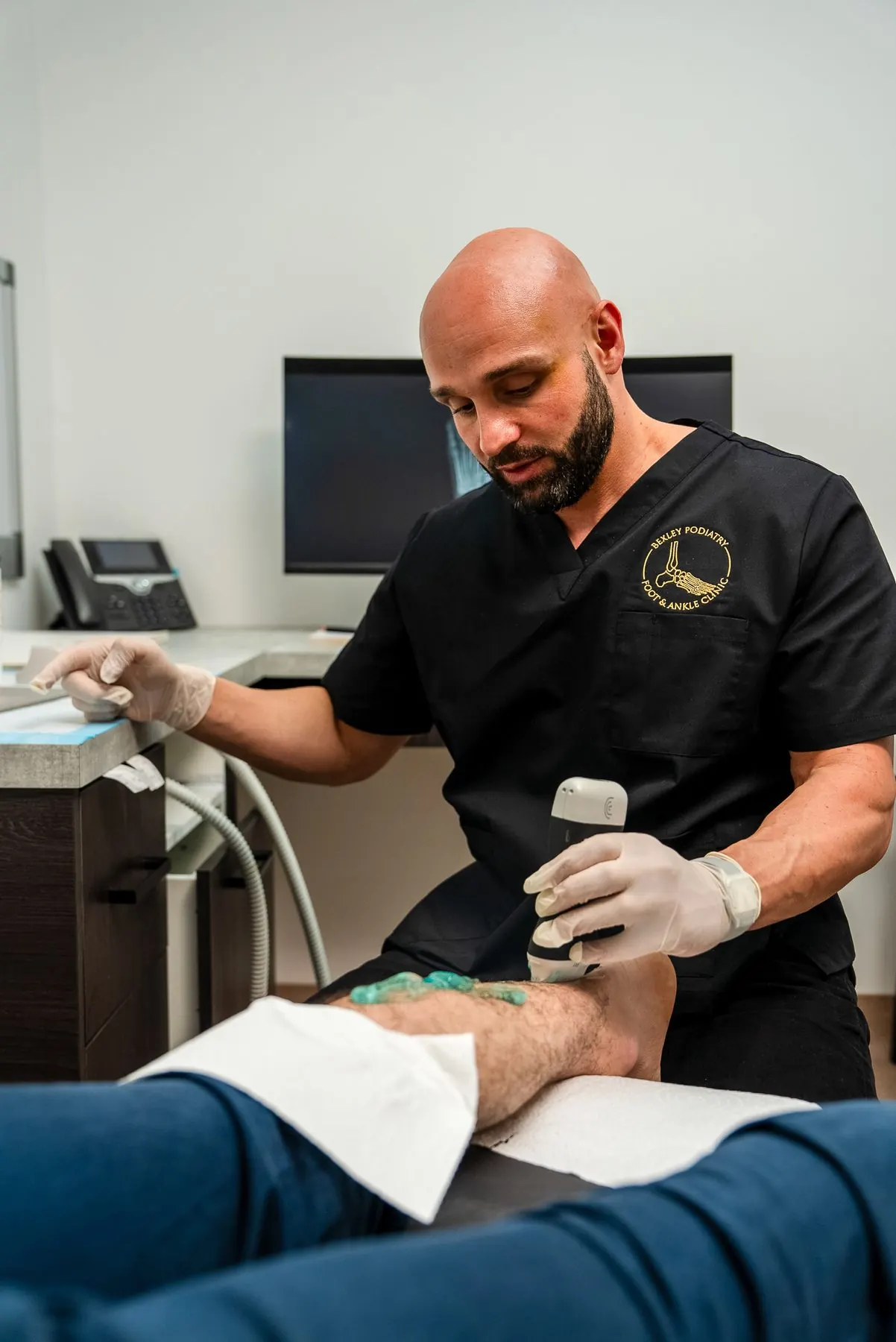
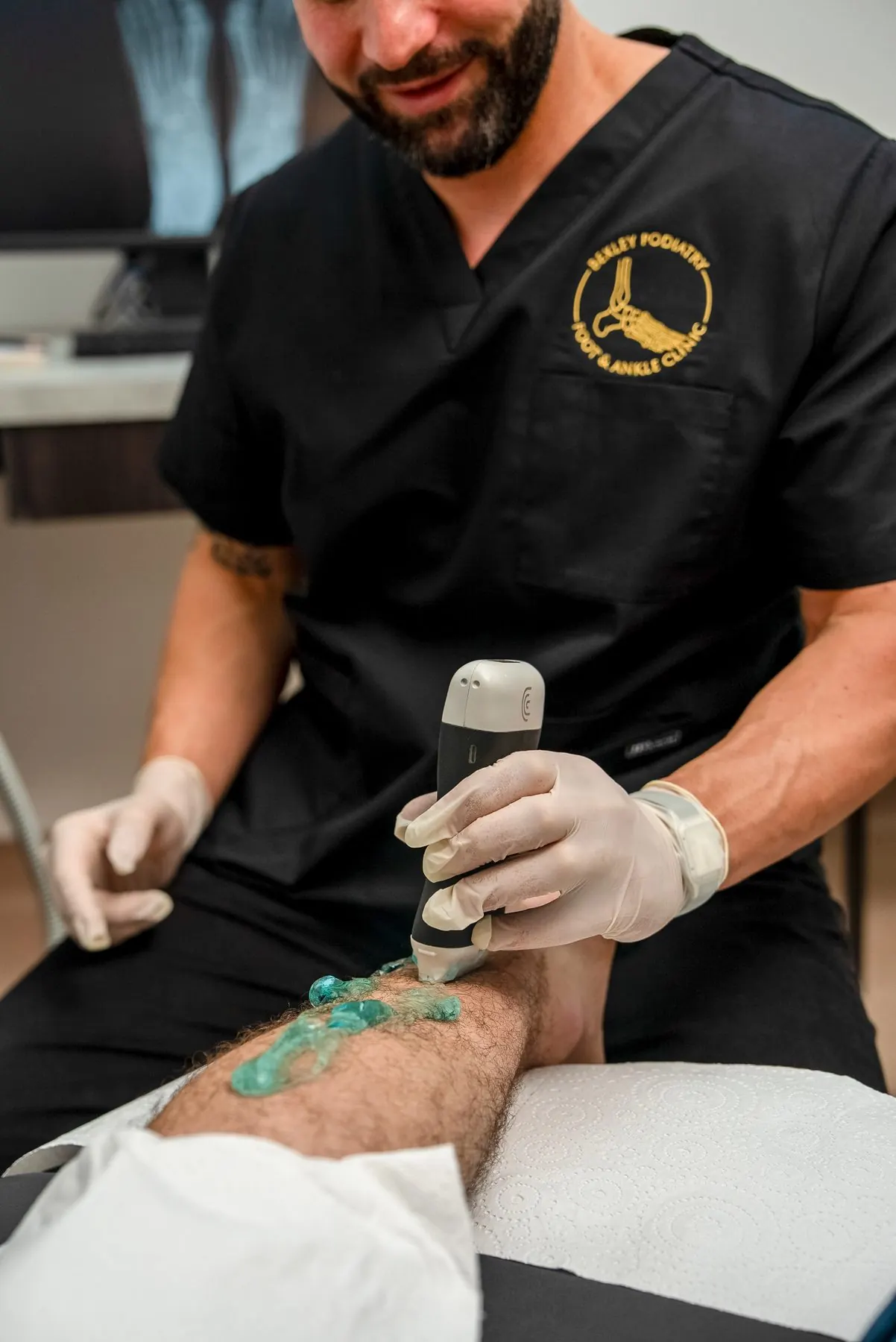
In-clinic diagnostic ultrasound
assessing associated soft-tissue and ligament injury around the joint.
MRI or CT referral
the key step, as these lesions are best seen on MRI or CT rather than X-ray alone.
Conservative Management
Some osteochondral lesions - particularly stable ones without a loose fragment - can settle with a period of protected loading and rehabilitation. Conservative care may include:
- Protected weight-bearing - a period of offloading or immobilisation to allow the joint surface to settle
- Activity modification - reducing the high-impact loading that stresses the lesion
- Ankle rehabilitation - restoring strength, balance and stability to protect the joint
- Custom orthotic therapy - improving alignment and offloading the affected part of the joint
- Addressing instability - treating any underlying ankle instability that keeps stressing the cartilage
Stable lesions may improve with protected loading and rehabilitation. Lesions with a loose or separated fragment, or that fail to settle, generally need surgical assessment.
When Surgery Is Considered
Osteochondral lesions with a loose or separated fragment, or that continue to cause pain and dysfunction despite conservative care, usually require surgical assessment. Procedures range from stimulating the joint surface to heal, through to fixing or replacing the damaged cartilage. Our podiatric surgical registrar can help coordinate assessment, and these joint-surface procedures are referred to an appropriate surgical specialist. Addressing any associated ankle instability is an important part of protecting the result.
Osteochondral Lesions FAQs
Why does my ankle still hurt deep inside months after a sprain?
Deep ankle pain that outlasts a sprain can mean the joint surface itself was injured - an osteochondral lesion - not just the ligaments. Because these lesions are easily missed, persistent deep pain, swelling or catching after an ankle injury is worth properly investigating with the right imaging.
Will an X-ray show an osteochondral lesion?
Not reliably. Many osteochondral lesions do not show clearly on a standard X-ray, especially early on. MRI or CT is usually needed to see the cartilage and underlying bone properly, which is why we arrange the appropriate scan when a lesion is suspected.
Can an osteochondral lesion heal without surgery?
Some can, particularly stable lesions without a loose fragment, with a period of protected loading and rehabilitation. Lesions with a separated fragment or that keep causing symptoms typically need surgical assessment, as cartilage has limited capacity to heal on its own.
Does ankle instability make this worse?
Yes. A repeatedly rolling, unstable ankle keeps stressing the joint surface and can worsen a lesion over time. That is why treating any underlying instability is an important part of managing an osteochondral lesion and protecting the joint.

Lingering Ankle Pain Investigated in Bexley
An ankle that has not been right since a sprain deserves a closer look. Bexley Podiatry: Foot and Ankle Clinic, 390 Forest Rd, Bexley, assesses osteochondral and ankle injuries for patients from Rockdale, Brighton-Le-Sands, Kogarah and across southern Sydney, and coordinates imaging and surgical referral where needed. Call 1300 345 226.
Related conditions
Ankle Instability
An ankle that keeps rolling or gives way - usually the legacy of sprains that never fully rehabilitated.
Learn moreFoot & Ankle Arthritis
Wear or inflammation in the foot and ankle joints - managed to reduce pain, protect joints and keep you moving.
Learn morePeroneal Tendon Disorders
Pain along the outer ankle from the peroneal tendons - often mistaken for a simple sprain that will not settle.
Learn moreRequest an appointment
Send a few details and our team will be in touch to arrange a time that suits you.
Visit the clinic
Bexley, NSW 2207