

Plantar Fasciitis Treatment in Bexley
First steps in the morning feel like standing on a drawing pin? Plantar fasciitis is the single most common source of heel pain - and the large majority of cases come good with the right conservative programme.
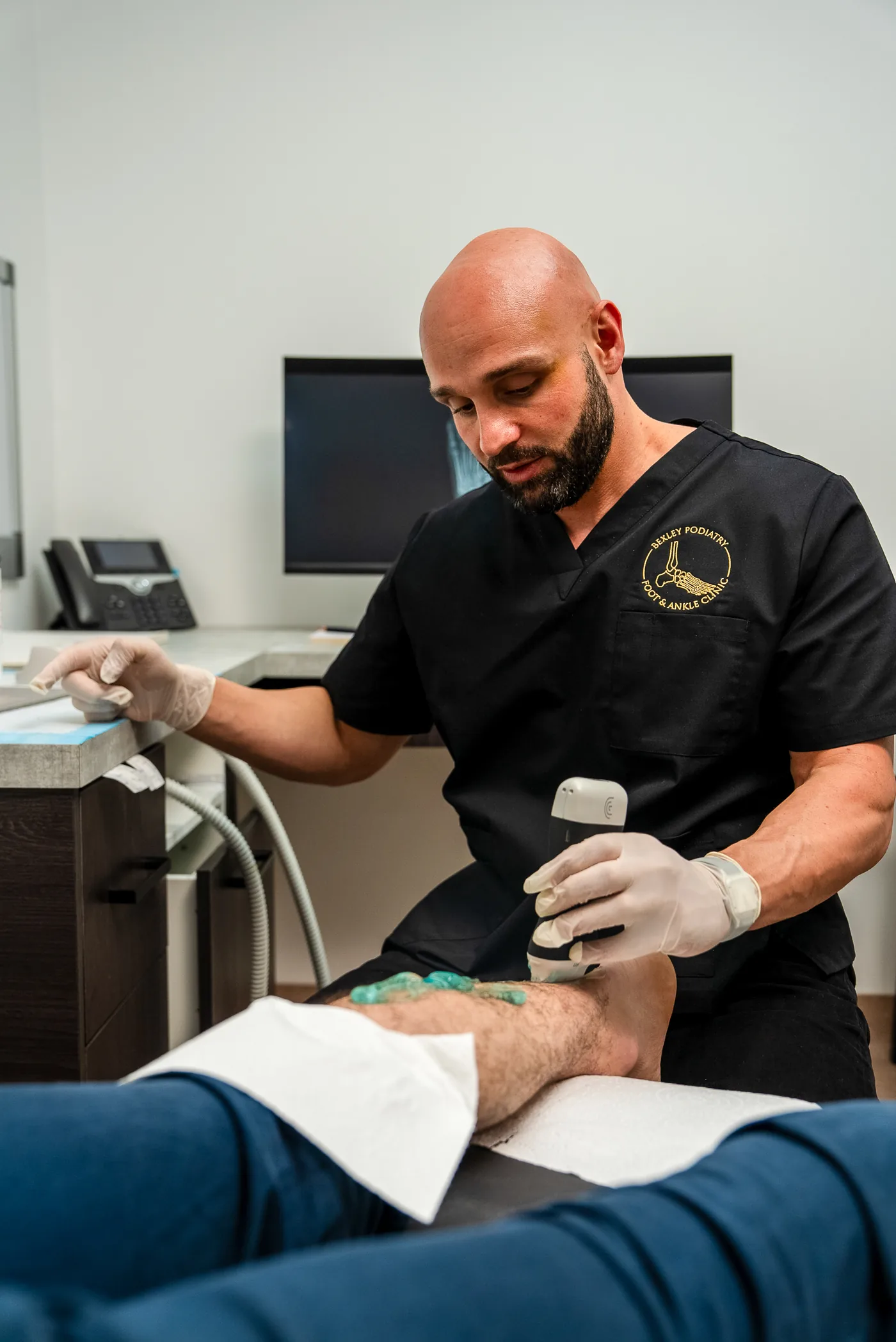
- In-clinic diagnostic ultrasound
- Shockwave therapy on site
- Custom orthotic therapy
- 60+Years Combined Experience
- 4.9Google Rating (250+)
- Podiatric surgical registrar on team
- Endorsed for Scheduled Medicines
What Plantar Fasciitis Is
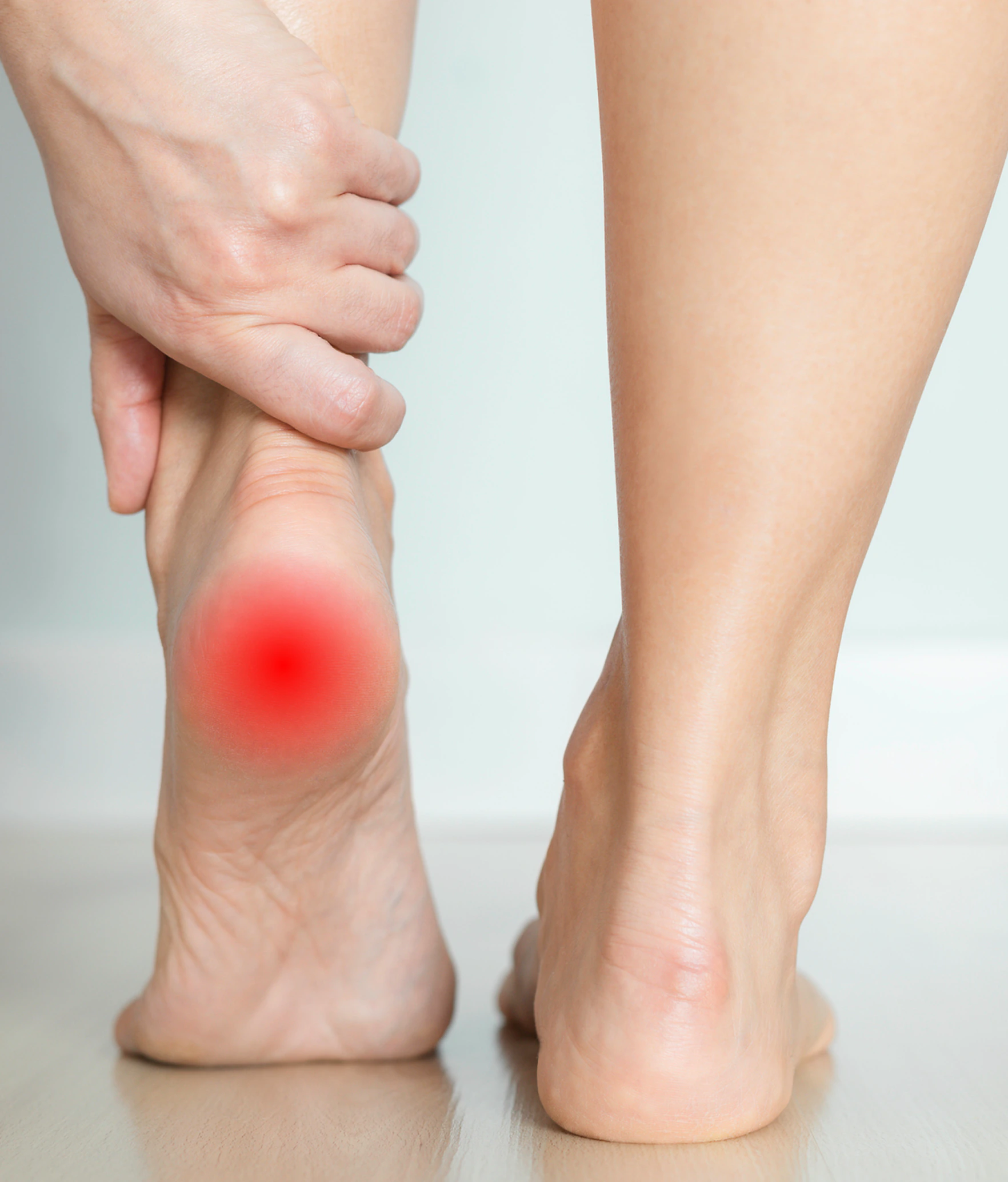
Plantar fasciitis is irritation and overload of the plantar fascia - a strong, fibrous band that runs along the sole from your heel bone forward to the base of the toes. It behaves like a natural spring, supporting the arch and helping absorb shock every time your foot hits the ground.
When the demand on that band outstrips what it can cope with, tiny areas of strain build up, the tissue becomes irritated and degenerative rather than simply inflamed, and pain sets in. It is the number one reason adults develop heel pain, and it makes up a sizeable share of the presentations we see across Bexley and Sydney's south.
It is not a tear in the everyday sense, and surgery is very rarely part of the story. What frustrates people most is the timeline - it can be slow to resolve, especially when treatment is patchy or put off.
What Tips the Fascia Over the Edge
Plantar fasciitis almost never comes down to one thing. It emerges when load on the fascia exceeds its tolerance - sometimes abruptly after a change in routine, sometimes creeping up over months. Contributors we look for include:
A jump in load
a sudden lift in running, walking or hours spent standing
Tight calves
stiff calf muscles and limited ankle bend that pass strain to the arch
Arch shape
flatter or higher arches that change how force spreads through the foot
Flat, flimsy shoes
unsupportive footwear and thongs worn for long stretches
Hard floors at work
long shifts standing on concrete or tiled surfaces
Weight and pregnancy
extra load through the foot from weight gain or pregnancy
Tissue ageing
reduced tissue elasticity, particularly through the 40 to 60 age range
How It Tends to Feel
The classic giveaway is pain on the inner edge of the heel that is at its worst on the very first steps after rest. Many people describe a sharp, bruise-like stab that eases as the foot warms up, only to nag again later after standing or exercise.
First-step pain
Sharp inner-heel pain as you get out of bed in the morning.
Pain after sitting
A flare when you stand up after a spell off your feet.
Inner-heel tenderness
A sore spot right on the inside of the heel.
Arch ache
A pulling ache along the arch that worsens after activity.
Guarded walking
Cutting long walks short to avoid the pain building.
Confirming the Diagnosis
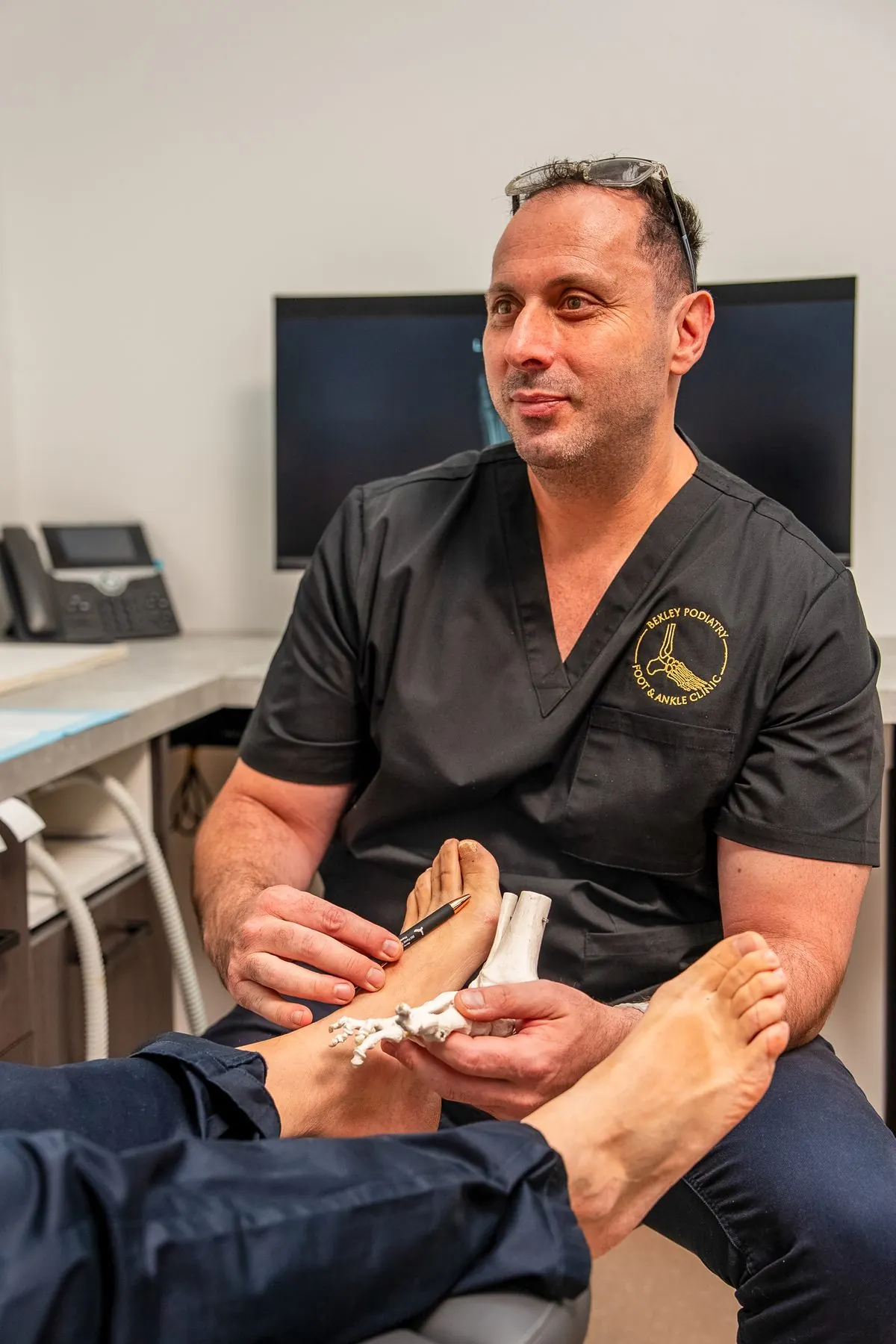
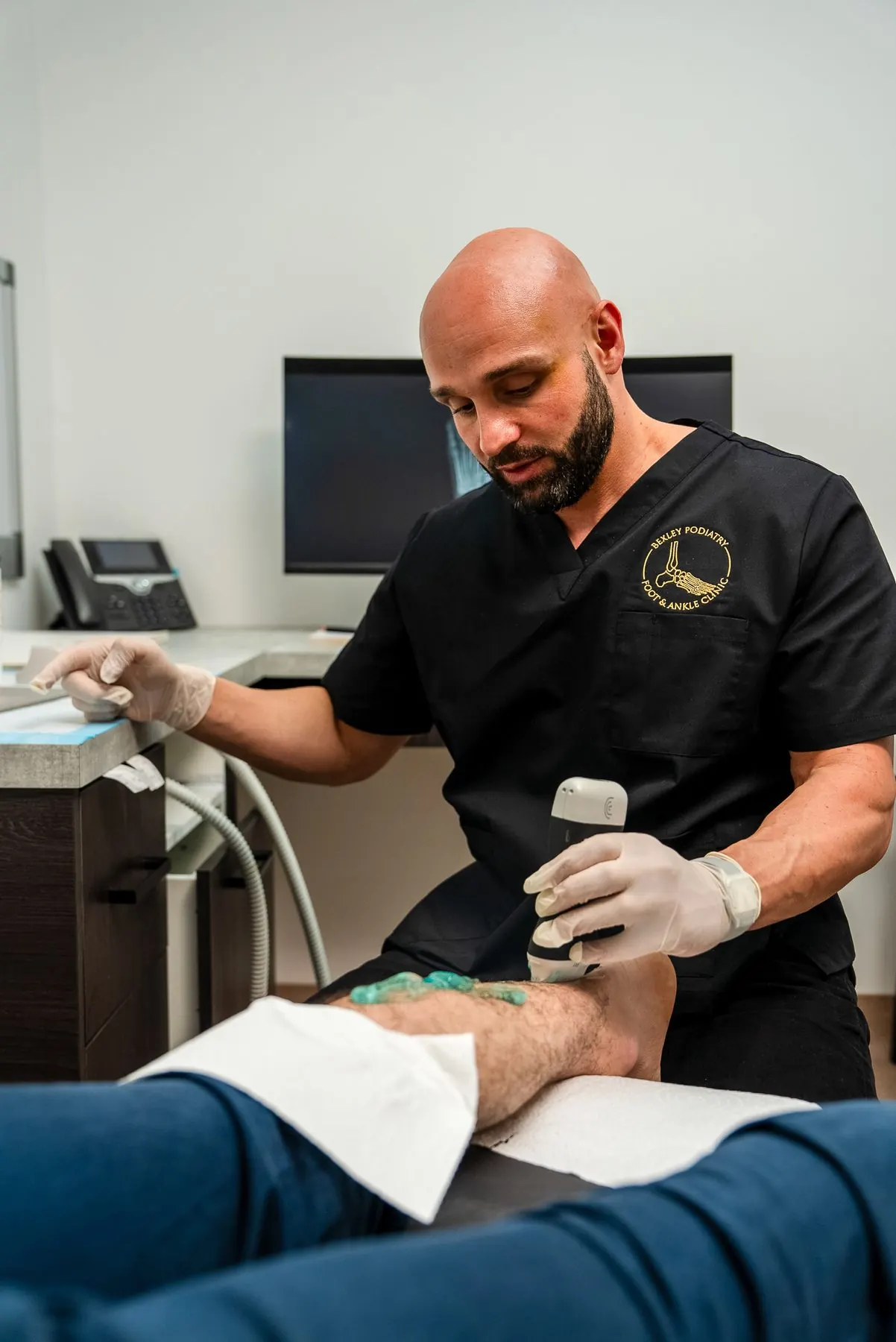
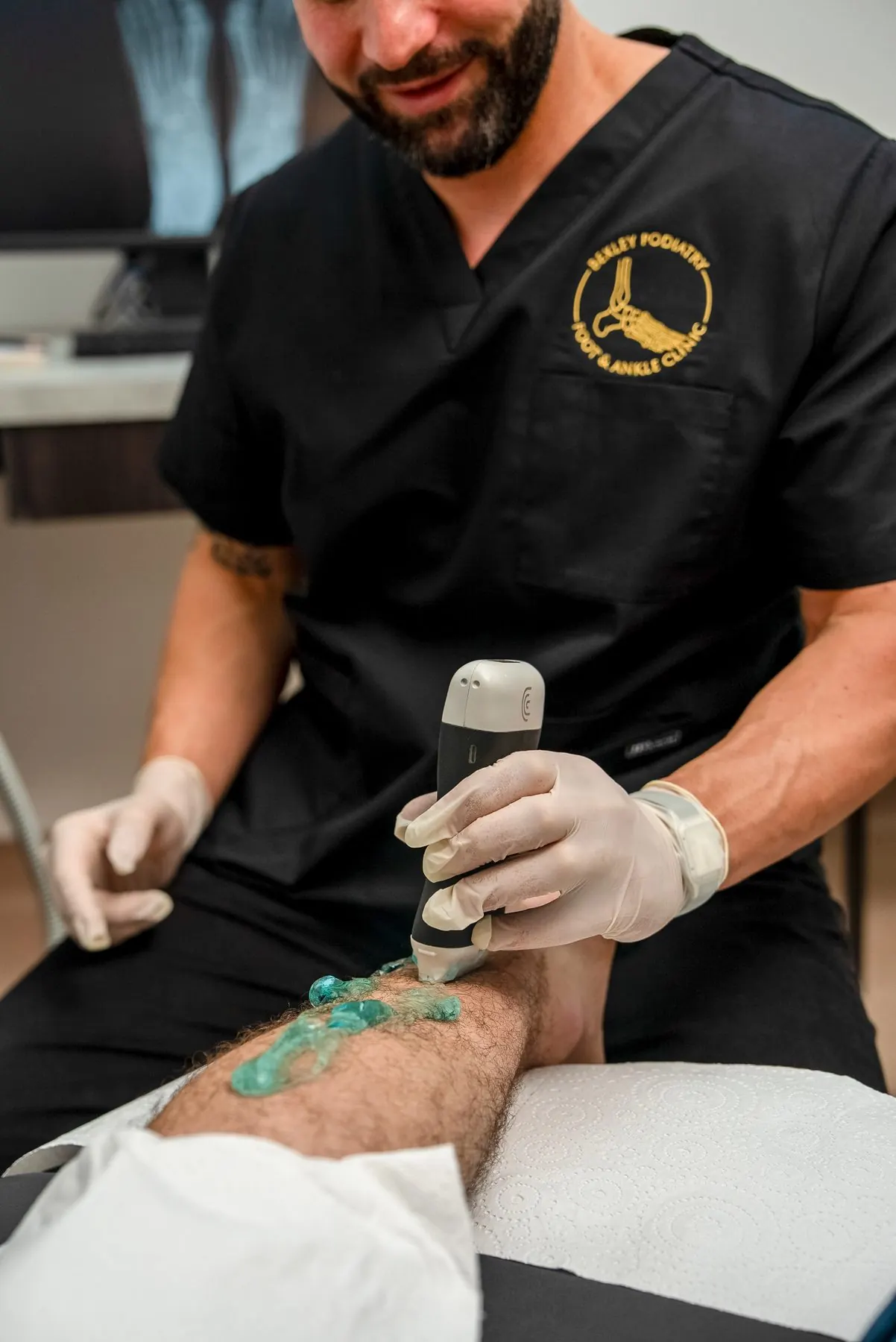
Plantar fasciitis is usually diagnosed clinically - your history and a hands-on exam tell most of the story. When we want to gauge severity or rule out mimics, imaging fills the gap, and having ultrasound in the clinic means we can look on the spot.
Detailed history
the pattern, timing and triggers of your pain.
Targeted palpation
of the fascia and heel to find the source.
Flexibility testing
checking ankle range and calf tightness.
Gait and posture analysis
identifying the mechanical drivers.
In-clinic diagnostic ultrasound
measuring fascia thickness and spotting degeneration or micro-tearing in real time.
X-ray referral
if a stress fracture or other bony cause needs excluding.
Treating Plantar Fasciitis
Plantar fasciitis responds well to a structured plan, and the research is encouraging - the clear majority of people recover with conservative care alone. Depending on your presentation we may combine:
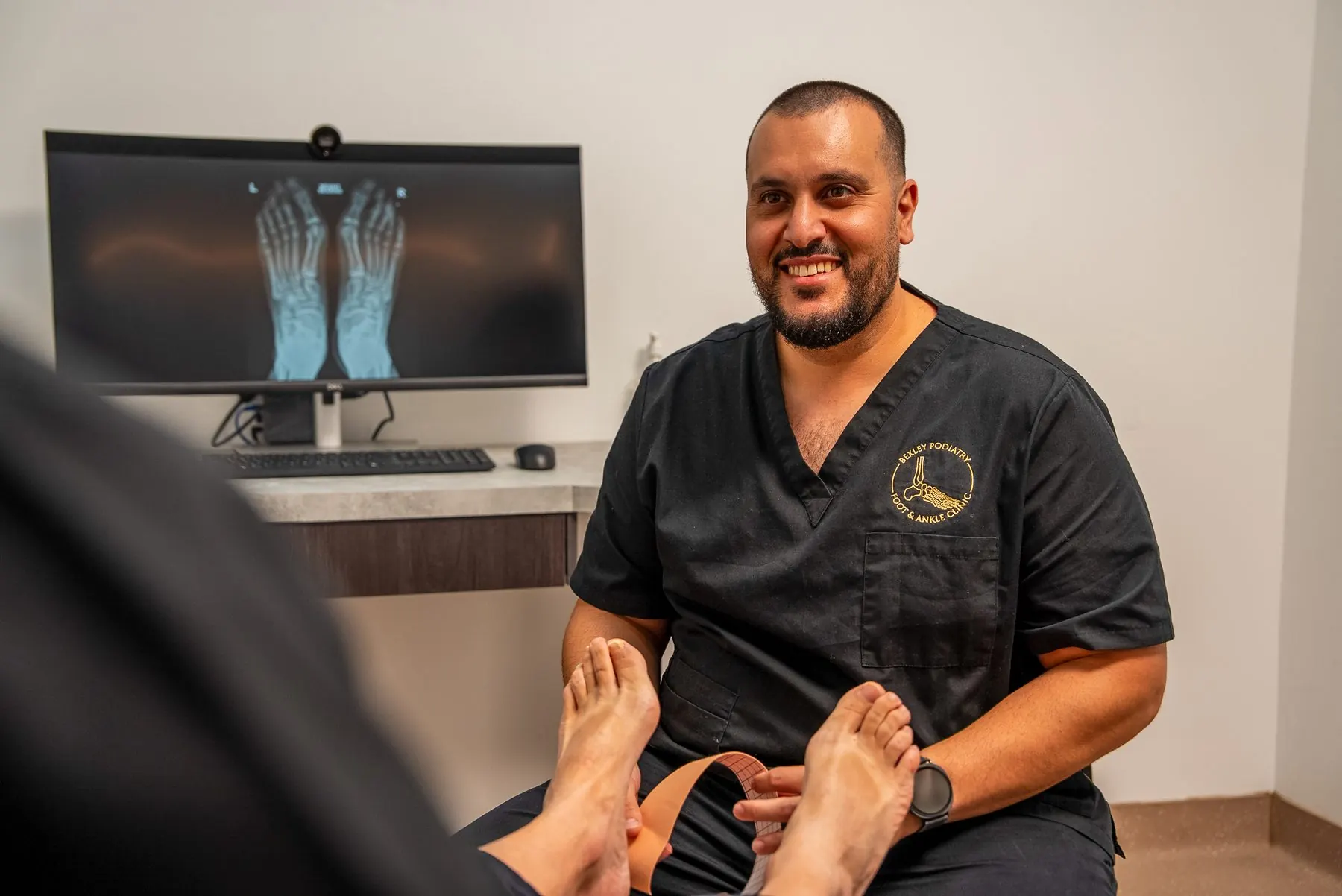
- Stretch and load programme - calf and fascia stretching plus progressive loading, ideally started before your first steps each day
- Custom orthotic therapy - devices built around your mechanics to support the arch and unload the fascia
- Shockwave therapy - strong evidence in persistent cases, prompting the body's own repair response across a course of sessions
- Footwear guidance - swapping problem shoes for options with genuine support and cushioning
- Activity modification - keeping you active while dialling load to a level the tissue can handle
- Night splinting - a gentle overnight stretch that can take the edge off morning pain
- Dry needling - settling tight trigger points in the calf and fascia that feed the problem
- Ultrasound-guided injection - reserved for significant inflammation that is not responding to the above
Recovery is a marathon, not a sprint - milder cases tend to ease over 8 to 12 weeks, while long-standing cases can take six months or more. Getting in early is the biggest single factor in a faster result.
When Conservative Care Stalls
A small share of cases turn genuinely chronic and refuse to budge with extended conservative treatment. At that point we revisit the diagnosis and weigh advanced options - such as an ultrasound-guided injection, a platelet-rich plasma injection, or, only after nine to twelve months of failed structured care, surgical release of the fascia. Surgery is uncommon and never a first step; our podiatric surgical registrar helps assess suitability, and complex cases are referred to an appropriate surgical specialist.
Plantar Fasciitis FAQs
Is plantar fasciitis just a heel spur?
No. Plantar fasciitis is a soft-tissue problem in the fascia itself, whereas a heel spur is a small bony growth that can form where the fascia meets the heel. Many people with fasciitis have no spur, and plenty with a spur feel nothing at all.
Will it clear up if I just leave it?
Sometimes, but often not without addressing what caused it. Left alone it can become chronic and drag out far longer. A targeted plan reliably produces better and faster outcomes than waiting and hoping.
Can I keep running with plantar fasciitis?
That depends on how irritable it is. Many people continue a modified running load through recovery. We will set a running plan that keeps you moving without provoking the fascia.
What is the quickest way to fix it?
There is no true overnight cure, but combining stretching, orthotic support, footwear change and shockwave therapy for persistent cases consistently gives the best results. A focused programme beats any single quick fix.
Plantar Fasciitis Help for Kogarah, Hurstville and Bexley
If morning heel pain is the first thing on your mind when your feet hit the floor, it is worth having properly assessed. Bexley Podiatry: Foot and Ankle Clinic, 390 Forest Rd, Bexley, sees plantar fasciitis patients from Kogarah, Hurstville, Carlton and the surrounding St George suburbs. Call 1300 345 226 to book.
Related conditions
Heel Pain
That first-step morning stab or a heel that aches by evening - assessed with in-clinic ultrasound and treated.
Learn moreAchilles Tendinopathy
Pain and stiffness in the tendon at the back of the heel - managed with graded loading, not rest alone.
Learn moreHigh-Arch Foot
A high, rigid arch that concentrates pressure on the heel and ball of the foot - and can predispose to rolling.
Learn moreRequest an appointment
Send a few details and our team will be in touch to arrange a time that suits you.
Visit the clinic
Bexley, NSW 2207