
What Does a Podiatrist Do? Everything You Need to Know
Not sure what a podiatrist actually treats? From heel pain to ingrown toenails, custom orthotics to foot surgery - here's everything a podiatrist can do.

TL;DR
Podiatrists are AHPRA-registered allied health professionals who diagnose and treat a wide range of conditions affecting the feet, ankles and lower limbs. Their scope goes far beyond toenail care - it includes heel pain, sports injuries, skin and nail conditions, custom orthotics, diabetic foot management, children's foot health and in some cases surgical procedures. You do not need a GP referral to see one.
Ask most people what a podiatrist does and you'll get something about toenails. That answer is technically correct but wildly incomplete. Podiatrists are university-trained allied health professionals registered with the Australian Health Practitioner Regulation Agency (AHPRA) who specialise in the assessment, diagnosis, treatment and prevention of conditions affecting the foot, ankle and lower limb.
In Australia, podiatry is a regulated profession. You cannot practise as a podiatrist without completing an accredited four-year degree and maintaining AHPRA registration. That regulatory framework sets a consistent standard of clinical training and accountability across the profession, which matters when you're choosing someone to manage a persistent or complex foot condition.
What Conditions Does a Podiatrist Treat?
The clinical scope of podiatry is broader than most people realise. A podiatrist can assess and treat:
- Heel pain: Plantar fasciitis, heel spurs, Achilles tendinopathy and Sever's disease in children
- Nail conditions: Ingrown toenails, fungal nail infections (onychomycosis), thickened nails and nail trauma
- Skin conditions: Corns, calluses, plantar warts, cracked heels and dry skin
- Sports injuries: Running injuries, shin splints, ankle sprains, stress fractures and overuse conditions
- Biomechanical issues: Flat feet, high arches, overpronation, supination and gait abnormalities
- Diabetic foot care: Risk assessment, circulation and sensation checks, ulcer prevention and wound management
- Children's podiatry: Developmental concerns, in-toeing, out-toeing, growing pains and coordination issues
- Arthritis and joint conditions: Foot and ankle pain related to osteoarthritis, rheumatoid arthritis and gout
- Surgical care: Ingrown toenail surgery, bunion surgery, hammer toe correction and more complex foot and ankle procedures
What Happens at Your First Podiatry Appointment?
Your first appointment typically takes 30-60 minutes depending on the complexity of your presentation. It starts with a detailed clinical history - what's bothering you, how long you've had it, what makes it better or worse, your medical history, medications, footwear habits and activity levels.
This is followed by a physical assessment. The podiatrist will examine the foot and ankle directly, assessing range of motion, joint function, skin and nail condition, and the alignment of your foot. Where relevant, a gait assessment is performed - watching you walk on a flat surface or treadmill to identify biomechanical factors contributing to your problem.
From there, you'll get a clear explanation of what's causing the issue, what treatment options are available and what the likely timeline for improvement looks like. Most conditions can be treated in-clinic or managed with a home programme. Some require ongoing care or referral to other specialists.
Do You Need a Referral to See a Podiatrist?
No. In Australia, podiatry is a self-referral allied health service. You can book directly without seeing a GP first. That said, a referral does matter in certain situations:
- Medicare Chronic Disease Management (CDM) plans: If your GP puts you on a CDM plan for a chronic condition, you may be eligible for up to five Medicare-rebated allied health visits per calendar year, including podiatry.
- NDIS: Podiatry is a funded therapeutic support under the National Disability Insurance Scheme. A GP referral is not required, but podiatry must be included in your plan.
- Private health insurance: Most extras policies cover podiatry with no referral required. Check your policy for annual limits and waiting periods.
- WorkCover or DVA: These schemes typically require a referral from a treating doctor before podiatry can be claimed.
What Are Custom Orthotics and Does a Podiatrist Make Them?
Yes. Prescribing and fabricating custom foot orthotics is one of the core clinical services podiatrists provide. A custom orthotic is a prescription insole made specifically for your foot, based on a biomechanical assessment of your gait, foot posture and lower limb alignment.
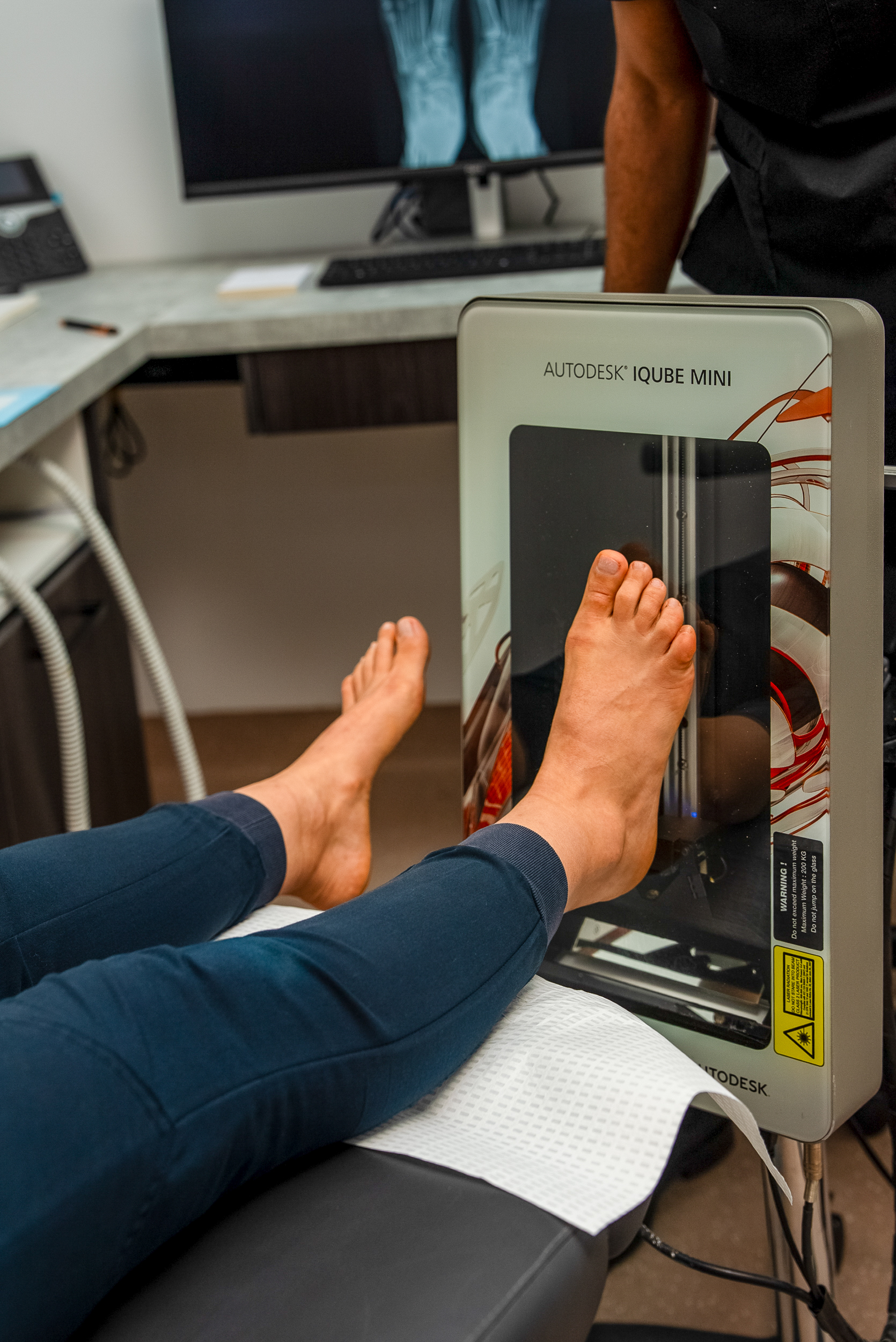
They are not the same as the generic insoles available at a pharmacy or sports store. According to Cochrane systematic reviews, custom orthotics have demonstrated meaningful clinical benefit for conditions including plantar fasciitis, patellofemoral pain and posterior tibial tendon dysfunction. The process involves capturing your foot shape through foam impression, plaster casting or 3D scanning, then fabricating the device to specification.
What Is the Difference Between a Podiatrist and an Orthopaedic Surgeon?
Both treat foot and ankle conditions, but the training pathways and clinical scopes are different. Orthopaedic surgeons complete a medical degree followed by specialist surgical training across the musculoskeletal system. Podiatrists complete a four-year podiatry degree and, for those who go into surgery, a separate podiatric surgical fellowship through the Australasian College of Podiatric Surgeons.
In practice, for foot and ankle conditions, a podiatrist is often the most appropriate first point of contact. They handle the full spectrum of conservative care and, where they hold surgical qualifications, operative procedures on the foot and ankle.
What Is a Surgical Podiatrist?
A surgical podiatrist is a podiatrist who has completed additional postgraduate training in foot and ankle surgery. They are qualified to perform operative procedures including bunion correction, ingrown toenail surgery, hammer toe surgery, plantar fascia release and more complex foot and ankle reconstructive procedures.
Bexley Podiatry has a podiatric surgical registrar on the clinical team. This means patients who need a surgical opinion or assessment can access it directly through the clinic, without needing a separate referral to a surgeon at another facility.
Does Podiatry Help With Diabetic Foot Care?
Yes, and for people living with diabetes, regular podiatry is not optional - it's essential. Diabetes can cause peripheral neuropathy (reduced sensation in the feet) and peripheral arterial disease (reduced circulation). Both significantly increase the risk of foot ulcers, infections and in severe cases, amputation.
Diabetes Australia recommends that all people with diabetes have a foot examination at least once per year. Those with existing complications or risk factors should be seen more frequently. A podiatric diabetic foot assessment covers sensation testing, circulation assessment, skin and nail inspection, wound review and risk stratification.
Whether it's heel pain, an ingrown toenail or something you're not sure about - a podiatry assessment is the fastest way to get a proper answer and a clear plan. Book your first appointment.
Related on our site
Frequently asked questions
Is a podiatrist the same as a chiropodist?
Yes. "Chiropodist" is the older term for podiatrist. In Australia, the profession is universally referred to as podiatry and regulated by AHPRA. Both terms refer to the same university-trained health professional.
Can a podiatrist prescribe medication?
Podiatrists in Australia have limited prescribing rights. They can prescribe certain topical agents and local anaesthetics relevant to podiatric treatment. Podiatrists endorsed for scheduled medicines have broader prescribing authority. For systemic medications, they refer to a GP or specialist.
How much does a podiatry appointment cost?
Private podiatry fees vary by clinic and appointment type. Most private health insurers with extras cover podiatry. Medicare rebates are available through Chronic Disease Management plans (up to five visits per year). Some services are covered under the NDIS and DVA.
How often should I see a podiatrist?
That depends on your situation. For an acute problem like a new heel pain or ingrown toenail, you may only need one or two appointments. For ongoing conditions, biomechanical management or diabetic foot care, regular reviews every 3-6 months are typically recommended.
Can children see a podiatrist?
Yes. Podiatrists routinely assess and treat children for developmental concerns, growing pains, in-toeing, coordination issues and skin or nail problems. Paediatric podiatry is a recognised area of the profession.