
Running Injuries - When to See a Podiatrist (and When to Wait)
Running injury not improving? A podiatrist assesses load, biomechanics and footwear to find the real cause. Here's when to book and what the assessment covers.

TL;DR
Most running injuries stem from load errors (too much, too soon), biomechanical factors, or inadequate footwear. A podiatrist assesses all three. See one if pain is worsening with continued running, hasn't improved after 2 weeks of rest, or is changing how you run. Early assessment dramatically shortens recovery time compared to waiting.
Runners are notoriously reluctant to stop running. The instinct is to push through, modify slightly, and hope things settle. For minor muscle soreness, that approach is usually fine. For actual injury, it's one of the main reasons runners end up with three months off instead of two weeks.
A podiatrist isn't just for chronic conditions - they're one of the most useful first contacts for running injuries, particularly when the problem is in the foot, ankle, lower leg or relates to how you're loading the ground with every stride. This article explains which running injuries benefit most from podiatric assessment, what to expect from the assessment process, and how to tell when waiting is the right call versus when you need to get assessed now.
What Running Injuries Do Podiatrists Treat?
Podiatrists manage a broad range of running-related conditions. Those with the strongest evidence for podiatric intervention include:
- Plantar fasciitis: The most common running injury presenting to podiatry. Classic heel pain worst in the morning. Load management, orthotics and shockwave therapy are highly effective.
- Achilles tendinopathy: Both insertional (at the heel bone) and mid-portion (4-6cm above the heel). Responds well to progressive loading protocols and shockwave. See our dedicated post on Achilles tendinopathy treatment.
- Medial tibial stress syndrome (shin splints): Periosteal pain along the inner tibia from repetitive tibial bending. Podiatric management addresses both load and the biomechanical drivers of tibial bending moment.
- Patellofemoral pain (runner's knee): A British Journal of Sports Medicine meta-analysis found foot orthoses significantly reduce patellofemoral pain, particularly in runners with pronated foot posture.
- Metatarsal stress fractures: Bony stress reactions from repetitive loading, typically in the second or third metatarsal. Requires offloading, footwear modification and a structured return-to-run protocol.
- Morton's neuroma: Compression of the digital nerve between metatarsal heads causing shooting or burning pain into the toes. Footwear modification, metatarsal padding and occasionally injection therapy.
- Ankle sprains (post-acute): After initial management, assessment of ankle stability, proprioceptive deficits and return-to-running readiness reduces the high recurrence rate associated with undertreated ankle sprains.
- Sesamoiditis: Inflammation of the sesamoid bones under the big toe joint. Common in forefoot strikers and dancers. Offloading and activity modification are the primary interventions.
When Should You See a Podiatrist for a Running Injury?
The following scenarios warrant a podiatry assessment rather than more waiting:
- Pain is worsening despite reduced load. If you've already cut back training and the pain is getting worse, not better, something structural needs to be addressed.
- Pain has persisted beyond 2 weeks without improvement. Soft tissue injuries that are healing typically show some improvement within the first 2 weeks of appropriate management. No change after 2 weeks suggests the injury needs a different approach.
- The pain is altering your running form. Compensating for pain changes how you load other structures, creating secondary problems. Assessment and management of the primary injury protects you from a cascade of secondary issues.
- Pain occurs immediately on running and stops you running. This pattern - pain that hits quickly and forces you to stop - often indicates a more significant injury that needs clinical assessment to rule out stress fracture or other structural pathology.
- You have a race or event within 6-8 weeks. Early assessment gives you the best chance of making the start line. Waiting until 2 weeks before the event does not.
When Is It Okay to Wait?
Minor delayed-onset muscle soreness (DOMS) after a hard effort or a new training stimulus is normal and resolves with easy activity within 48-72 hours. Minor blisters, superficial skin irritation, and general fatigue in legs after a long run don't need a podiatry appointment.
The reliable guide is: if the pain is in the same place on two or more consecutive runs, or is getting worse rather than better with continued activity, see someone.
What Does a Running Injury Assessment Involve?
At Bexley Podiatry, a running injury assessment covers:
- Training history: Recent changes to weekly mileage, intensity, surfaces, footwear - load errors are the most common cause of running injuries and the history often tells the story before the physical exam.
- Physical examination: Joint range of motion, muscle flexibility (particularly calf complex and hip flexors), strength testing, and palpation of the symptomatic structure.
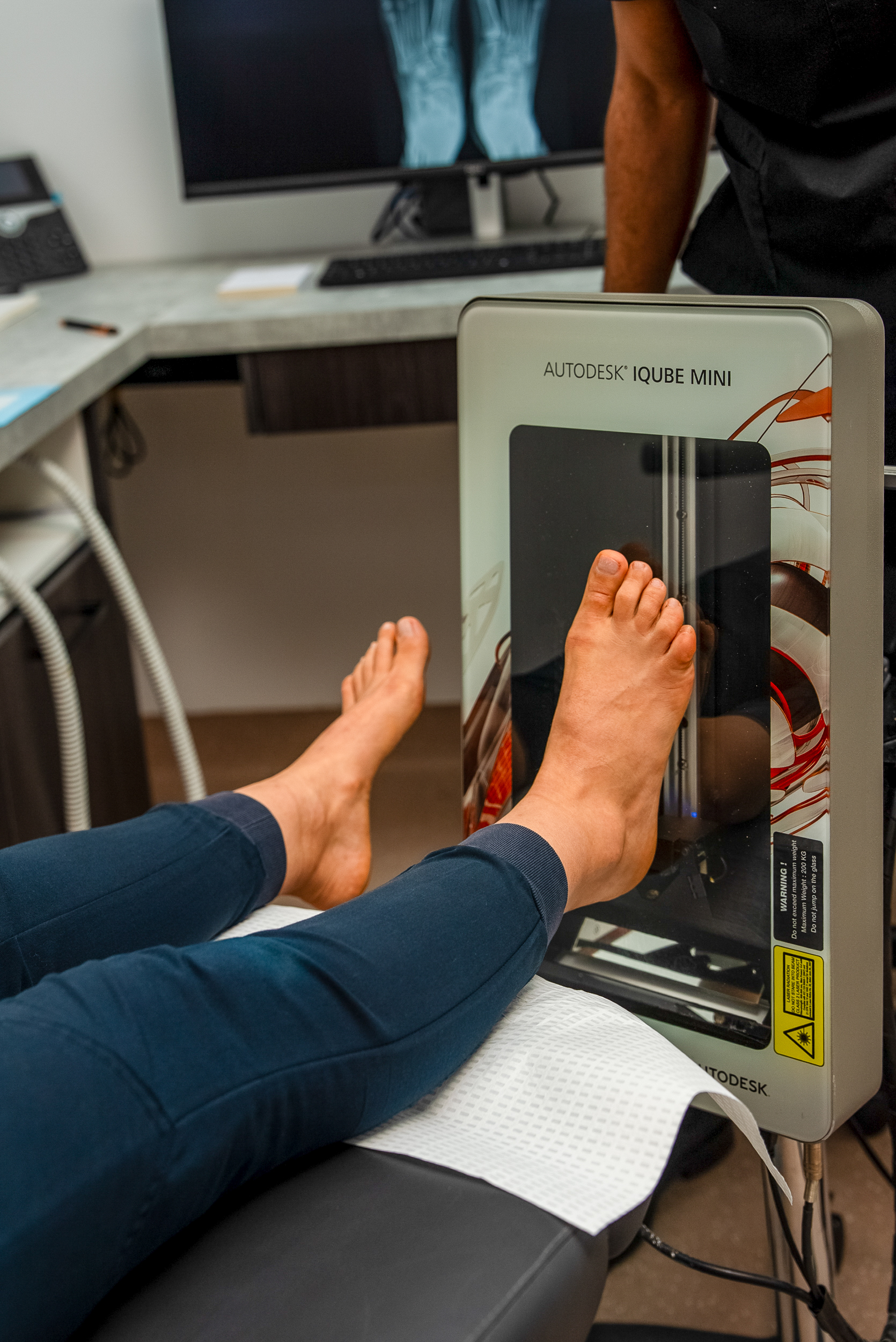
- Gait analysis: Observation of your running pattern on a treadmill or flat surface to identify biomechanical contributors - foot strike pattern, pronation rate, cadence, hip drop, crossover gait and other variables that increase tissue load.
- Footwear assessment: Checking your current running shoes for appropriate category, condition and fit. A worn-out shoe or a shoe in the wrong stability category for your foot type is a common overlooked contributor.
- Diagnosis and plan: A clear explanation of what's injured and why, what the treatment approach is, and a realistic return-to-running timeline.
Can Orthotics Help Running Injuries?
For many runners, yes. Custom orthotics prescribed for running-related conditions address the biomechanical loading that is stressing the symptomatic structure. Research published in the Journal of Orthopaedic and Sports Physical Therapy supports custom orthoses for plantar fasciitis, patellofemoral pain and medial tibial stress syndrome in runners.
Orthotics are not a universal solution - some running injuries are primarily load errors that need volume management and progressive rehabilitation, not a device. Your podiatrist will advise based on your specific presentation and the identified biomechanical factors.
The Role of Shockwave Therapy in Running Injuries
For runners with chronic tendon or fascial injuries that haven't responded to load management and rehabilitation, extracorporeal shockwave therapy (ESWT) has strong evidence of effectiveness. It's particularly useful for:
- Plantar fasciitis lasting more than 3 months
- Insertional and mid-portion Achilles tendinopathy
- Tibialis posterior tendinopathy
Shockwave promotes biological tissue repair rather than just pain masking - making it a durable intervention rather than a temporary fix. A standard course is 3-6 sessions spaced one week apart, with the full therapeutic effect typically apparent 6-8 weeks after the final session.
Running injuries don't resolve by being ignored. Early assessment means faster return to full training, not a longer time off. Book a running injury assessment.
Frequently asked questions
Should I stop running if I have a running injury?
It depends on the injury. For stress fractures and significant tendon pathology, a period of complete rest from running is often necessary. For many overuse injuries, a strategic load reduction (rather than complete cessation) is more appropriate - complete rest frequently leads to deconditioning without resolving the underlying cause. Your podiatrist will advise based on your specific diagnosis.
Can I see a podiatrist if I'm not a competitive runner?
Absolutely. Running-related injuries affect recreational runners, people who walk regularly, new runners and experienced athletes equally. Any repetitive loading activity that creates symptoms warrants assessment.
Will I need orthotics for my running injury?
Not necessarily. Orthotics are appropriate when a biomechanical contributor to the injury can be modified with a prescription device. For many runners, load management, rehabilitation and footwear advice are sufficient. An assessment is the only way to know.
How quickly can a podiatrist see me for a running injury?
Bexley Podiatry aims to see urgent presentations as promptly as possible. Contact the clinic directly for current availability. For non-urgent presentations, a standard appointment is typically available within 1-2 weeks.