
Orthotics for Flat Feet - Do They Actually Help?
Flat feet don't always need orthotics - but when they do, the right pair makes a real difference. Here's what the evidence says and how to know if they'll help you.
TL;DR
Orthotics can help flat feet - but only when they're the right type, prescribed for the right reason. Not everyone with flat feet needs them. The key question is whether your flat feet are actually causing symptoms like pain, fatigue or secondary knee and hip issues. A proper biomechanical assessment answers that question definitively.
Flat feet get a lot of attention. Walk into any sports store and you'll find a wall of insoles claiming to fix them. See a podiatrist and the conversation is usually more nuanced. Flat feet are extremely common - estimates from the American Orthopaedic Foot and Ankle Society suggest around 20-30% of people have some degree of flat foot - and the majority have no symptoms at all. The real question isn't whether your foot is flat. It's whether your flat foot is causing a problem.
What Is a Flat Foot?
A flat foot (pes planus) is a foot where the medial longitudinal arch is lower than typical - in some cases absent entirely when standing. When the arch collapses under body weight, the foot tends to pronate (roll inward) excessively during walking and running. This altered load distribution is what creates downstream problems in the ankle, knee, hip and lower back.
Flat feet are classified in two main ways:
- Flexible flat foot: The arch disappears when standing but reappears when the foot is unloaded - when you sit down or stand on tiptoes. This is the most common type and is often asymptomatic.
- Rigid flat foot: The arch is absent in all positions, loaded or unloaded. This is less common and more likely to be associated with a structural cause such as tarsal coalition or severe posterior tibial tendon dysfunction.
When Do Flat Feet Become a Problem?
Flat feet become clinically significant when they cause symptoms. Those symptoms might include:
- Arch or heel pain after standing or walking, particularly later in the day
- Foot fatigue that limits how long you can be on your feet at work or at home
- Knee pain on the inner (medial) side - a common downstream effect of sustained overpronation
- Hip pain or lower back pain with no other obvious cause
- Achilles tendinopathy or shin splints in runners
- Uneven shoe wear - wear concentrated on the inner heel and medial forefoot
- Recurring calluses on the inner border of the big toe or ball of the foot
If none of these apply to you, your flat feet are most likely not causing a problem and orthotics are probably not warranted.
What Does the Evidence Say About Orthotics for Flat Feet?
For symptomatic flat feet, the evidence is reasonably solid. A Cochrane systematic review of foot orthoses for adult flat foot found that custom orthotics significantly reduced pain and improved function compared to a sham condition. A 2020 review in the Journal of Foot and Ankle Research confirmed custom orthotics outperform generic insoles for moderate to severe flat foot presentations.
The caveat is clear in every review: the benefit is specific to symptomatic patients. Prescribing orthotics for flat feet that aren't causing pain or functional limitation is unlikely to provide a clinically meaningful outcome, and the evidence doesn't support it.
Custom Orthotics vs Off-the-Shelf: Which Do You Need?
Not everyone with symptomatic flat feet needs a custom device. The decision depends on the severity of the presentation and how well the foot responds to a trial of a generic product.
- Off-the-shelf orthotics: Appropriate for mild cases, general arch fatigue and as a first-line trial. A quality semi-rigid arch support from a pharmacy or podiatry clinic can provide meaningful relief for mild flat foot. They're significantly cheaper than custom devices.
- Custom orthotics: Warranted when the presentation is moderate to severe, when off-the-shelf products haven't provided adequate relief, or when there's a specific biomechanical characteristic that a generic product can't adequately address. Custom devices are also preferred for athletes with high training loads and people with complex biomechanical patterns.
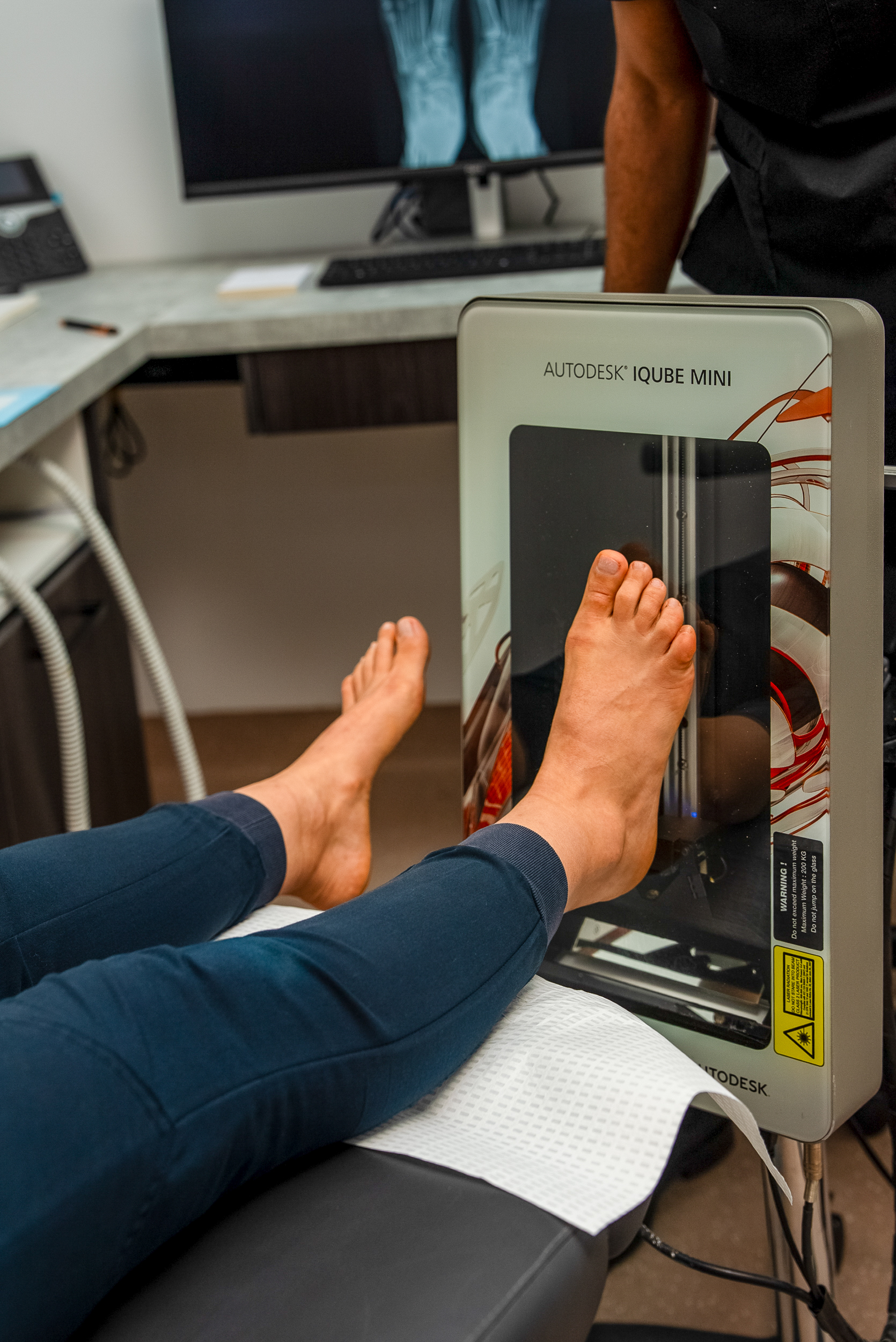
The process for a custom orthotic starts with a full biomechanical assessment - gait analysis, foot posture index measurement and lower limb alignment assessment. Your foot shape is then captured (foam impression, plaster casting or 3D scanning) and the device fabricated to specification.
What Else Can Help With Flat Feet?
Orthotics are rarely the only answer. A comprehensive management plan for symptomatic flat feet typically includes:
- Footwear advice: Motion control and stability shoes provide a structured base that complements orthotic therapy and reduces the demand on the foot's own arch structures.
- Strengthening programme: The tibialis posterior, intrinsic foot muscles and calf complex all contribute to dynamic arch support. Targeted strengthening can reduce reliance on passive support over time. Research published in the British Journal of Sports Medicine supports progressive foot and ankle strengthening as an effective adjunct for flat foot rehabilitation.
- Load management: Reducing the aggravating load - particularly for runners and people who stand for long periods at work - gives the symptomatic tissue a chance to settle before rehabilitation progresses.
Will My Child Grow Out of Flat Feet?
Probably, if they're young enough. Flat feet are developmentally normal in children under 6 years old - the fat pad in the foot's arch makes the foot look flat even when the arch is present. Most children develop a visible arch by age 6-7 as the fat pad reduces and the foot's bony architecture matures.
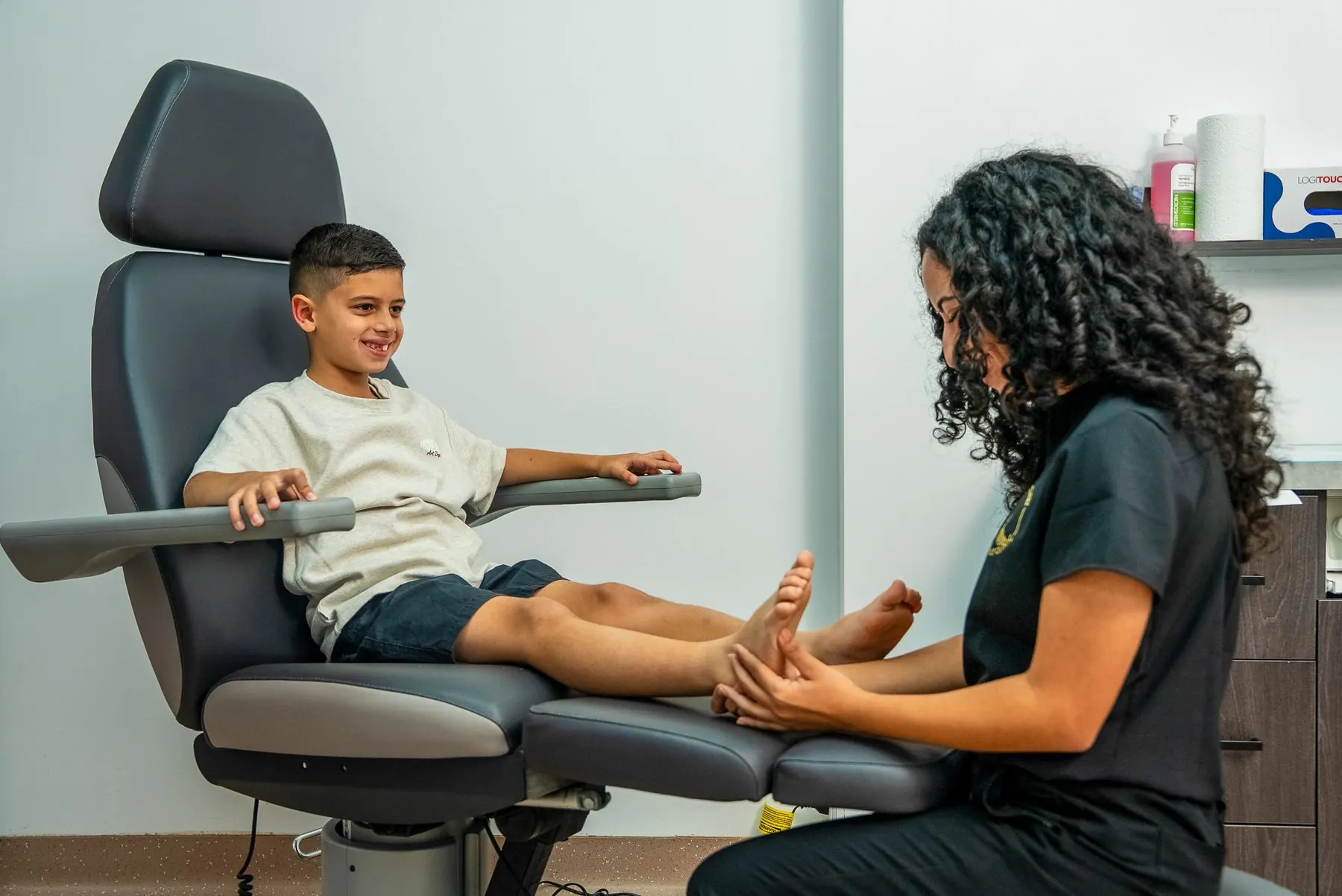
If your child is over 7 and still has flat feet, or if they're experiencing pain, fatigue or avoiding physical activity, a paediatric podiatry assessment is worthwhile. Early intervention during the growth years can support normal foot development.
Flat feet causing pain or fatigue? A biomechanical assessment gives you a clear answer on whether orthotics will help - and which type is actually right for you. Book a flat foot assessment.
Related on our site
Frequently asked questions
Will orthotics fix my flat feet permanently?
Orthotics manage symptoms and control biomechanical loading during activity - they don't structurally correct flat feet in adults. The flat foot itself remains. The goal is pain reduction, improved function and prevention of secondary problems like knee and hip pain.
Can I use orthotics in any shoe?
Orthotics work best in shoes with a removable insole and a structured upper. They're harder to use effectively in very flat shoes, sandals or high heels. Your podiatrist will advise on appropriate footwear at your fitting appointment.
My child has flat feet - do they need orthotics?
Not necessarily. Flat feet are developmentally normal in young children and most develop an arch naturally by age 6-7. If your child is over 7 with persistent flat feet, pain or avoidance of physical activity, a paediatric podiatry assessment is worthwhile.
How long do custom orthotics last?
Most custom orthotics last 2-5 years with regular use, depending on the materials used and the physical demands of the wearer. Athletes and heavy-duty workers typically need replacement sooner. Annual reviews are recommended to check wear and assess whether the prescription still matches the clinical picture.
Are custom orthotics covered by health insurance?
Most private health funds with extras cover custom orthotics under podiatry with a podiatric prescription and receipt. Rebate amounts vary by fund and level of cover. Custom orthotics may also be funded as low-cost assistive technology under the NDIS.