
How to Get Rid of a Corn on Your Foot Permanently
Corns keep coming back because home treatments don't fix the cause. Here's what works, and how a podiatrist removes a corn permanently at Bexley Sydney.
TL;DR
The only way to permanently get rid of a corn is to remove the pressure that caused it. A podiatrist removes the corn (painlessly, with a scalpel) and identifies and addresses the root cause - footwear, biomechanics, or a bony prominence. Without addressing the cause, corns always come back. Home treatments reduce symptoms temporarily but don't fix the problem.
If you've had a corn on your foot for more than a few months, you've probably tried the obvious things - filing it down, using corn plasters, soaking your foot. And if you're reading this article, those things probably haven't worked. Or they worked briefly, and the corn came back.
That's because the standard home treatments for corns address the symptom but not the cause. A corn is your skin's response to sustained, focal pressure - and until that pressure is removed, the skin will keep producing thickened tissue at that site no matter how many times you file it back.
What Is a Corn and Why Does It Keep Coming Back?
A corn (heloma) is a focused area of thickened, hardened skin with a hard conical nucleus that points inward into the deeper tissue. Unlike a callus (which is broader and more diffuse), a corn has a defined hard core that acts like a small stone being driven into the underlying tissue when pressure is applied - which is why corns are typically much more painful than calluses.
They form wherever focal, sustained pressure is applied to the same point of skin repeatedly - typically over a bony prominence, at the tips or tops of toes rubbing against footwear, or between toes pressed together in a narrow shoe.
Corns recur for a simple reason: the standard treatments don't address the pressure. Filing the skin or using a salicylic acid plaster removes the surface layers of the corn temporarily, but the bony prominence, the tight shoe or the gait pattern that created the pressure is still there. Within weeks, the skin rebuilds the corn in exactly the same location in exactly the same way.
Can You Get Rid of a Corn at Home?
Home management can reduce the symptoms of an existing corn and slow the rate at which it rebuilds, but it cannot permanently eliminate a corn without addressing the underlying pressure source.
What works at home (as symptom management):
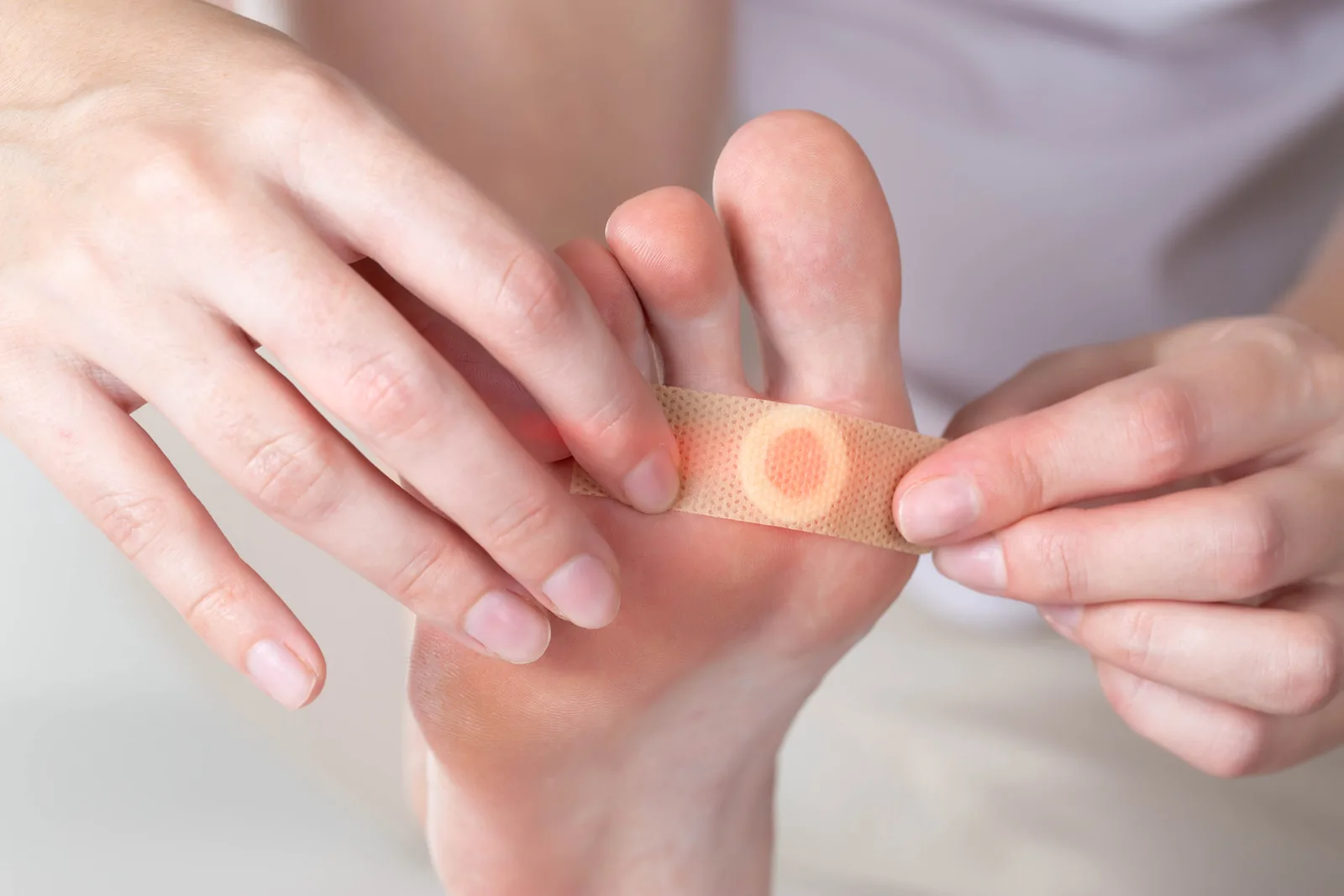
- Silicone corn pads or toe caps: Redistribute pressure away from the corn site. Reduce friction. Useful between podiatry appointments.
- Foam toe separators: For soft corns between toes - reduce the friction between adjacent toe joints that creates and maintains the corn.
- Footwear change: Switching to shoes with a wider toe box and lower heel immediately reduces the pressure driving most corns. This is often the single most impactful home intervention.
- Urea-based moisturiser: Reduces the build-up of hardened skin around the corn, making it less prominent and reducing friction.
What doesn't permanently fix a corn at home:
- Corn plasters (salicylic acid pads): Soften the thickened skin but do not remove the corn nucleus. They also soften surrounding healthy skin, increasing maceration risk. They should not be used by people with diabetes, peripheral arterial disease or neuropathy - the risk of skin breakdown and ulceration is significant.
- Filing or pumice stones: Remove surface layers but not the deep nucleus. The corn rebuilds from the core outward.
- Cutting the corn yourself: Dangerous. Cutting into the deep tissue without sterile technique and clinical skill significantly increases the risk of infection and can cause serious wound complications, particularly in people with diabetes.
What Does a Podiatrist Do That Home Treatment Can't?
A podiatrist manages corns in two phases:
Phase 1: Removal
Using a sterile scalpel, the podiatrist carefully enucleates (removes) the corn nucleus - the hard, deep-seated core - along with the surrounding thickened skin. This is done with precision and in a controlled clinical environment. When done correctly by an experienced podiatrist, corn removal is virtually painless - there are no nerve endings in thickened keratin, and the technique avoids the sensitive underlying tissue.
The result is immediate relief of the pressure symptom - the corn nucleus is no longer being driven into the tissue with every step.
Phase 2: Addressing the Cause
This is the part home treatment cannot do, and it's the reason professional management produces lasting results where home management doesn't.
At Bexley Podiatry, after removing the corn, your podiatrist will assess what's causing the focal pressure. The most common causes are:
- Ill-fitting footwear: Shoes that are too narrow, too tight or too flat create focal pressure at predictable locations. Footwear advice and referral to appropriate shoe styles resolves most footwear-driven corns with proper management.
- Bony prominences from toe deformities: Hammer toes, claw toes and mallet toes create pressure hotspots at the tips, tops or joints of toes that rub against footwear. Conservative management includes padding and footwear modification. Surgical correction of the underlying deformity may be discussed if the pressure cannot be adequately managed conservatively.
- Prominent metatarsal heads: Excessive pressure under one or more metatarsal heads creates plantar corns (on the ball of the foot). Metatarsal domes or offloading orthotics redistribute pressure. Custom orthotics can eliminate the pressure point that drives a plantar corn entirely.
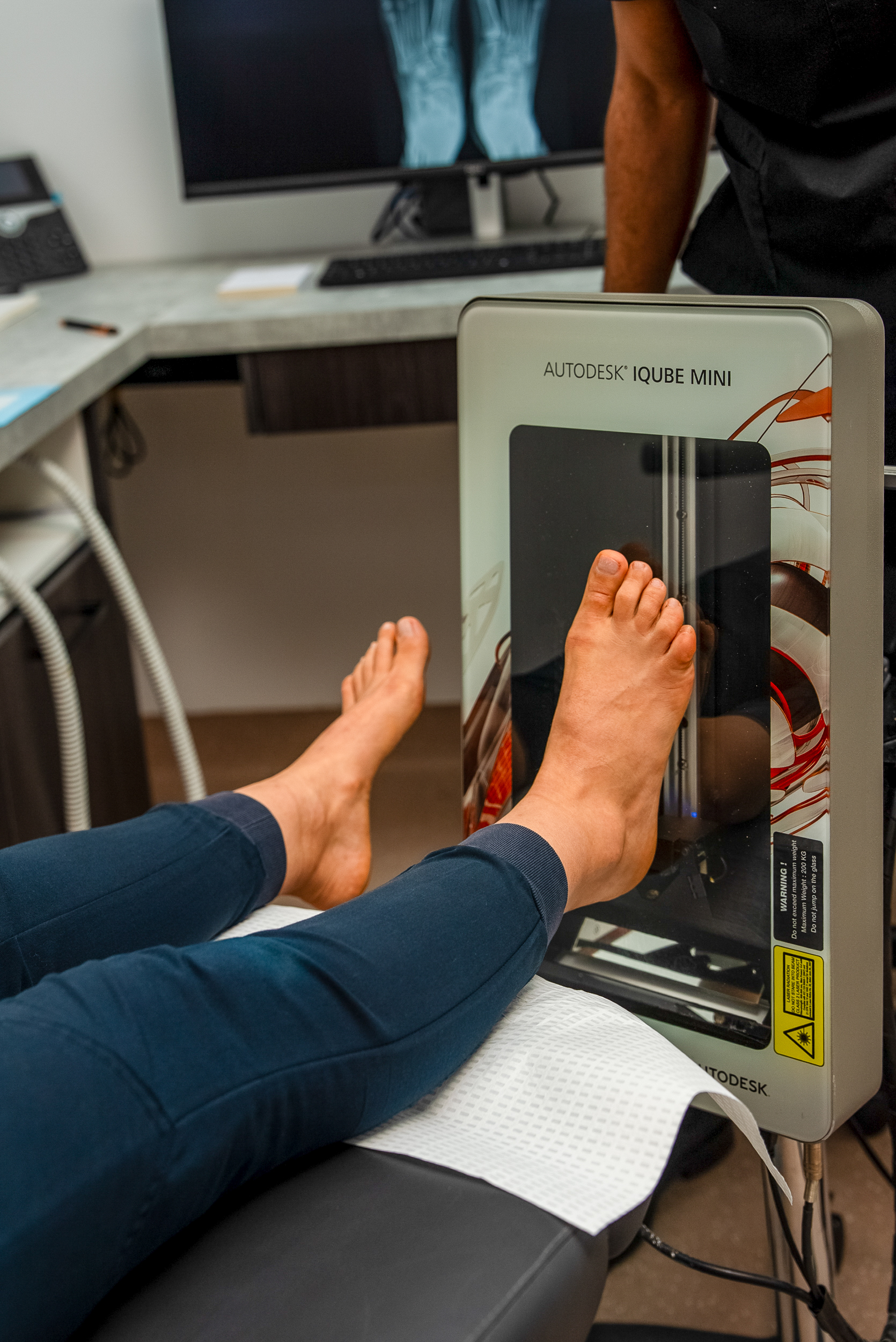
- Gait patterns: How you walk affects where load concentrates. A biomechanical assessment identifies whether the corn site is being repeatedly loaded because of a gait characteristic that can be modified.
How Long Does It Take to Get Rid of a Corn Permanently?
With podiatric management, the corn is removed at the first appointment - the immediate symptom is resolved the same day. How long before it returns (or doesn't) depends entirely on how successfully the underlying pressure cause is addressed:
- If the cause is footwear and the patient makes the appropriate change - the corn typically does not return.
- If the cause is a hammer toe or bony prominence - the corn will recur at a slower rate. Padding and orthotic management extends the time between treatments. Surgical correction of the deformity is the definitive solution.
- If the cause is a gait pattern and orthotics are prescribed - the corn frequently does not return, or returns very slowly.
For the full clinical picture of corn formation, treatment and prevention, including how corns and calluses differ, see the Corns and Calluses condition page.
When to See a Podiatrist Urgently for a Corn
See a podiatrist promptly if:
- You have diabetes, peripheral vascular disease or neuropathy and you have a corn - do not attempt to manage it yourself
- The corn is bleeding, discharging, or showing signs of infection (spreading redness, warmth, swelling)
- The pain is severe enough to be affecting how you walk
- The corn has returned multiple times after self-treatment
Diabetes Australia specifically recommends that people living with diabetes do not attempt self-treatment of foot skin conditions including corns - the risk of ulceration and secondary infection is clinically significant.
A corn that keeps coming back is telling you the cause hasn't been fixed. Come in, we'll remove it properly and work out what's actually driving it. Book a corn treatment appointment.
Related on our site
Frequently asked questions
Does corn removal at a podiatrist hurt?
No. Corn enucleation (removal) by a podiatrist is virtually painless when performed correctly. There are no nerve endings in the thickened keratin, and the technique keeps the scalpel within the corn tissue rather than cutting into the sensitive underlying dermis. Most patients are surprised by how painless the procedure is.
How often do I need to see a podiatrist for corn removal?
This depends on the underlying cause. If the cause is fully addressed (footwear changed, orthotics prescribed), some patients don't need further treatment. If there is an ongoing structural driver such as a hammer toe, most patients need corn removal every 6-12 weeks. Your podiatrist will discuss a realistic ongoing management plan at your appointment.
Are corn plasters safe to use?
For people without diabetes, peripheral arterial disease or neuropathy, corn plasters can provide temporary relief. They should not be used by people with any of these conditions. They do not permanently remove the corn - they soften the surface layers only. Follow package instructions carefully and do not leave them on longer than directed.
Can a corn turn into a foot ulcer?
In people with diabetes, peripheral neuropathy or poor circulation, yes. A callus or corn that is not managed can create sustained elevated pressure beneath it, leading to tissue breakdown and ulceration. This is why regular podiatric skin care is considered essential for people with diabetes, not optional.
Is there a surgery to permanently remove a corn?
There is no surgery to remove a corn directly. However, surgical correction of the underlying bony deformity - a hammer toe, a prominent metatarsal head - eliminates the pressure point that is causing the corn. This is the most definitive treatment for corns driven by structural deformities that cannot be adequately managed conservatively.