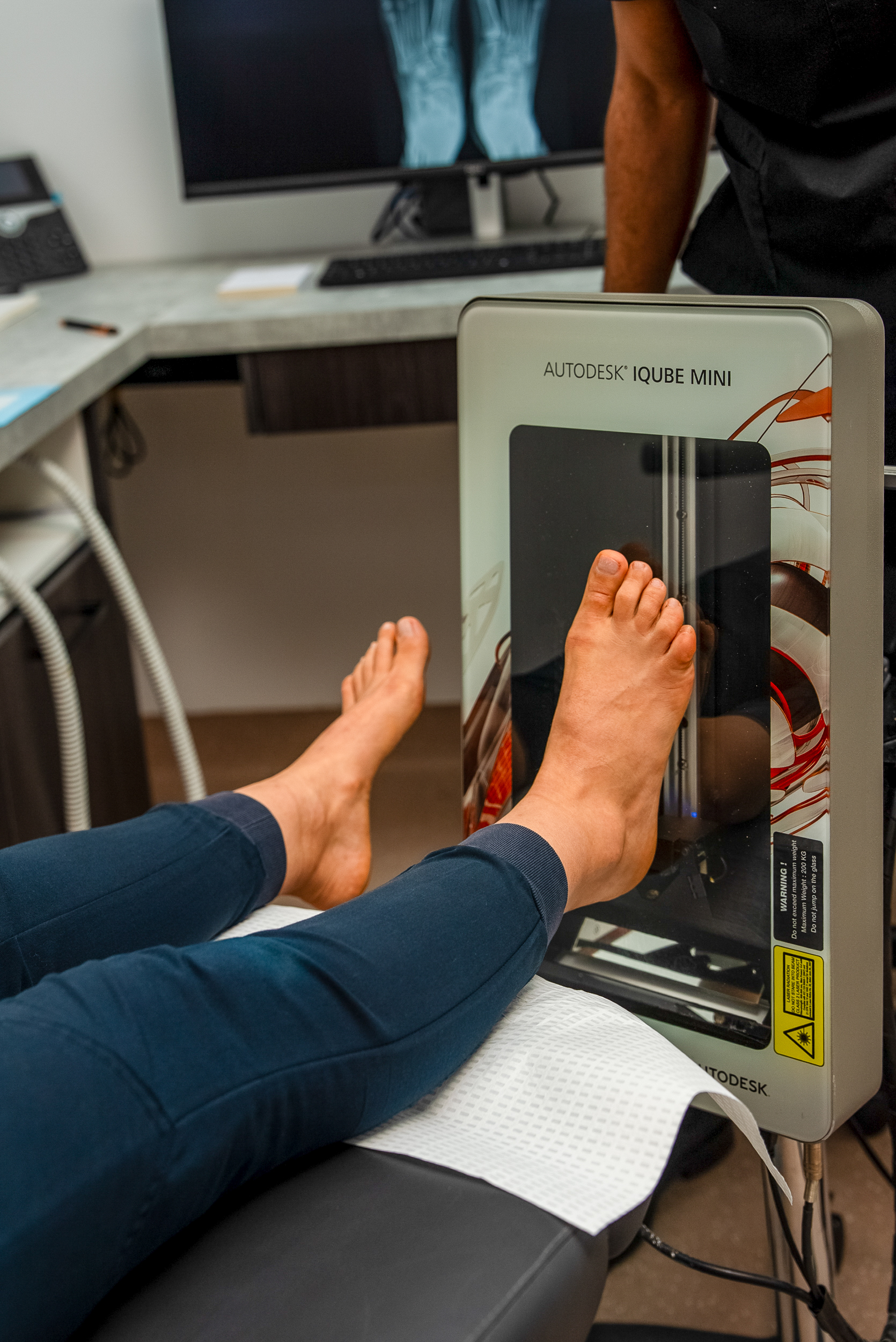

Common Foot Problems: Causes, Symptoms & When to See a Podiatrist
Most foot pain has a clear cause - and a clear fix. The conditions we see most at Bexley Podiatry, what drives them, and the signs that say it is time for a proper assessment instead of waiting it out.

TL;DR
Foot pain is rarely "just part of life" - most causes are diagnosable and treatable. The most common foot problems include heel pain, ingrown toenails, bunions, and Achilles tendinopathy. Early treatment almost always means fewer interventions - conservative options first, surgery only when needed. If pain has lasted more than a week or is affecting how you walk, it is time to see a podiatrist. Bexley Podiatry treats complex and referral-grade cases alongside everyday presentations, with advanced in-house therapies.
Your feet carry your entire bodyweight through every step you take. So when something goes wrong - whether it is a sharp jab of heel pain first thing in the morning, a toenail that keeps becoming inflamed, or a growing bump on the side of your foot - it affects everything: how you move, how you work, how you sleep.
The good news is that most foot problems are well understood and, in the right hands, very treatable. This guide covers the conditions we see most frequently at Bexley Podiatry, what causes them, and the signs that tell you it is time to get a proper assessment rather than waiting it out.
Why do foot problems happen?
Most foot problems come down to one or more of the following underlying causes:
- Biomechanical factors - the way your foot and ankle move can place excess load on specific structures over time.
- Footwear - poor fit, insufficient support, or excessive heel height changes how load is distributed across the foot.
- Activity level and loading - sudden increases in training volume, standing all day at work, or carrying excess weight all increase stress on the foot.
- Structural factors - flat feet, high arches, bunions, and hammer toes are often hereditary and predispose certain areas to injury.
- Systemic conditions - diabetes, rheumatoid arthritis, gout, and peripheral vascular disease each affect foot health in specific and serious ways.
- Skin and nail conditions - fungal infections, ingrown toenails, warts, corns, and cracked heels are among the most prevalent foot complaints in the general population.
A thorough foot and ankle assessment is always the starting point - because treating the symptom without identifying the cause is how temporary relief turns into a chronic problem.
The most common foot problems, explained
Below are the conditions we assess and treat most frequently. Each one is different - in cause, in how it presents, and in what works best to resolve it.
- [Plantar fasciitis & heel pain](/conditions/plantar-fasciitis) - sharp pain under the heel, worst with the first steps of the morning. Caused by overload of the plantar fascia, the band of tissue connecting the heel to the ball of the foot.
- [Achilles tendinopathy](/conditions/achilles-tendinopathy) - stiffness and pain at the back of the heel, aggravated by running, walking uphill, or prolonged activity. A degenerative tendon problem that rarely resolves without structured treatment.
- [Bunions (hallux valgus)](/conditions/bunions) - a bony prominence at the base of the big toe caused by the joint drifting outward. Often hereditary. Causes pain, redness, and difficulty fitting shoes comfortably.
- [Morton's neuroma](/conditions/mortons-neuroma) - a thickening of tissue around the nerve between the toes, producing burning, sharp, or electric-shock pain in the ball of the foot. Often described as walking on a small stone.
- [Hammer toes](/conditions/hammer-toes) - a bending or curling of the lesser toes at the middle joint. Can be flexible (correctable) or rigid, and often leads to corns, calluses, and shoe-fitting problems.
- [Ingrown toenails](/conditions/ingrown-toenails) - when the nail edge grows into the surrounding skin, causing pain, swelling, and infection. Recurring or infected ingrown toenails may need a minor surgical procedure for permanent correction.
- [Chronic ankle instability](/conditions/chronic-ankle-instability) - a history of ankle sprains that have left the ankle feeling unstable or repeatedly giving way. Often undertreated, leading to ongoing ligament weakness and joint damage.
- [Flatfoot](/conditions/flatfoot) & [high-arch foot](/conditions/high-arch-foot) - structural variations in arch height that alter load distribution through the foot. Both can cause pain in the foot, ankle, knee, or even lower back without appropriate management.
- [Fungal nails](/conditions/fungal-nails) & athlete's foot - fungal nail infections cause thickened, discoloured, brittle nails. Athlete's foot produces itching, scaling, and cracking of the skin. Both spread easily and require targeted treatment.
- [Corns & calluses](/conditions/corns-and-calluses) - areas of thickened skin caused by repeated friction or pressure. Corns have a hard central core; calluses are broader. Both can be painful and are safely debrided by a podiatrist.
- [Tarsal tunnel syndrome](/conditions/tarsal-tunnel-syndrome) - compression of the tibial nerve as it passes behind the ankle, producing burning, tingling, or numbness along the sole of the foot. Often misdiagnosed or confused with plantar fasciitis.
- [Cracked heels](/conditions/cracked-heels) - deep fissures in the heel skin that can be painful and become infected if left untreated. Often linked to dry skin, open-backed footwear, and prolonged standing on hard surfaces.
How are foot problems treated?
The right treatment depends entirely on the diagnosis. What works for plantar fasciitis is very different from what works for a Morton's neuroma, and applying the wrong approach is one of the main reasons people live with foot pain longer than they should.
At Bexley Podiatry, treatment always follows an accurate clinical diagnosis - and the principle is conservative first, then more advanced if needed. The most common treatment pathways include:
- [Orthotic therapy](/services/orthotic-therapy) - custom-prescribed orthoses correct the biomechanics driving your pain, taking load off the injured structure.
- [Shockwave therapy (ESWT)](/services/shockwave-therapy) - non-invasive shockwave for stubborn plantar fasciitis, heel pain, and chronic tendinopathy.
- [Injection therapy](/services/injection-therapy) - ultrasound-guided corticosteroid, PRP, and regenerative injections delivered in-house for precise, lasting relief.
- Exercise and rehabilitation - structured loading programmes that retrain tissue and restore function over time.
- [Nail surgery](/services/ingrown-toenail-surgery) - permanent correction of painful or recurrent ingrown toenails under local anaesthetic, in-clinic.
- Minor surgical procedures - led by our podiatric surgical registrar, for presentations that have not resolved with conservative care.
- [Coordinated surgical referral](/services/surgical-consultations) - for complex cases (bunions, hammer toes, tendon tears) that require a specialist surgeon.
Explore the full list of podiatry services available at our Bexley clinic.
When should you see a podiatrist?
A common mistake is waiting too long. Foot pain that has been present for several weeks does not simply "go away on its own" - in most cases it becomes harder to treat the longer it is left. Early intervention consistently produces faster recovery and less invasive treatment requirements. See a podiatrist if you have any of the following:
- Foot or ankle pain that has lasted more than one week.
- Pain that is affecting how you walk, stand, or exercise.
- A toenail that is infected, painful, or repeatedly ingrown.
- Numbness, tingling, or burning in the foot or toes.
- A visible deformity - a bump, bent toe, or collapsed arch - that was not there before.
- Foot wounds, ulcers, or skin changes, particularly if you have diabetes.
- Heel pain that is worst first thing in the morning.
- Ankle instability or repeated sprains.
- Any foot concern in a child - the earlier developmental problems are caught, the better the outcome.
If you have already had treatment elsewhere and it has not resolved the problem, a second-opinion assessment at Bexley Podiatry may help identify what was missed and what the next step should be.
Foot problems in specific populations
Children and adolescents
Growing feet are not simply small versions of adult feet - they are still developing, and gait abnormalities, flat feet, heel pain during growth spurts (Sever's disease), and developmental issues respond best when caught early. Our children's podiatry service is designed specifically for young patients, with a child-friendly approach to assessment and treatment.
People with diabetes
Diabetes affects circulation and nerve function in the feet, making even minor issues - a blister, a small cut, a thickening nail - potentially serious. Regular diabetic foot assessments screen for vascular and neurological risk before problems develop, and are an important part of preventive diabetes management.
Athletes and active adults
Runners, team-sport athletes, and people who exercise regularly place significantly higher loads on their feet and ankles than the general population. Stress fractures, tendinopathies, ankle instability, and overuse injuries require a targeted sports assessment and a structured return-to-sport plan rather than generic advice to rest.
Why Bexley Podiatry for complex foot cases?
Bexley Podiatry is positioned as a destination clinic - not a generalist provider. The practice is led by a podiatric surgical registrar with an active referral network that includes GPs, sports physicians, physiotherapists, and orthopaedic surgeons across the St George area and greater Sydney. What that means practically:
- Advanced injection therapies and in-clinic diagnostic ultrasound - no referrals out for imaging in most cases.
- Minor surgical procedures performed in-clinic, not in a hospital day-surgery setting.
- Complex, referral-grade presentations are specifically welcomed - including cases where previous treatment has failed.
- 60+ years of combined clinical experience across the team.
- 4.9-star Google rating across 250+ reviews.
- Urgent appointments available - we endeavour to see acute foot and ankle concerns as promptly as possible.
Visit the full list of conditions we treat - from plantar fasciitis and Achilles tendinopathy through to osteochondral lesions, tendon tears, and failed previous treatment.
Foot pain holding you back?
Book an assessment with our podiatrists at Bexley Podiatry: Foot & Ankle Clinic, 390 Forest Rd, Bexley NSW 2207. We will pinpoint the cause and start you on the right treatment path - conservative first, surgical only when it is genuinely the best option. Call 1300 345 226 or book online to get started.
Related on our site
Reviewed by Dr Ozan Amir, FACPS. This article is general information, not a diagnosis - for advice about your own feet, book an assessment.
Frequently asked questions
What are the most common foot problems?
The most common foot problems include plantar fasciitis (heel pain), ingrown toenails, bunions, Achilles tendinopathy, corns and calluses, and Morton's neuroma. Many of these respond well to early podiatry intervention.
When should I see a podiatrist for foot pain?
See a podiatrist if your foot pain has lasted more than a week, is affecting your daily activity, worsens with walking or standing, or has not improved with rest. Early diagnosis leads to faster, less invasive treatment.
Can foot problems be treated without surgery?
Most foot problems can be resolved without surgery using conservative treatments such as orthotic therapy, shockwave therapy, injection therapy, or targeted exercises. Surgery is considered only when conservative options have been exhausted.
What causes heel pain in the morning?
Morning heel pain that eases after a few steps is the classic presentation of plantar fasciitis. It is caused by inflammation of the plantar fascia - the thick band of tissue running along the sole of the foot - and is one of the most treatable foot conditions with the right approach.
Does Bexley Podiatry treat complex or referred foot cases?
Yes. Bexley Podiatry is a destination clinic for complex and referral-grade foot and ankle cases. Led by a podiatric surgical registrar, the clinic offers advanced injection therapies, in-house diagnostic ultrasound, and minor surgical procedures at 390 Forest Road, Bexley NSW 2207.
Are bunions genetic?
There is a strong hereditary component to bunions (hallux valgus). Foot structure and mechanics inherited from parents make certain people more prone to developing them, though footwear choices and activity levels also play a role in progression.
How do I know if I have a Morton's neuroma?
Morton's neuroma typically causes a sharp, burning or electric-shock pain in the ball of the foot, often between the third and fourth toes. Some people describe a sensation like standing on a small pebble. A podiatrist can confirm the diagnosis with a clinical examination and in-house ultrasound.
What is the difference between a corn and a callus?
Both are areas of thickened skin caused by pressure or friction. Corns are smaller, have a hard central core, and usually form on bony prominences (e.g. the tops of toes). Calluses are broader, flatter, and typically appear on the ball or heel of the foot. A podiatrist can debride both safely and address the underlying cause.