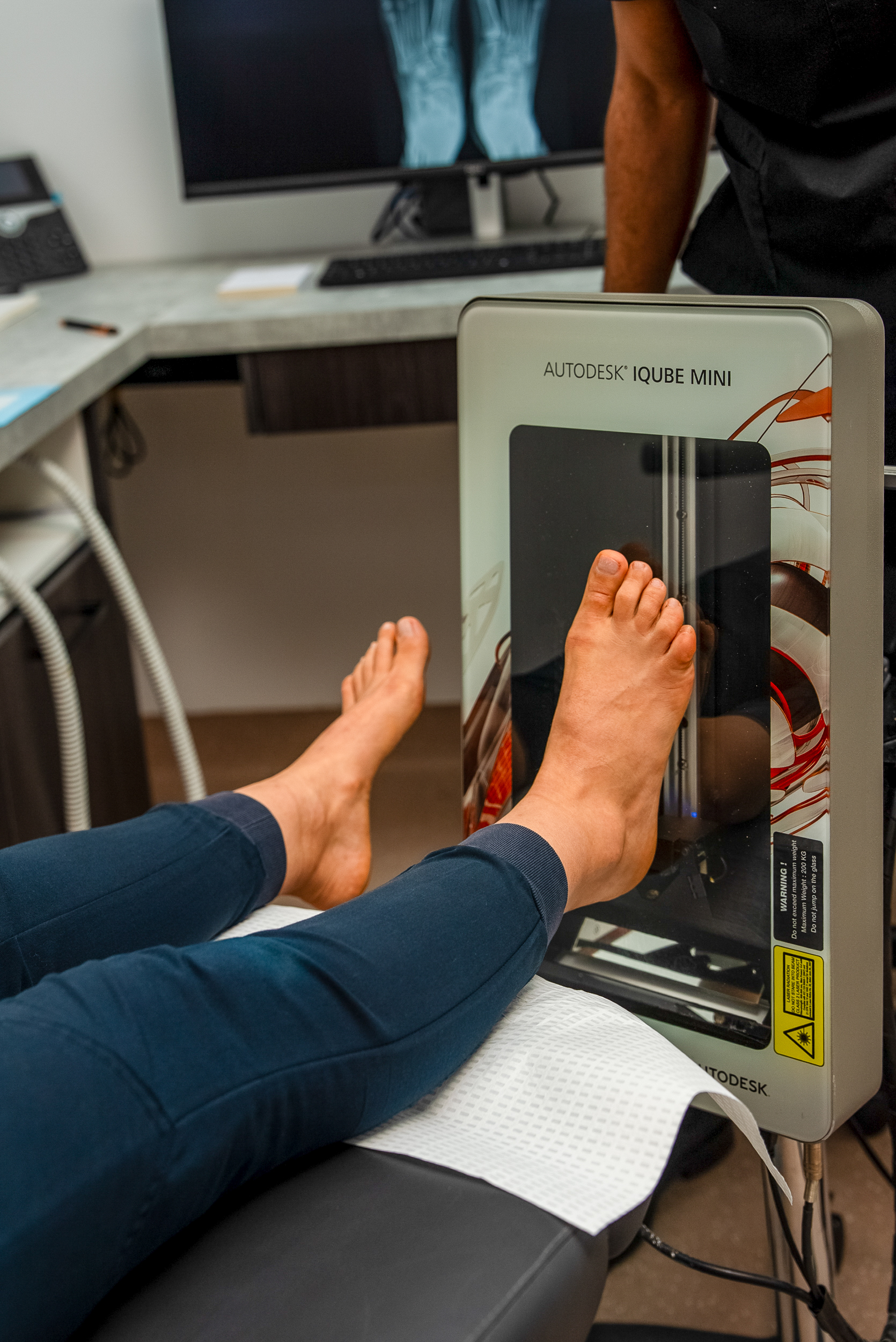

4 Tips to Help You Choose the Best Shoes for Your Child
Children's feet grow fast and are easily affected by poorly fitting shoes. Here are four simple fitting tips from our podiatrists - and the warning signs that mean it's worth having your child's feet checked.
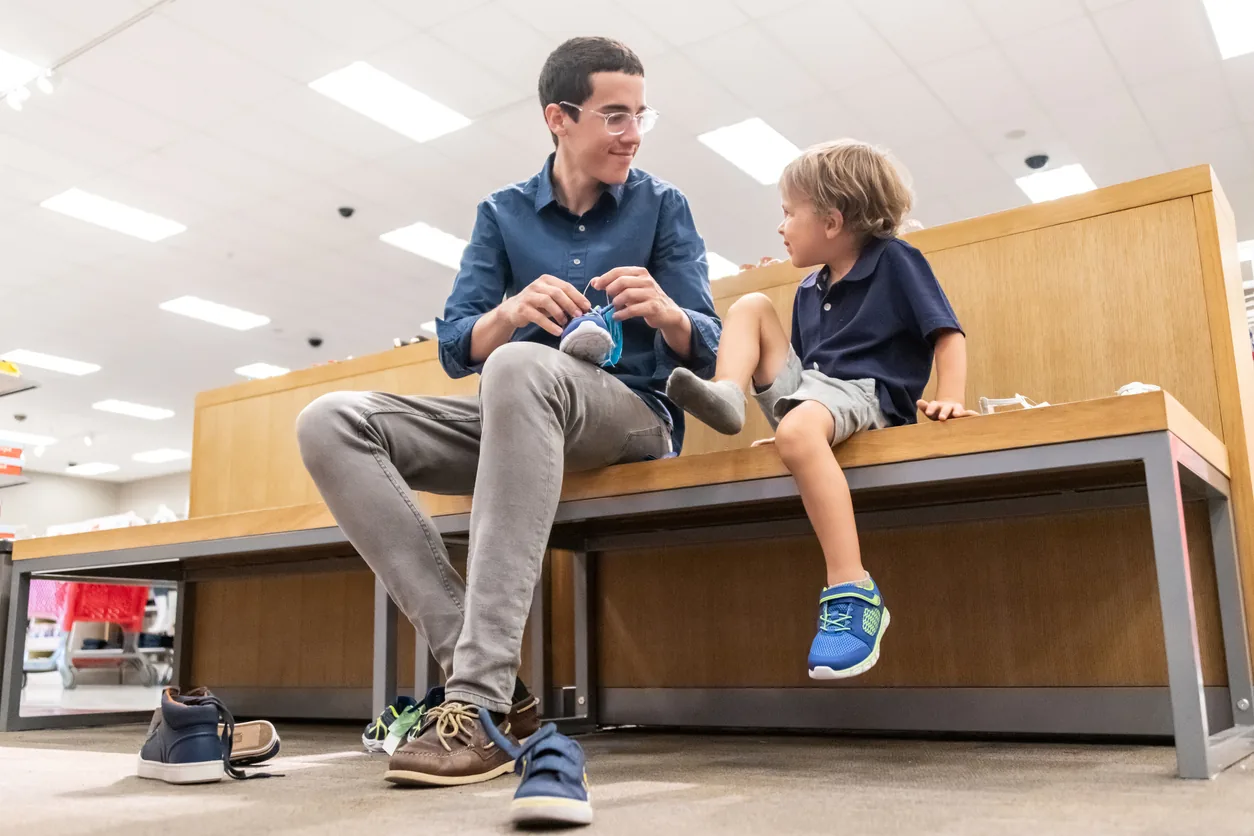
Above all, children's shoes should protect growing feet - and because those feet grow quickly and are soft and easily moulded, a badly fitting shoe can do real harm. Here's how the podiatrists at Bexley Podiatry recommend parents across the St George area choose and fit their kids' shoes.
Check the size often
Recheck shoe (and sock) size every 1-3 months up to age three, every four months to age five, and every six months after that. Children rarely tell you a shoe has become too small.
1. Always measure both feet
Have both feet measured for length and width - most people have one foot slightly larger, and you fit to the bigger one. Don't buy on the label size alone; sizing varies between brands.
2. Fit the natural shape of the foot
Look for a rounded, roomy toe box so toes can spread and move. Cramped, pointed shoes can contribute to ingrown toenails and nail problems in children.
3. Leave growing room - but not too much
Allow about 10mm between the longest toe and the end of the shoe. Too little and the foot is cramped; too much and the child trips or the shoe doesn't support properly. Avoid buying several sizes too big to 'grow into'.
4. Check the heel and the flex
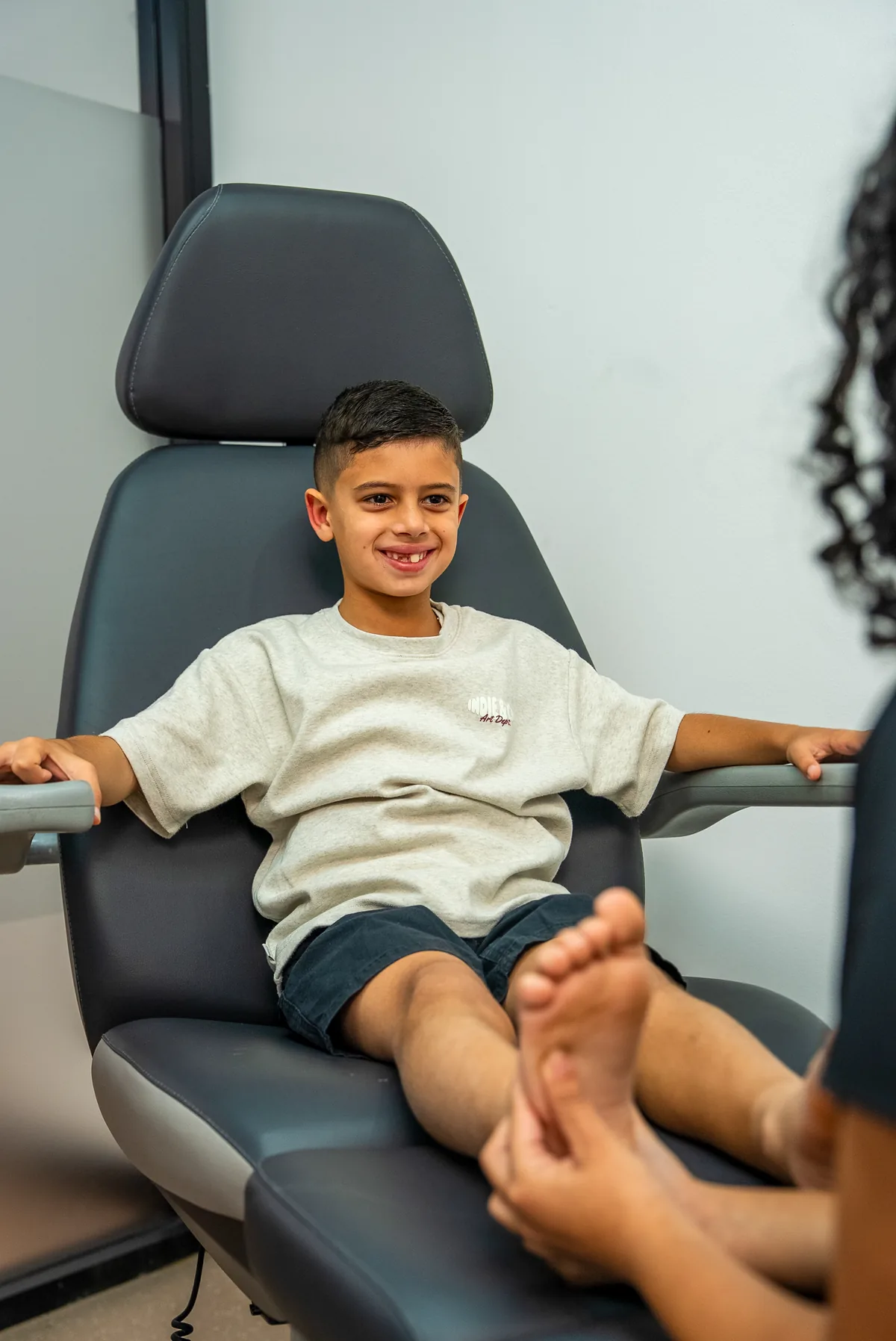
The shoe should hold the heel firmly without slipping or pinching. The front should flex where the foot flexes - at the ball of the foot - not fold in half in the middle. A firm heel and a flexible forefoot support natural movement.
When to have your child's feet checked
Speak with one of our podiatrists if you notice:
- Uneven shoe wear (one side or area wearing faster than the other).
- Skin rashes, hard skin, lumps or bumps on your child's feet.
- Recurrent pain in the feet or legs, or your child asking to be carried.
- Frequent tripping or falling.
Children's foot checks in Bexley
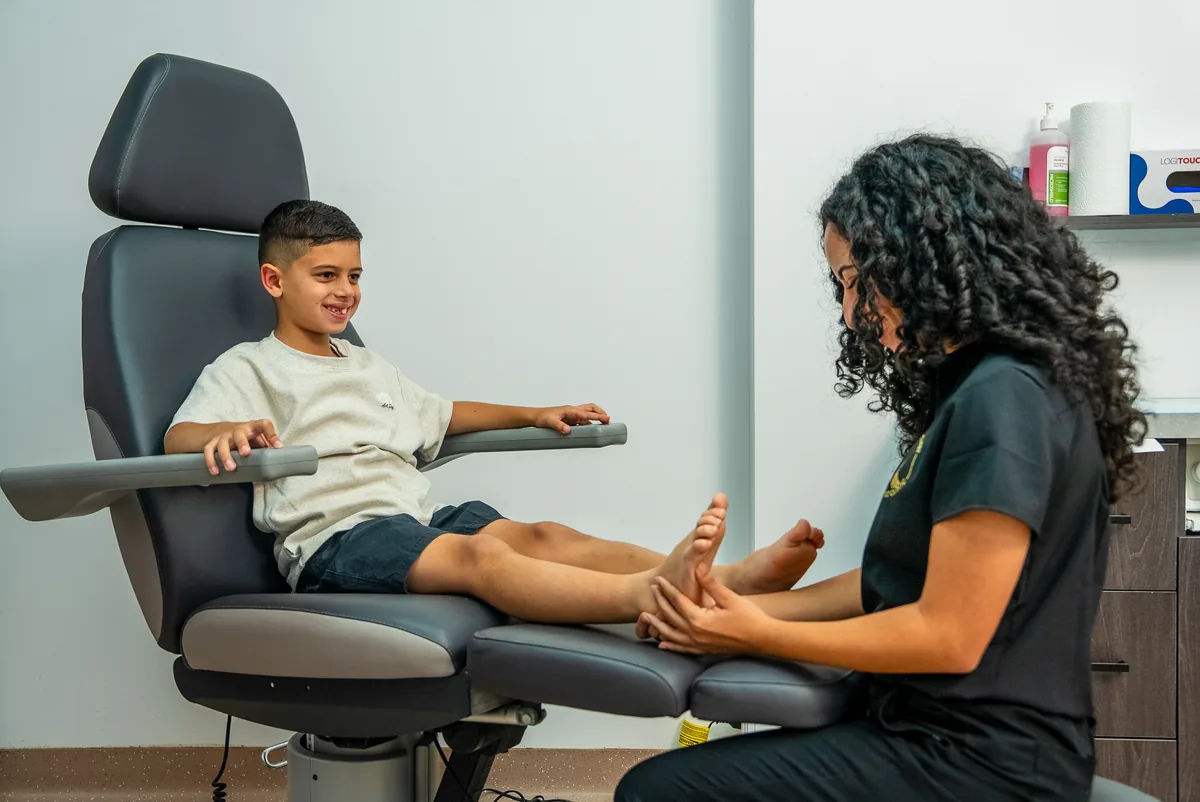
If something about your child's feet or footwear is worrying you, our children's podiatry service can help. We look after families across Bexley, Kogarah, Hurstville and Sydney's south, and you don't need a referral. Book online or call 1300 345 226.
Related on our site
Reviewed by Dr Vanessa Hadchiti, BAppSc (Podiatry), MIPH, MIDI. This article is general information, not a diagnosis - for advice about your own feet, book an assessment.
Frequently asked questions
How much growing room should children's shoes have?
About 10mm between the longest toe and the end of the shoe - enough to grow into for a few months, but not so much that the shoe slips or the child trips.
Are second-hand shoes bad for kids?
It's best to avoid hand-me-down shoes. Shoes mould to the first wearer's foot and wear unevenly, so a used pair may not support your child's foot correctly. New, well-fitted shoes are worth it for growing feet.
Do children need arch support in their shoes?
Most healthy children don't need special arch support - flexible flat feet are normal as arches develop. If your child has pain, tires easily or trips often, have their feet assessed rather than guessing.